
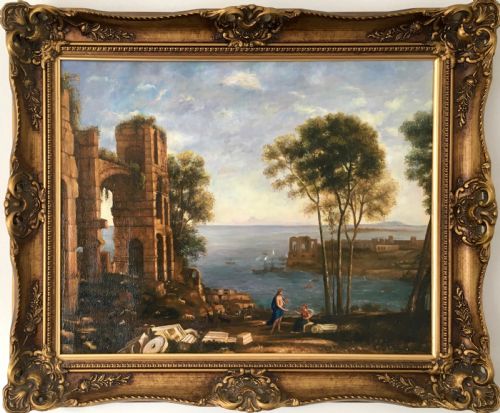
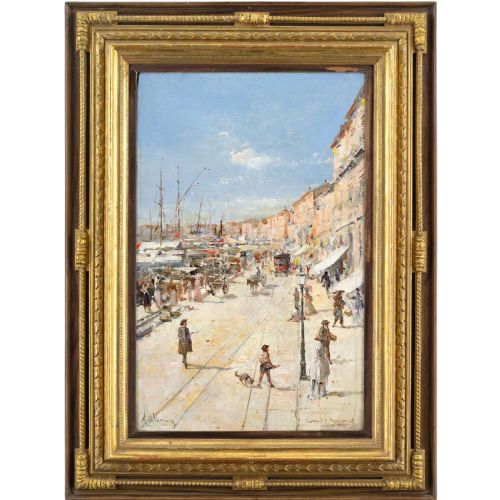
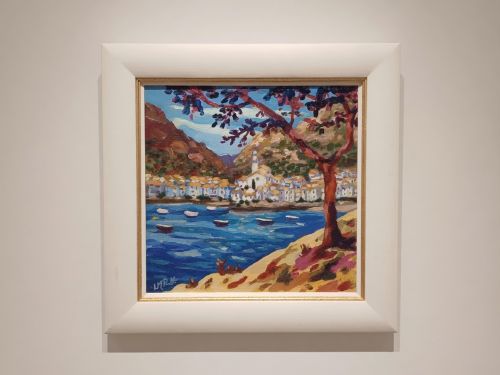
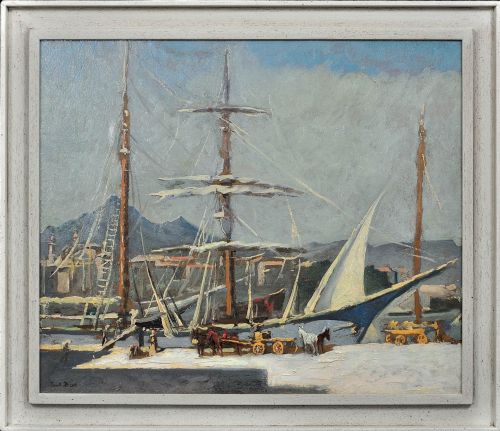


Framed Mediterranean Landscape Painting
A framed mediterranean landscape painting brings warm coastal light, harbours and olive groves directly onto your wall.
Framed Mediterranean Landscape Painting
A framed mediterranean landscape painting captures the sun-drenched coastal views, harbours and rustic interiors of southern Europe. These works transport viewers to the shores of Italy, France, Spain and Greece through distinct regional vistas. You encounter harbour scenes, olive groves and coastal rocks rendered across the twentieth century.
The selections on this page encompass works from nineteen hundred through the nineteen sixties and later. Makers record these southern vistas using oil paint, watercolour and gouache upon canvas, paper and board. Each piece arrives within a protective frame, ranging from gilded wood to simple mouldings that secure the artwork for display.
How they were made
Artists apply oil paint or watercolour onto stretched canvas, paper or board to build these coastal scenes. Canvasses receive layers of pigment that capture strong southern light and shadow, whilst watercolours use fluid washes on paper to suggest bright skies and sparkling sea. Pigments often display the bold hues characteristic of impressionism and fauvism.
Makers house these works inside wooden frames, frequently incorporating gilded finishes to complement the warmth of the subject matter. Some pieces employ textured painted prints on board, whilst others utilise traditional stretching techniques over wooden supports.
Several artists packed watercolours and heavy oil paints into dusty suitcases to capture the glaring southern sun before heading home.
What varies in quality
The strength of the composition and the handling of light distinguish the finest examples from simpler decorative works. Masterful brushwork captures the palpable heat and atmosphere of southern ports and olive groves, whereas weaker execution results in flat colouration.
The integration between the painting and its frame also affects the overall standard. Original or period framing that enhances the coastal subject elevates the piece above later replacements.
Augusto Alberici·Paul Bret·Erich Mercker·Gustave Vidal·Jean-Baptiste Olive·Cecil Rochfort D'Oyly-John·Edith E Caswall·John William Gilroy
The Framed Mediterranean Landscape Painting Glossary
- Fauvism
- A style characterised by vibrant, non-naturalistic use of colour and bold brushstrokes. Painters working in this manner prioritised painterly qualities over realistic representation.
- Gouache
- An opaque water-based paint that dries to a matte finish. Artists employ it on paper to achieve solid blocks of bright colour.
- Capriccio
- An architectural fantasy artwork that places imaginary or real buildings into a fictional landscape setting. Painters often use this term for Italian coastal compositions.
- Post-Impressionism
- An art movement extending impressionism whilst rejecting its limitations. Practitioners developed distinct approaches to structure and symbolic colour.
- Provenance
- The documented history of ownership surrounding an artwork. Records confirm the origin and past exhibitions of specific pieces.
Framed Mediterranean Landscape Painting: Frequently Asked Questions
Where were these coastal scenes painted?
Artists painted these views across the southern regions of Europe, including the coasts of Italy, France, Spain and Greece. Popular locations encompass Sicily, the French Riviera, Provence and coastal towns along the Mediterranean.
Creators travelled to these sunny destinations to record local harbours, fishing boats, olive groves and architecture under bright natural light.
How should I hang a framed mediterranean landscape painting?
Select a wall space that receives indirect natural light to showcase the pigments properly without exposing the canvas or paper to harsh direct sun. Ensure the frame securely supports the weight of the work before mounting.
Pair the piece with neutral wall colours that allow the warm hues of the southern landscape to stand out in your room.
What periods do these artworks represent?
The available works span from the nineteenth century through the mid-twentieth century, including pieces dated around nineteen hundred, nineteen twenty, nineteen thirty and the nineteen sixties.
Styles shift across these decades from traditional nineteenth century realism and early impressionism to mid-century modernism and fauvist interpretations.
What materials did artists use for these paintings?
Makers primarily utilised oil paint on canvas or paper, alongside watercolours and gouache on paper. Some pieces feature textured painted prints on board.
Frames are constructed from wood, frequently with gilded surfaces or simple painted finishes designed to protect and complement the artwork.