


Terracotta Landscape Canvas Artwork
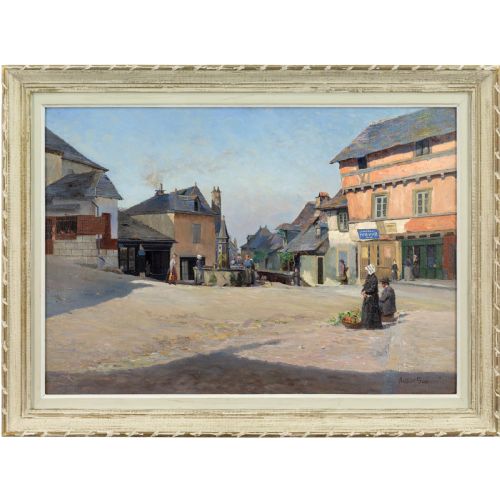
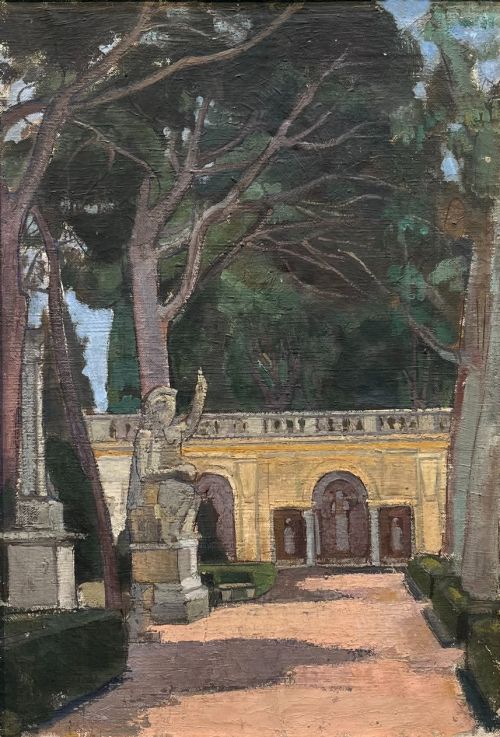
These terracotta landscape canvas artwork pieces bring warm Mediterranean earth tones and rural scenes into a room through oil paint.
Terracotta Landscape Canvas Artwork
A buyer seeking terracotta landscape canvas artwork looks for oil paintings depicting rural views, Mediterranean scenes, and old towns rendered in warm, reddish-brown earth hues. The works on this page span from the nineteenth century through the mid-twentieth century, capturing subjects from Italian canals to French farmhouses.
Most pieces you encounter here belong to Impressionist, Post-Impressionist, or Mid-Century Modern traditions, often executed on canvas or board. They range from British regional landscapes to sun-drenched views of Provence, Venice, and Rome.
Makers represented include named European and British artists working within distinct regional schools, alongside unsigned works from the nineteenth and twentieth centuries. The common thread is the palette of terracotta, rust, and ochre dominating each painted canvas.
Assessing quality and execution
Quality in these paintings rests upon the handling of light, brushwork confidence, and compositional balance rather than surface condition alone. Superior works demonstrate an assured application of pigment where the warmth of the terracotta palette defines form and atmosphere without muddying.
The distinction between standard decorative pieces and finer works lies in the artist's command of tone and perspective, particularly in how southern light and shadow are captured across architectural facades and natural terrain.
Listed works span the nineteenth century to the nineteen-sixties, utilising oil paint on canvas, wood, and board.
Arthur Gué·Herbert Royle·Owen Bowen·Claude Jousset·Armand Guillaumin·Abraham Hulk Junior·John Sanderson Wells·Eugene Battaille·Auguste Renoir·William Greaves·Paul Paul·Maurice Sijs·Charles Clement Calderon·John Frederick Tennant·Alfred Egerton Cooper·Christiaan Pieter Snyders
The Terracotta Landscape Canvas Artwork Glossary
- Canvas
- A heavy woven fabric, usually linen or cotton, stretched tightly across a wooden frame to serve as a painting surface. It has formed the primary support for oil paintings since the Renaissance.
- Impasto
- A technique where paint is laid onto a canvas in very thick layers, thick enough that the brush or palette knife strokes remain visible. This adds physical texture and dimension to the painted surface.
- Plein air
- Painting outdoors in direct natural light to capture the immediate visual conditions of a landscape. Artists of the nineteenth and twentieth centuries used this method to record shifting atmospheric effects.
- Post-Impressionism
- An art movement developing from about the eighteen-eighties that rejected the naturalism of impressionism in favour of expressive colours and symbolic forms. Painters used heavier outlines and bolder hues to structure their canvases.
- Provenance
- The chronological record of ownership and exhibition history of an artwork. A documented history helps establish authenticity and trace the journey of a painting through time.
Terracotta Landscape Canvas Artwork: Frequently Asked Questions
What periods do these paintings date from?
The works span from the nineteenth century through the mid-twentieth century, encompassing Victorian academic painting, impressionism, and mid-century modernism.
Most pieces cluster around the early decades of the twentieth century, reflecting the popularity of continental travel and plein air painting among European artists.
How should I hang an oil painting on canvas?
Hang your canvas away from direct sunlight, damp walls, and heat sources that might cause the wood and paint to warp or crack. Ensure the hanging wire and wall fixings are strong enough to support the weight of the framed wooden stretcher.
Keep the room at a stable temperature and humidity level to preserve the oil paint and canvas fabric over the decades.
Are these paintings signed by the artists?
Many listings feature works by named historical artists, while others represent anonymous British or European school paintings from the period. Signatures appear in paint or pencil, usually in one of the lower corners of the canvas.
Unsigned works are attributed based on style, technique, subject matter, and the materials used during a particular era.
What subjects appear in these landscapes?
The scenes encompass French and Italian countryside views, coastal towns, riverbanks, and architectural studies featuring old mansions and gardens. Terracotta roofs, craggy stone walls, and olive trees feature prominently in the Mediterranean compositions.
Other works capture domestic farmhouses, rural fields, and cityscapes across Britain and continental Europe.