




Ewer and Basin Set
An ewer and basin set is a practical and decorative washing ensemble, and these pieces bring period washstands and dressing tables to life.
Ewer and Basin Set
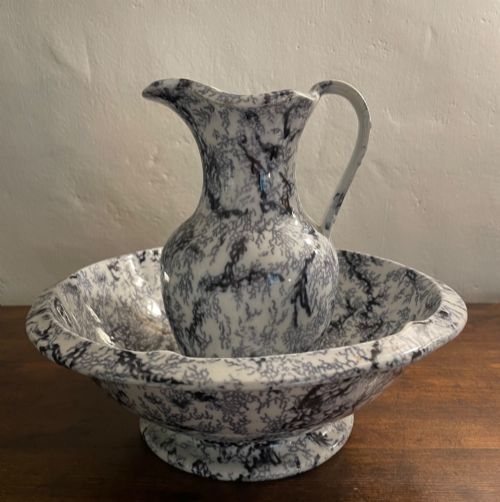
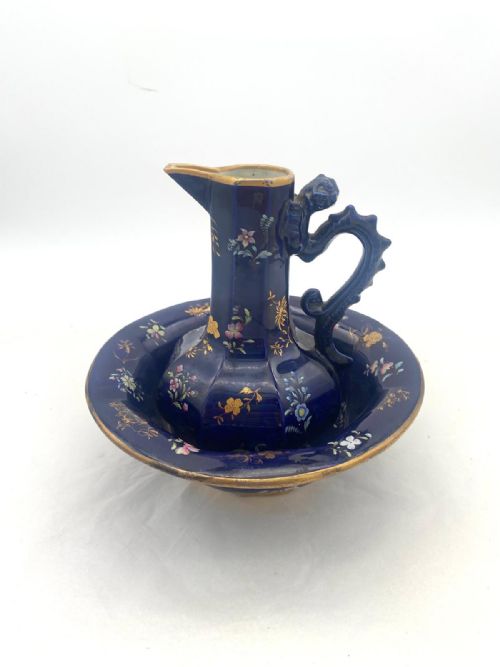
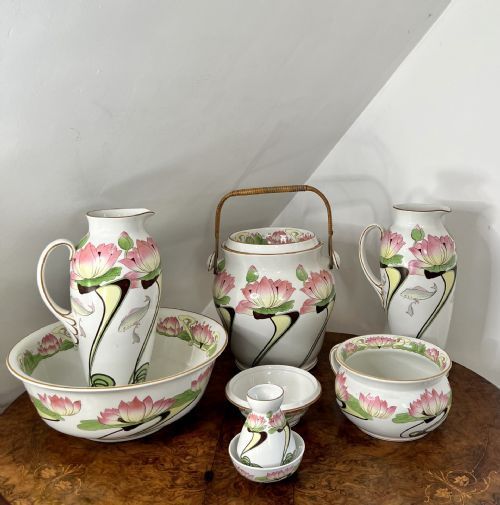
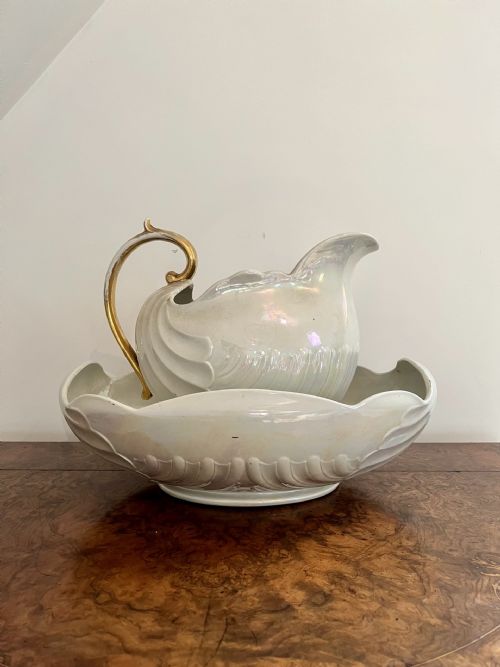
An ewer and basin set combines a tall-spouted jug with a wide bowl, traditionally used for personal washing in bedrooms before modern plumbing. The examples seen here span from the early nineteenth century through the Victorian, Edwardian, and Art Nouveau periods, reflecting changing domestic habits and interior tastes.
Most items on this page appear as ceramic washstand sets or earthenware jug and bowl sets, alongside occasional glass and silver-plate drinking vessels with stands. These sets range from utilitarian bathroom wares to decorative ceramic pieces designed to sit prominently in a bedroom.
Makers and manufacturers represented in the evidence include Masons, Doulton Burslem, Shelley, and Christofle, showing both British earthenware traditions and continental metalwork. Collectors encounter forms varying from robust ironstone basins to delicate glass claret ewers with matching stands.
Materials and methods
Ceramic and ironstone pieces dominate the selection, shaped by moulding and throwing before receiving glazes, transfer printing, or hand-painted details. Gold leaf and gilt highlights often accent the rims and handles of nineteenth-century ironstone sets.
Glass production involves techniques such as lattico glasswork, seen in Venetian claret ewers paired with matching stands and goblets. Metalware examples utilise silver plating over base metal foundations, as demonstrated by French manufacturing houses.
Materials recorded across the inventory include glazed ceramic, earthenware, ironstone, porcelain, gold leaf, silver plate, and lattico glass.
Assessing quality and character
Quality in these sets rests upon the crispness of the moulding, the stability of the glaze, and the precision of any applied gilding or transfer printing. Early ironstone and porcelain examples display heavier body weights and finer detail than later mass-produced sanitary ware.
The degree of preservation in hand-painted motifs and the completeness of matching sets distinguish superior items from standard domestic survivals. Intricate forms such as Art Nouveau contours or Venetian latticino threads require higher technical skill from the maker.
Masons Ironstone·Doulton Burslem·Shelley·Christofle
The Ewer and Basin Set Glossary
- Ewer
- A large jug with a flared spout and a shaped handle, designed specifically for holding water. Ewers form the upper half of a washing set.
- Basin
- A wide, shallow bowl intended to hold water for washing, paired directly with an ewer. These form the substantial lower half of a washstand set.
- Ironstone
- A heavy, durable type of earthenware patented in the nineteenth century to imitate porcelain. It resists chipping and forms robust washroom vessels.
- Latticino
- A glass-making technique featuring white or coloured glass threads embedded within clear glass. This method creates delicate linear patterns in decorative vessels.
- Flow blue
- A cobalt blue transfer-printing style where the colour intentionally blurred into the glaze during firing. This technique created a soft, hazy aesthetic popular on nineteenth-century ceramics.
Ewer and Basin Set: Frequently Asked Questions
What is an ewer and basin set used for today?
These sets serve primarily as decorative objects, often displayed on side tables, large mantelpieces, or traditional washstands in period homes.
Collectors also utilise the individual bowls and jugs for holding dried flowers or as standalone display pieces in bedrooms and hallways.
How do I date a ceramic wash set?
Dating relies upon stylistic markers such as Victorian transfer prints, Edwardian floral motifs, or sinuous Art Nouveau handle shapes.
Maker marks stamped or printed on the underside of the ceramic base provide the most reliable indication of the manufacturing period.
What materials are most common in these sets?
Earthenware, ironstone, and glazed ceramic form the vast majority of traditional bedroom sets found within nineteenth and early twentieth-century British domestic environments.
Alternative materials include silver-plated metal and Venetian glass, which appear in more specialised drinking or decorative sets.