





Ethnic Flatweave Rug
An ethnic flatweave rug brings graphic power and nomadic history into a room through flat-woven textiles designed for nomadic life.
Ethnic Flatweave Rug
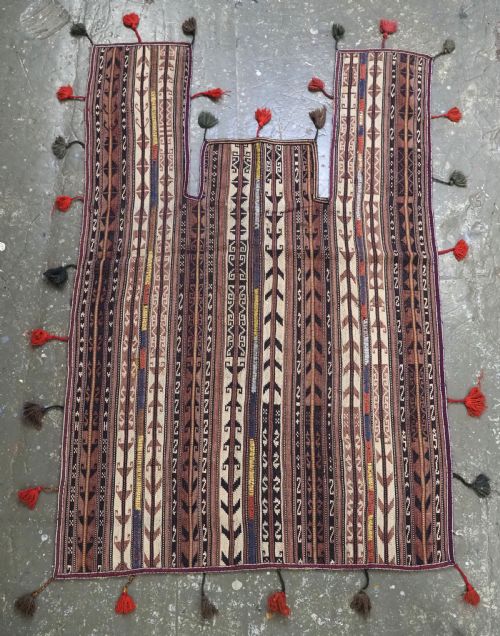
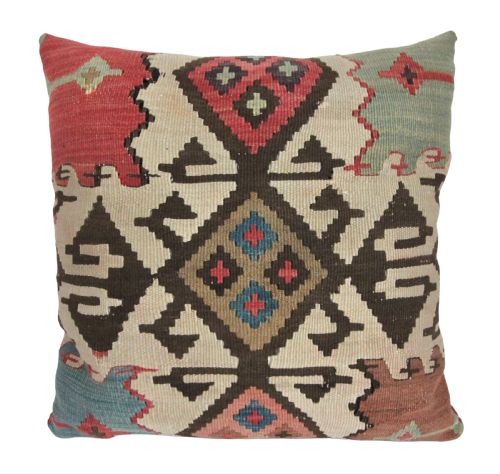
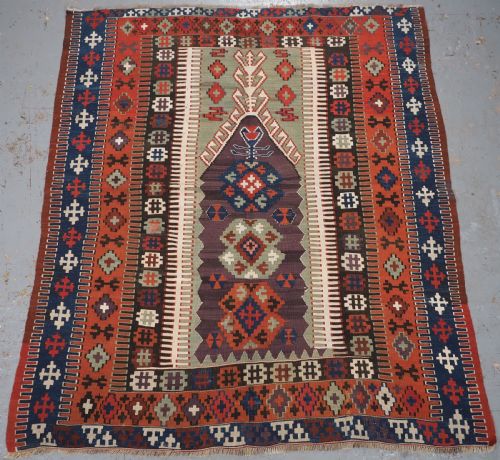
When you search for an ethnic flatweave rug, you are looking at tribal and traditional textiles that span Central Asian, Anatolian, Persian, and Balkan origins. These pieces include kilim rugs, saddle-bags, tent bands, horse blankets, and cushions dating from the mid-nineteenth century through the early twentieth century.
The most common formats on this page are kilim rugs and cushions made from older flatweave fragments, alongside regional panels and wall hangings. They originate from specific groups such as the Teke, Lakai Uzbek, and Afshar nomads, as well as production centres like Pirot and Sarkoy.
These textiles served practical roles in nomadic and village households, functioning as floor coverings, animal trappings, storage bags, and tent furnishings. Their survival reflects durable materials and functional craftsmanship adapted to daily nomadic existence.
What varies in quality
Quality rests in the crispness of the graphic design, the balance of the repeat medallion or banded layout, and the depth of the palette. Pieces with scarce layouts or precise tribal drawing stand apart from standard production work.
The handling of wool, the retention of original dimensions, and the integrity of the flat-woven structure define the upper tier of these textiles. Surviving textiles that maintain their original tribal character and strong structural cohesion represent the best of the range.
Listings feature wool and cotton across regions from Anatolia to Central Asia, spanning the nineteenth and early twentieth centuries.
The Ethnic Flatweave Rug Glossary
- Kilim
- A flat-woven carpet or rug made without a pile. It is produced by tightly interweaving warp and weft strands to form a flat surface.
- Torba
- A small Turkmen wall-hanging or storage bag. These pieces often feature precise tribal guls and detailed geometric borders.
- Chuval
- A large tent bag used by nomadic tribes for storage. They display complex repeat patterns characteristic of specific tribal groups.
- Yurt Band
- A long woven strip used to secure the framework of a nomadic tent. These bands exhibit continuous geometric motifs along their entire length.
- Warp
- The stationary vertical threads stretched on a loom. The weft yarns are passed through them to create the woven textile.
Ethnic Flatweave Rug: Frequently Asked Questions
What is an ethnic flatweave rug?
An ethnic flatweave rug is a non-pile textile created by nomadic and village weavers across Central Asia, Anatolia, Persia, and the Balkans. These pieces include kilims, horse blankets, and tent bands.
They were woven using wool and cotton for utility within traditional households and nomadic camps, prized today for their bold graphic designs.
How were flatweave rugs used?
Nomadic groups utilised flatweaves as floor coverings, animal trappings, storage bags, and structural tent bands. Their durable flat-woven structure suited life on the move.
Over time, many of these utilitarian textiles and larger panels transitioned into decorative wall hangings and interior furnishings.
How do I date an antique flatweave?
Dating relies on stylistic analysis, structural markers, and known regional designs from periods spanning the nineteenth and early twentieth centuries. Dyes and specific tribal motifs offer clues to origin and age.
Items from the listed selection date from the mid-nineteenth century up to around nineteen-twenty, showing shifts in palette and design over that era.