



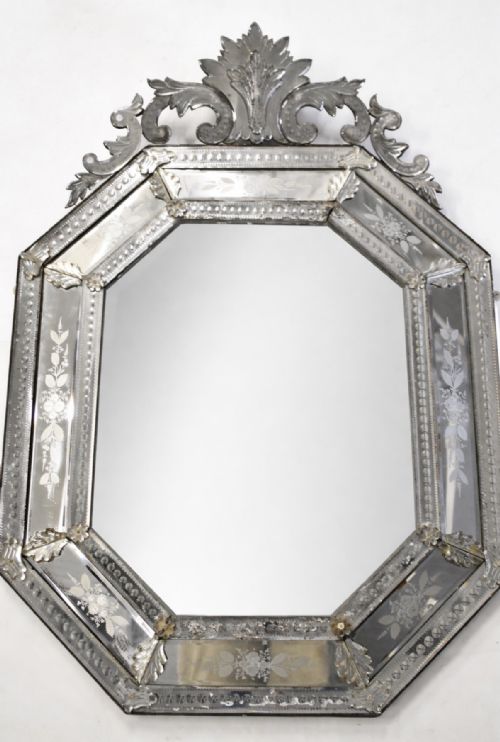
Etched Wall Mirror
An etched wall mirror brings depth and historic light to a room through delicate surface work on glass.
Etched Wall Mirror
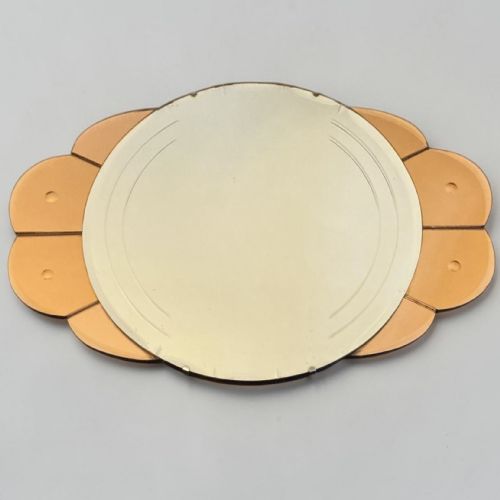
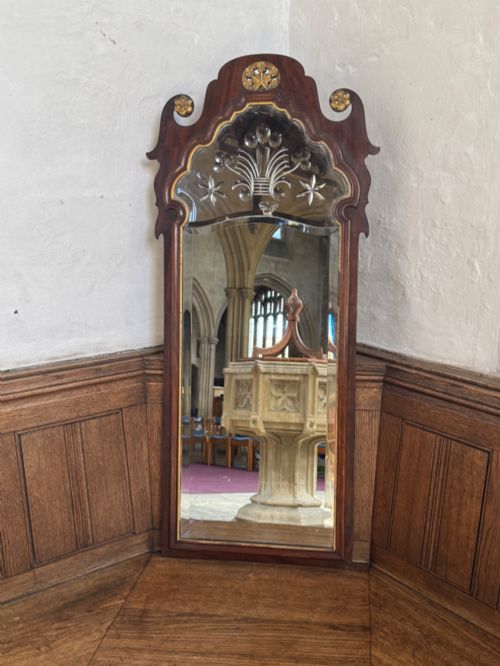
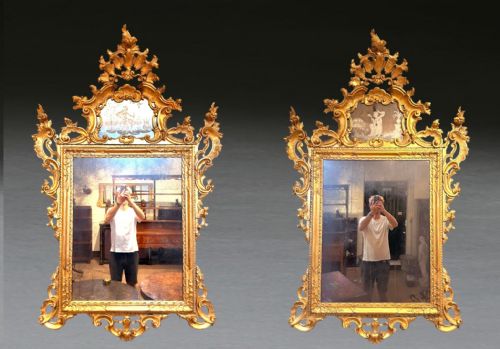
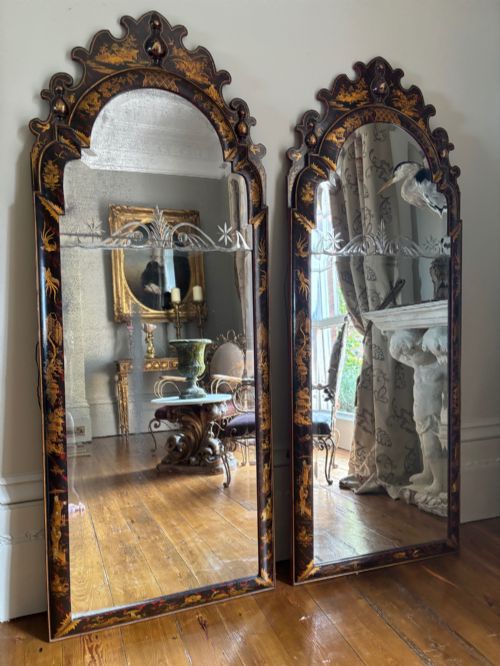
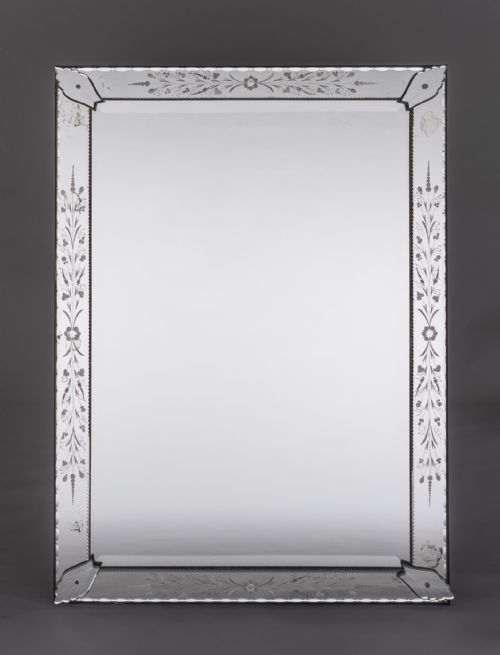
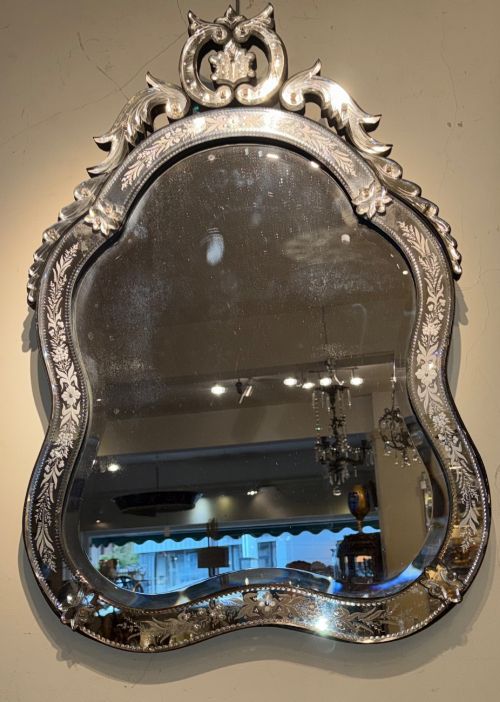
When you search for an etched wall mirror, you encounter a diverse array of pieces spanning from the eighteenth century through to the mid-twentieth century. The selection ranges from ornate Venetian glass plates to geometric Art Deco designs and substantial Victorian overmantels.
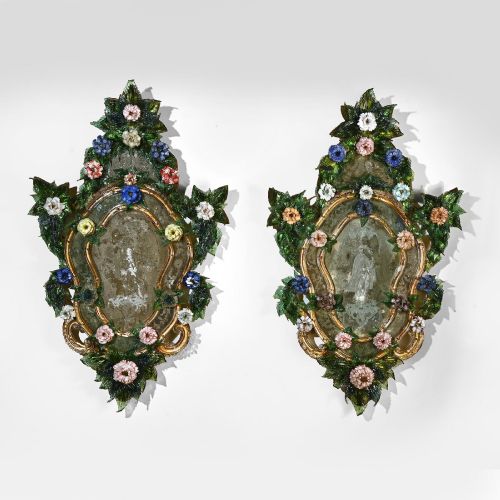
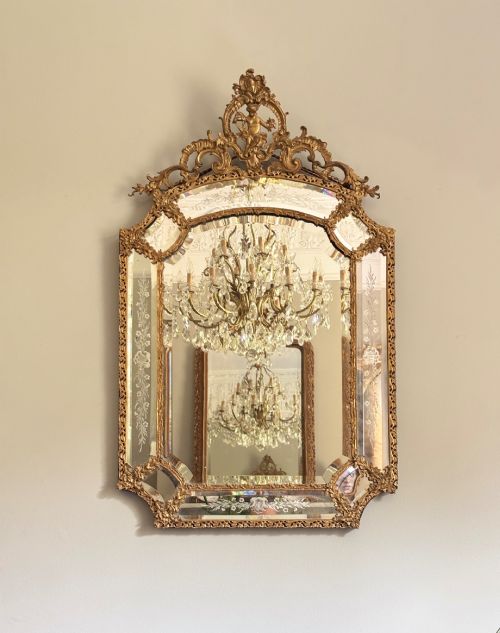
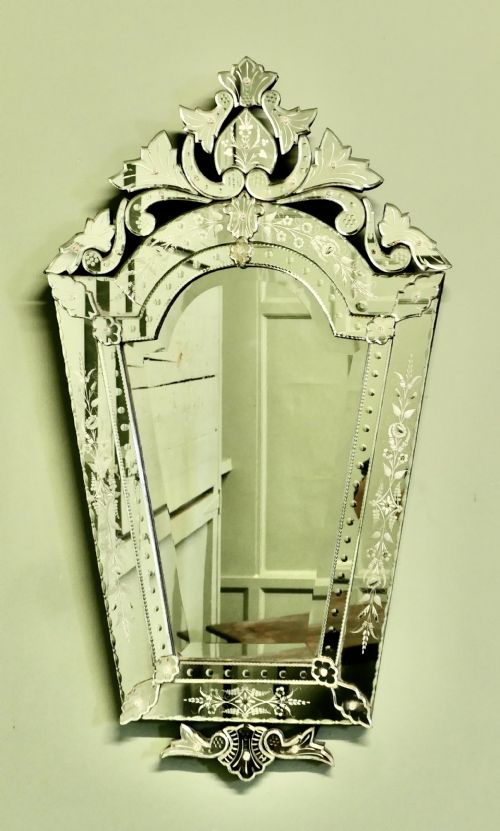
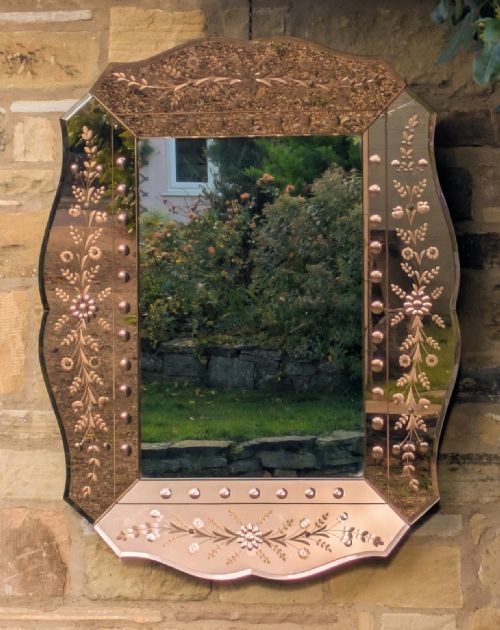
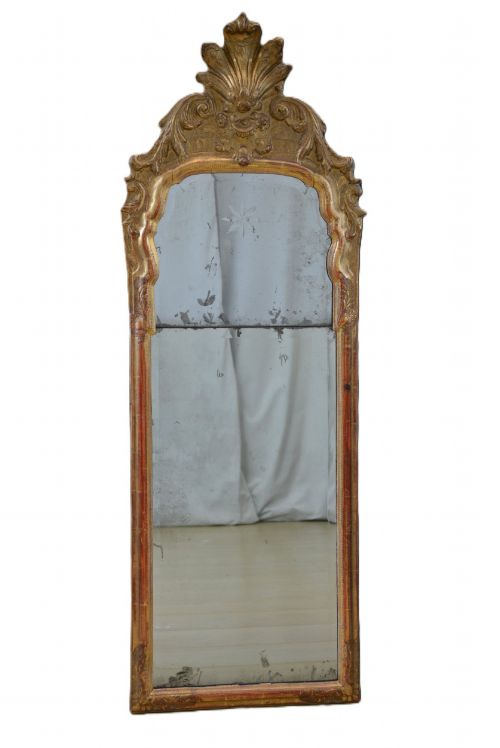
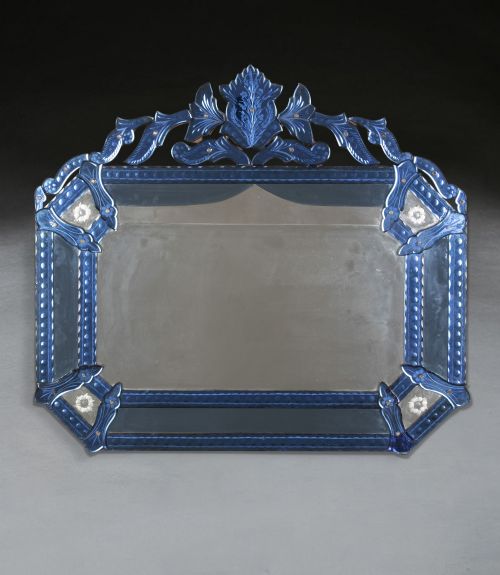
Italian Venetian examples dominate the aesthetic, featuring engraved plates, cushion frames, and coloured glass borders in peach, blue, or ruby red. Alongside these sit English pub mirrors, French Louis-style frames, and parcel gilt pier mirrors.
The forms vary from grand overmantels and large wall mirrors down to smaller girandoles and rectangular plates. These objects combine functional reflection with decorative engraving, floral motifs, and reverse-cut details.
How they were made
Makers utilised glass and mirror glass, often mounted onto wooden frames constructed from giltwood, painted wood, or gesso. Artisans shaped the plates through cutting, engraving, and acid etching to create intricate surface patterns.
Frames incorporated carved details, parcel gilding, and polychrome finishes, particularly in styles following Georgian, Victorian, and Rococo traditions. Silvered glass and mirrored plates provided the reflective ground for the surface ornamentation.
Listings feature pieces spanning from the 18th century to the 1950s, utilising glass, giltwood, gesso, and silvered glass.
What varies in quality
The standard of an etched wall mirror depends upon the crispness of the glass engraving and the depth of the hand-cut work on the plate. Finer pieces display precise floral, geometric, or figural details rather than shallow surface scratching.
Construction methods and materials dictate durability, seen in the solidity of the carved giltwood or gesso frames and the integrity of the original mirror plates. The harmony between the glass panel and its surrounding frame determines the overall visual balance.
John Belchier
The Etched Wall Mirror Glossary
- Etched glass
- Glass treated with acid or abrasive materials to create opaque decorative designs on the surface. This technique produces contrast against the clear or silvered background of the mirror.
- Gesso
- A plaster-like mixture applied to wood frames to create a smooth surface for gilding or painting. It allows carvers to achieve fine relief details.
- Overmantel mirror
- A large mirror designed to hang above a fireplace mantelpiece. These pieces often feature architectural proportions to anchor a reception room.
- Pier mirror
- A tall, narrow mirror traditionally hung on the wall space between two windows. They frequently incorporate console tables or sit above pier tables.
- Cushion mirror
- A mirror frame constructed with a convex profile that slopes outward or inward toward the central plate. This style adds sculptural depth to the wall.
- Girandole
- A wall mirror featuring attached candle sconces that reflect light into the room. The glass arms hold candles to amplify illumination.
Etched Wall Mirror: Frequently Asked Questions
Where should I hang an etched wall mirror?
These mirrors suit spaces where reflected light enhances architectural details, such as above a fireplace or across from a window.
Larger overmantel formats anchor living rooms, while smaller Venetian or Art Deco plates fit hallways and bedrooms.
How do I clean an antique mirror plate?
Use a soft, dry cloth to remove dust without disturbing the silvering or the aged edges of the glass.
Avoid commercial liquid cleaners that might seep behind the plate and damage the original backing or engraving.
What is the difference between an etched and an engraved mirror?
Etching uses acid or chemical agents to bite patterns into the surface of the glass, creating a frosted texture.
Engraving involves mechanical cutting with wheels or diamond points to produce deeper, sharper lines with clear facets.
Can I date a mirror by its frame?
Frame materials and construction styles provide clear indicators of period, from eighteenth-century giltwood to 1930s geometric woods.
Comparing the moulding techniques and backing boards helps confirm whether the frame and mirror plate remain original to each other.