
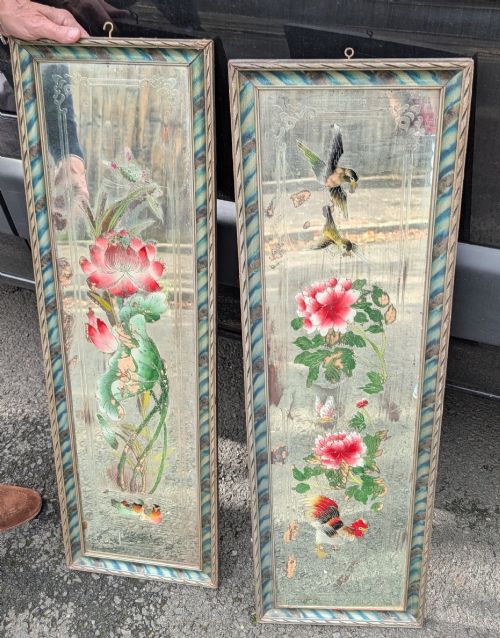
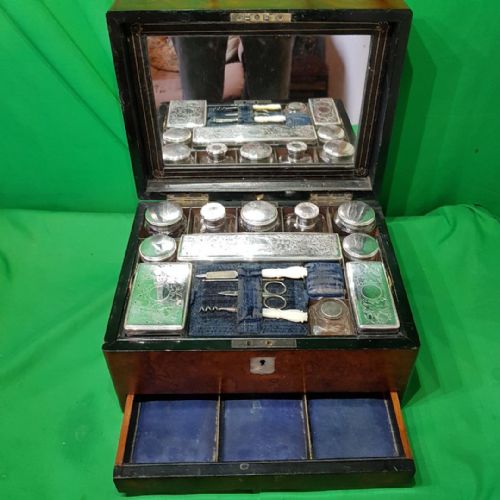
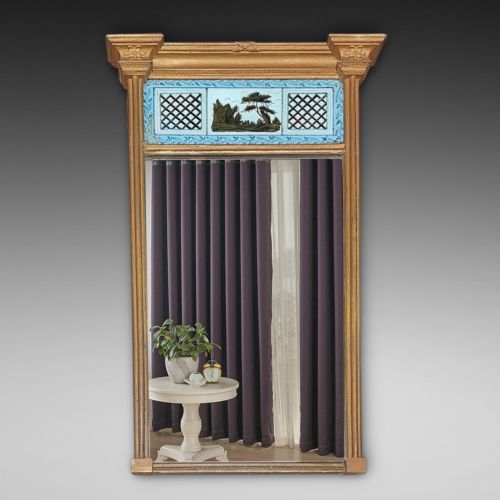
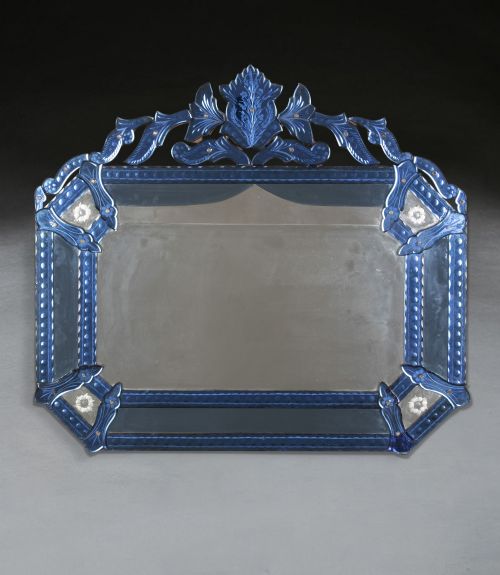


Blue Glass Mirror
A blue glass mirror brings depth and colour to a room, catching the light in ways clear glass simply cannot manage.
Blue Glass Mirror
A blue glass mirror combines tinted glass with reflective panels, often appearing as margin plates, borders or complete frames. The pieces found here span the eighteenth, nineteenth and twentieth centuries, taking forms from wall mirrors to dressing items and clock surrounds.
Venetian and Art Deco examples dominate the selection, showing how makers across different eras utilised cobalt and turquoise tones. Wall-hanging formats are most common, ranging from small oval plates to large architectural pier mirrors.
Materials and construction methods
These pieces rely on combinations of mirror glass, wood, giltwood and cast metal alongside coloured glass elements. Artisans secured the tinted glass panels using wooden backings, metal clips or silvered frames.
Techniques such as verre églomisé, silver deposit work and marginal bevelling appear frequently. The blue glass itself was produced by adding metallic oxides to the molten batch before blowing or rolling.
Listings feature items incorporating glass, wood, mirror glass, silver, giltwood, cobalt glass, chrome and paint across multiple centuries.
Assessing quality and craftsmanship
Quality rests upon the depth of the colour, the clarity of the silvering and the precision of the glass cutting. Superior examples exhibit hand-beveled edges and secure original frames without modern replacements.
The integration of the blue glass sections with the primary mirror plate demonstrates the maker's skill. Finer pieces maintain tight joints in the giltwood or wooden frameworks and retain their original backing materials.
Smiths·Jean Gille
The Blue Glass Mirror Glossary
- Verre églomisé
- A cold decoration technique where a design is painted and gilded on the reverse side of glass. This method creates a reflective, metallic finish often seen on Regency frames.
- Cobalt glass
- A deep blue glass coloured with cobalt oxide. It provides the striking tone found in nineteenth-century marginal plates and trays.
- Margin-edged mirror
- A mirror featuring smaller border plates surrounding a central plate. These border sections frequently utilise tinted or blue glass.
- Pier mirror
- A tall mirror designed to hang on the wall between windows. They often incorporate giltwood and coloured glass panels.
Blue Glass Mirror: Frequently Asked Questions
How do I clean a blue glass mirror?
Use a soft, dry microfibre cloth to remove dust from the glass and frame surfaces. Avoid harsh chemical sprays that might damage the silvering or the painted reverse decorations.
Take care around older wooden or giltwood frames, keeping moisture away from the joints. Gentle dusting preserves the original patination of the materials.
Where should I hang a blue glass mirror?
Position the piece where it can reflect natural light without facing direct, harsh sunlight all day. Hallways and living rooms benefit from the rich colour tones these mirrors introduce.
Ensure the wall fixings match the weight of the frame, especially for heavier nineteenth-century giltwood models. Professional hanging hardware provides necessary security.
Are Art Deco and Venetian styles very different?
Art Deco blue glass mirrors lean toward geometric lines, copper accents and fan shapes typical of the 1920s and 1930s. Venetian examples rely on layered plates, floral engravings and ornate glasswork.
Both styles utilise blue glass prominently, but the Italian pieces often draw on eighteenth-century revival motifs while Art Deco focuses on modernism.
How can I tell the period of the glass?
Examine the edges of the mirror plate for hand-bevelling and minor irregularities in the glass thickness. Older nineteenth-century plates often display subtle waviness absent in later machine-rolled examples.
Check the reverse for original wooden backings, old screws and paper labels. These physical clues help date the construction accurately.