





Etched Glass Overmantel Mirror
An etched glass overmantel mirror brings unmistakable character and reflected light to a room, drawing the eye instantly with its worked surface.
Etched Glass Overmantel Mirror
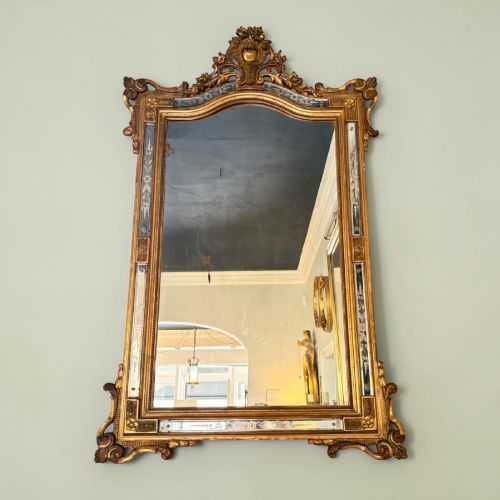
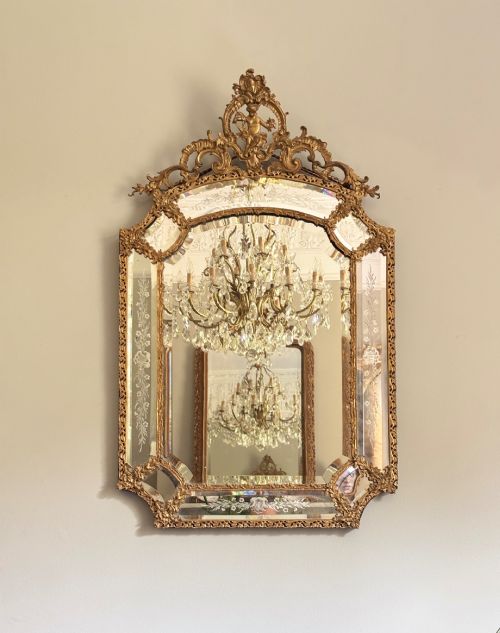
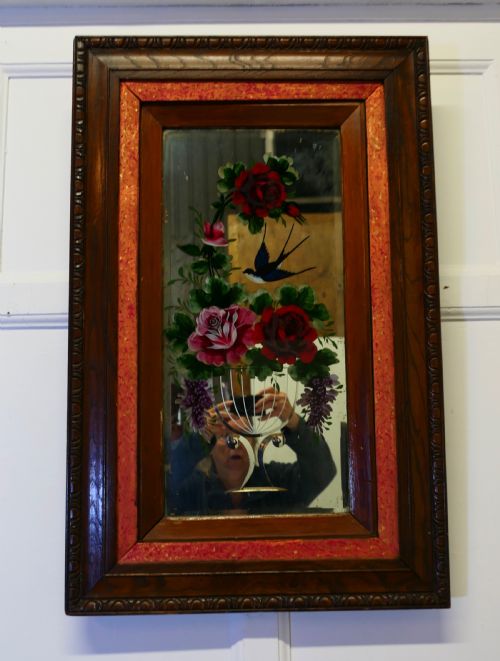
An etched glass overmantel mirror is a substantial looking-glass designed to hang above a fireplace or upon a principal wall, drawing together decorative framing and worked glass surfaces. The examples seen here range across the nineteenth and twentieth centuries, spanning periods from Victorian and Edwardian to Art Deco.
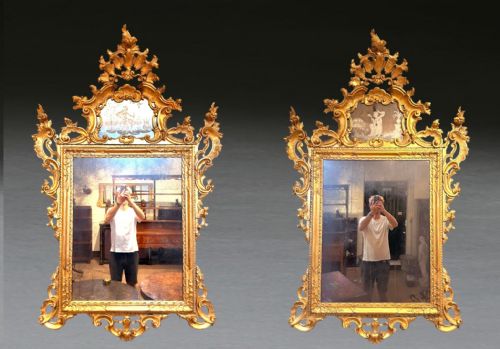
The forms vary from large arched top gilt frames to diamond wall mirrors and cushion mirrors. Buyers encounter styles including Rococo Revival, Italian Rococo, Baroque Revival, and Louis XVI Revival alongside geometric Art Deco designs.
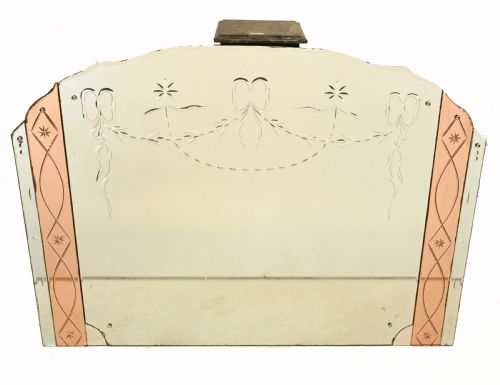
Origins span English, French, and Italian workshops, employing materials such as wood, gesso, giltwood, and gilt bronze. Peach glass and silvered glass appear alongside standard mirror glass to create distinct visual textures.
How they were made
Makers constructed the structural frames from carved wood, applying layers of gesso before gilding or painting the surface. Gilt bronze and carved wood provided the robust skeletons necessary to support heavy glass plates.
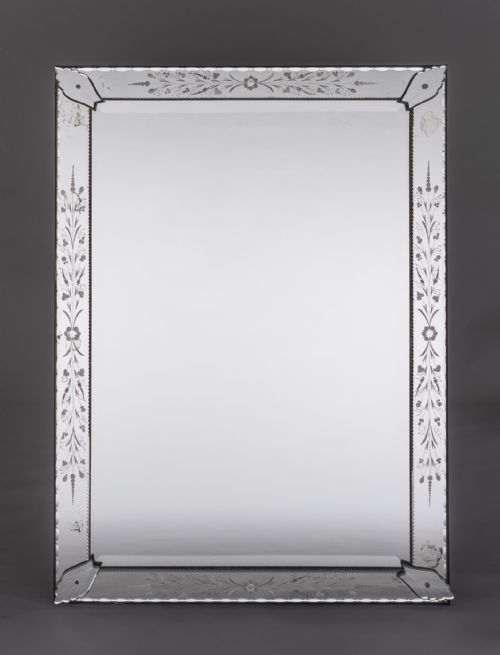
Mirror plates were silvered and treated with reverse painting or surface etching to create decorative motifs like roses. Specialised glass such as peach coloured glass was utilised to achieve particular tones.
Listings feature items spanning the nineteenth and twentieth centuries, including Victorian, Edwardian, and Art Deco periods.
What varies in quality
The quality of an etched glass overmantel mirror rests upon the depth and crispness of the carving on the wooden or gesso frame. Superior pieces display finely rendered details on giltwood and gilt bronze mounts.
The clarity and execution of the etching upon the glass plate distinguish finer examples from standard production. Original painted decorations and specialised glass plates like peach glass add distinction to the piece.
The Etched Glass Overmantel Mirror Glossary
- Overmantel mirror
- A large mirror specifically proportioned to hang on the wall directly above a mantelpiece. These pieces often feature horizontal emphasis to suit the domestic interior.
- Etched glass
- Glass decorated by applying an acidic substance or abrasive technique to cut designs into the surface. This method creates frosted or textured patterns against clear reflections.
- Giltwood
- Timber that has been coated in a thin layer of gold leaf or gilt powder. It provides a bright, reflective finish popular in revivalist styles.
- Gesso
- A plaster mixture applied to carved wooden frames as a smooth base for gilding or painting. It allows craftsmen to model sharp decorative details.
- Silvered glass
- Glass coated with a reflective metallic substance on the rear surface to create a mirror. Variations in this backing contribute to the antique appearance.
- Reverse painted
- A technique where pigment is applied to the back of the glass so the design is viewed through the front. This protects the colours and creates a smooth glossy finish.
Etched Glass Overmantel Mirror: Frequently Asked Questions
How do I hang a heavy overmantel mirror safely?
These substantial pieces require secure fixings into structural wall studs or masonry rather than plasterboard alone. Professional installation ensures the weight of the carved wood and glass is properly distributed.
Position the mirror at a height that reflects the room rather than the ceiling. This allows the etched details to catch the natural light effectively.
What is the difference between Victorian and Art Deco mirrors?
Victorian mirrors lean heavily into historic revival styles such as Rococo and Baroque, featuring ornate carved frames and elaborate gesso work. They celebrate traditional craftsmanship and opulent ornamentation.
Art Deco mirrors favour clean geometric shapes, symmetrical lines, and stylised motifs. They frequently incorporate tinted materials like peach glass to achieve a modern aesthetic.
How should I clean an antique etched glass mirror?
Wipe the glass gently with a soft microfibre cloth slightly dampened with distilled water. Avoid harsh chemical cleaners that might damage the silvering or the surrounding frame.
Keep moisture away from the wooden frame and gilt surfaces during cleaning. Old gesso and gilding are sensitive to excessive liquid.
Are Venetian glass mirrors different from English styles?
Venetian mirrors often showcase intricate glasswork and specialised plate construction originating from Italian traditions. They place emphasis on the glass elements themselves rather than heavy wooden framing.
English examples more commonly feature carved wood and gesso frames decorated with gilding. They reflect the domestic interior tastes of British periods from Victorian times onward.