


Etched Glass Glasses
When you search for etched glass glasses, you enter a world of Victorian tablewares and Edwardian drinking vessels marked by fine surface decoration.
Etched Glass Glasses
When you search for etched glass glasses, you encounter drinking vessels and tableware primarily from the Victorian and Edwardian eras, alongside pieces reaching back into Georgian periods and forward into the twentieth century. The selection ranges from singular celery vases and cordials to matched sets of champagne glasses, water tumblers, and hock glasses.
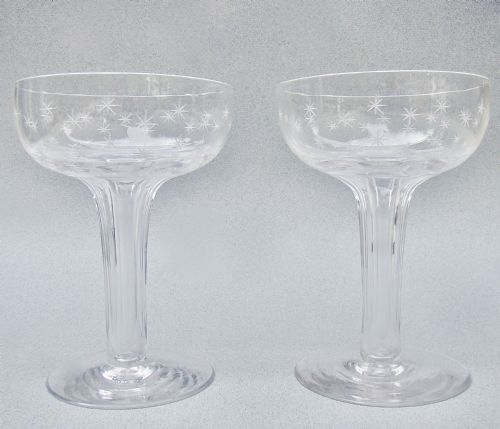
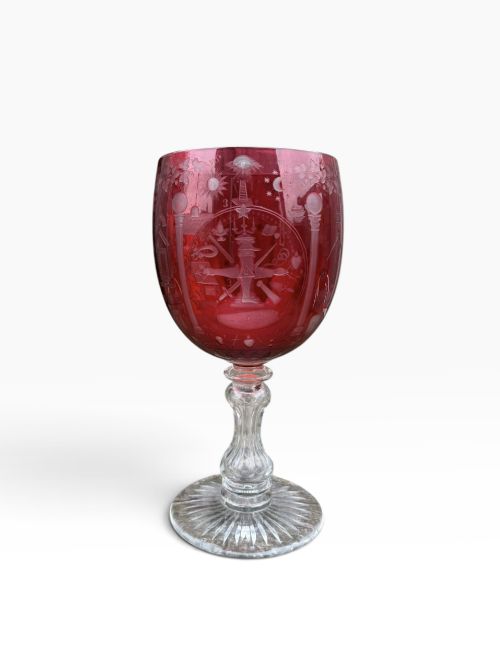
The most common forms on this page include hollow stem champagne glasses, port and sherry glasses, and water glasses carrying botanical or geometric motifs. Many examples stem from English and Continental traditions, utilising clear glass, cranberry glass, and ruby red glass.
How they were made
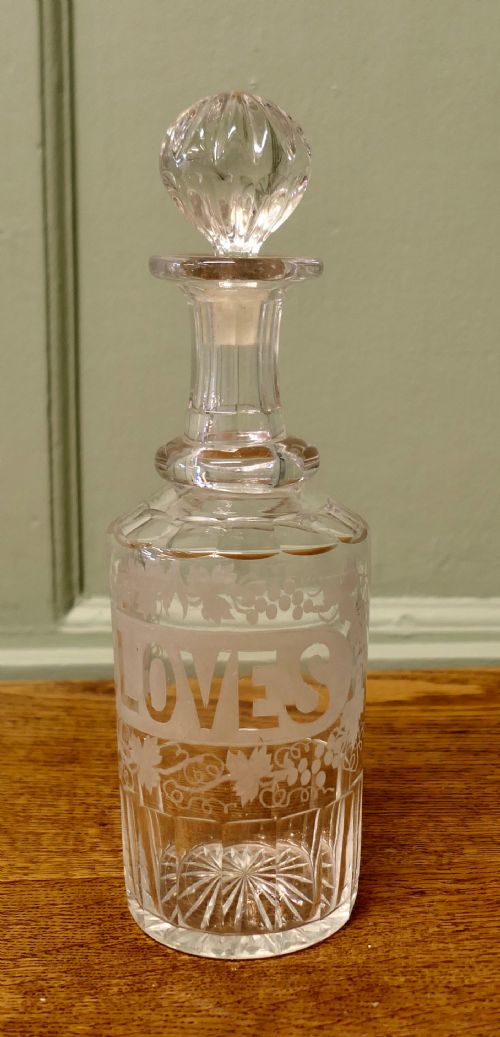
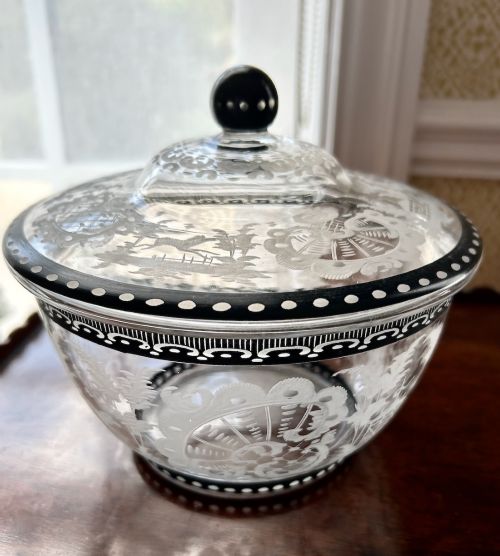
Makers shaped these drinking vessels using clear glass, cut glass, and cameo glass, often combining free-blowing or mould-blowing techniques with surface ornamentation. Artisans applied acid-etching or engraving to create delicate patterns such as ferns, stars, morning glories, and Greek keys.
The integration of acid-etching allowed workshops to produce repeating botanical details and crests with high precision across sets of wine and champagne glasses. Further enhancement involved cutting and frosting techniques on the bowl and stem.
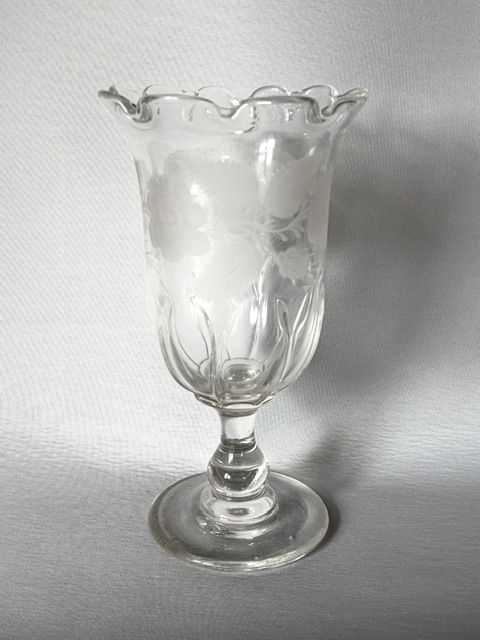
Some Victorian tables required specialised vessels just to display celery upright in state.
What varies in quality
The distinction between standard domestic table glass and finer display drinking vessels rests on the crispness of the etch and the weight of the metal. Superior pieces display deep, well-defined motifs like stars or ferns that retain sharp edges without blurring into the surrounding glass surface.
Consistency across a matched set elevates the standing of drinking glasses, particularly when stem thickness, bowl capacity, and engraving alignment match uniformly. The quality of the underlying glass, whether clear crystal or coloured cranberry and ruby hues, also dictates the visual depth of the finished piece.
Emile Gallé·Daum Frères·Venini·Maison Baguès·Asprey and Co. Ltd
The Etched Glass Glasses Glossary
- Acid-Etched Glass
- Glass decorated by applying acid to unprotected areas to eat into the surface. This technique produces fine, matte-textured designs.
- Celery Vase
- A tall decorative vessel used on Victorian dining tables to hold stalks of celery. They frequently feature deep etched patterns.
- Hollow Stem
- A drinking glass feature where the tubular stem remains open to the bowl above. This form appears often in Victorian champagne glasses.
- Hock Glass
- A traditional tall-stemmed wine glass historically used for German white wines. They frequently carry coloured bowls with detailed etching.
- Rummer
- A capacious heavy-bowled drinking glass common in the Georgian and Victorian periods. They often sit on a short faceted stem and wide foot base.
Etched Glass Glasses: Frequently Asked Questions
How do I clean antique etched glasses?
Wash these delicate drinking vessels by hand in warm water using a mild detergent. Avoid sudden temperature changes to protect the old glass.
Dry them immediately with a soft lint-free cloth to maintain the clarity of the engraved and etched surface patterns.
Can I use these glasses for daily dining?
Many Victorian and Edwardian drinking vessels remain robust enough for occasional use at the table. Hand washing protects the fine rims and etched decorations from modern dishwasher detergents.
Take care with thin stems on champagne and wine glasses when setting them down on hard surfaces.
How do I date etched glass glasses?
Examine the form, the weight of the metal, and the style of the etching to determine the period. Victorian examples often display ferns and stars, while Edwardian sets favour geometric and classical motifs.
Pontil marks on the base and the clarity of the glass also offer clues regarding the manufacturing era.
Were these glasses made as matched sets?
Period manufacturing produced both individual specialty vessels like celery vases and large matched sets of six or twelve wine and water glasses. Sets varied from simple tavern glass to fine crystal.
Finding a complete surviving set of Edwardian or Victorian drinking glasses remains a notable feature for collectors.