
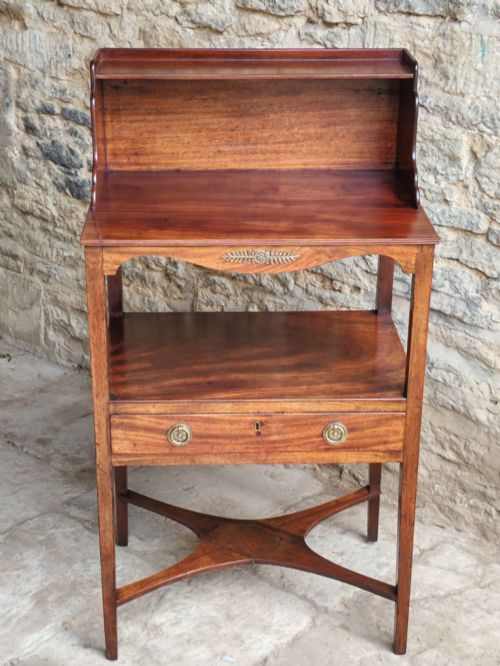
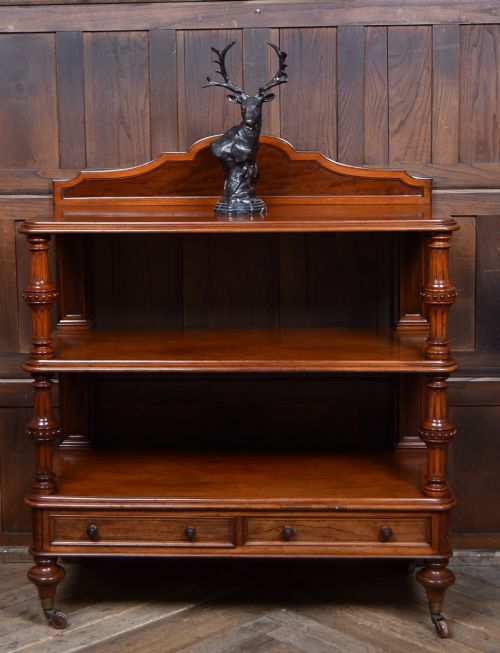
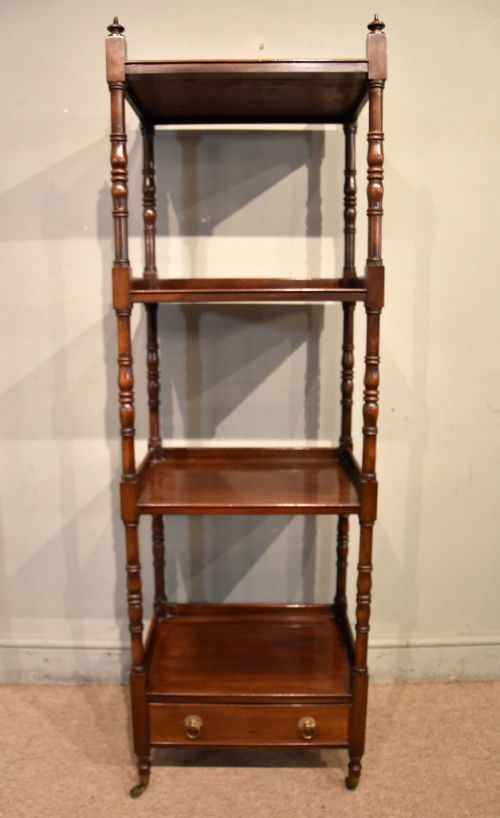
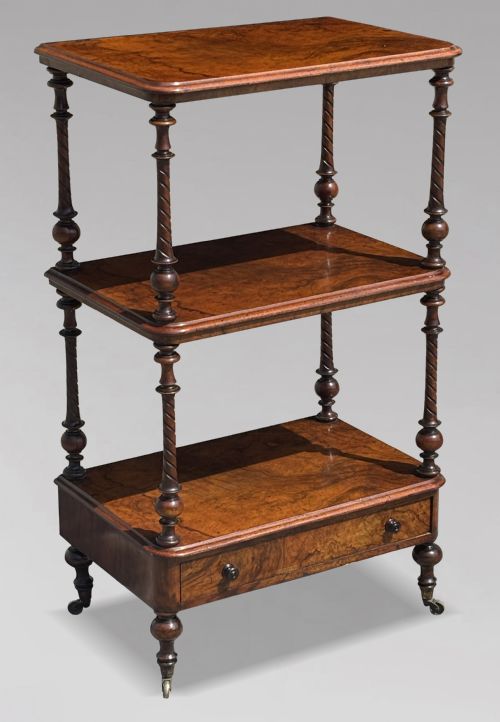
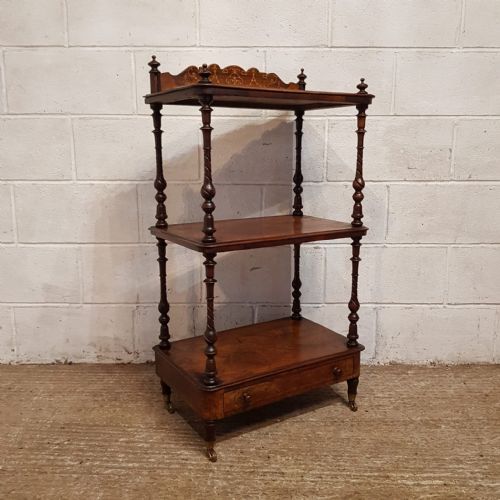
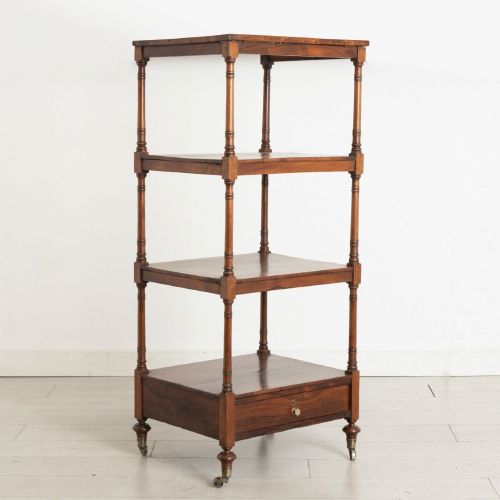


Etagere with Drawer
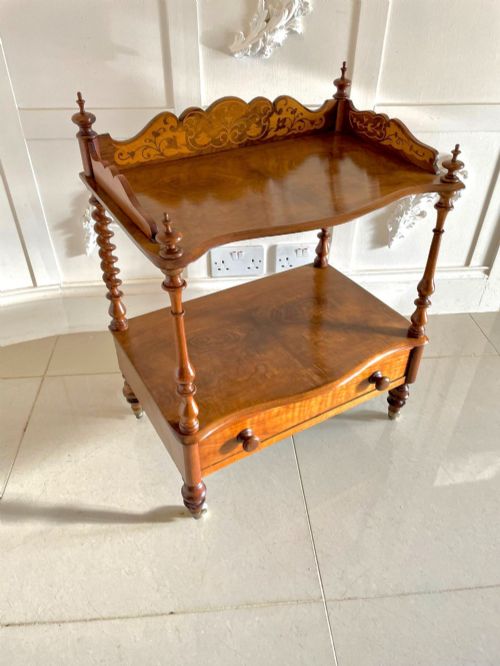
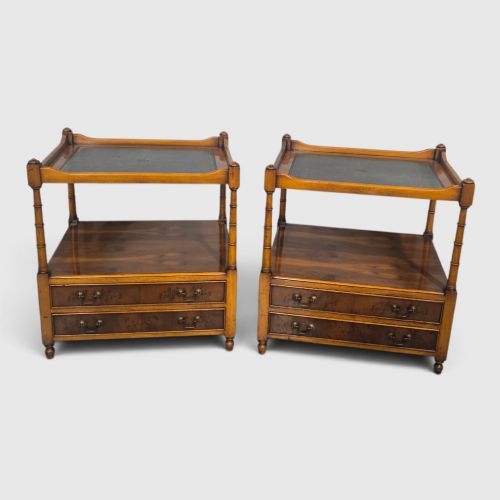
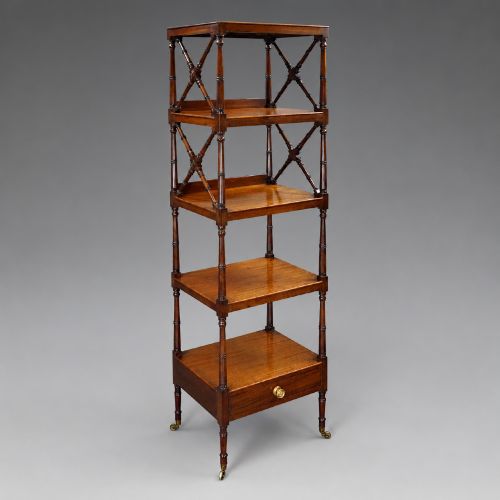
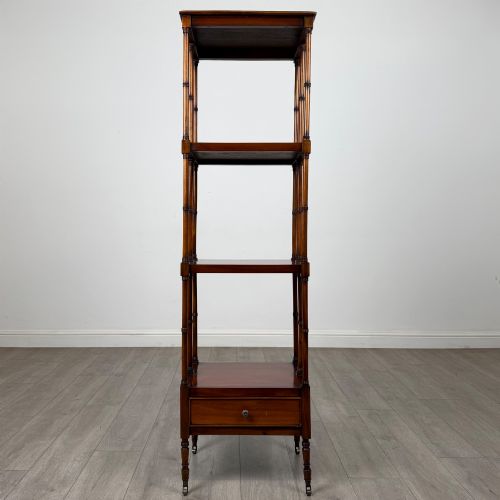
An etagere with drawer combines open tier display with enclosed storage, offering a practical surface for display and small items.
Etagere with Drawer
An etagere with drawer is primarily found in Victorian, Georgian, and Regency periods, serving as a multi-tiered display stand for books, ornaments, and precious objects.
The version most commonly met on this page is a mahogany or rosewood multi-tier stand featuring a single drawer set into the base or lower section.
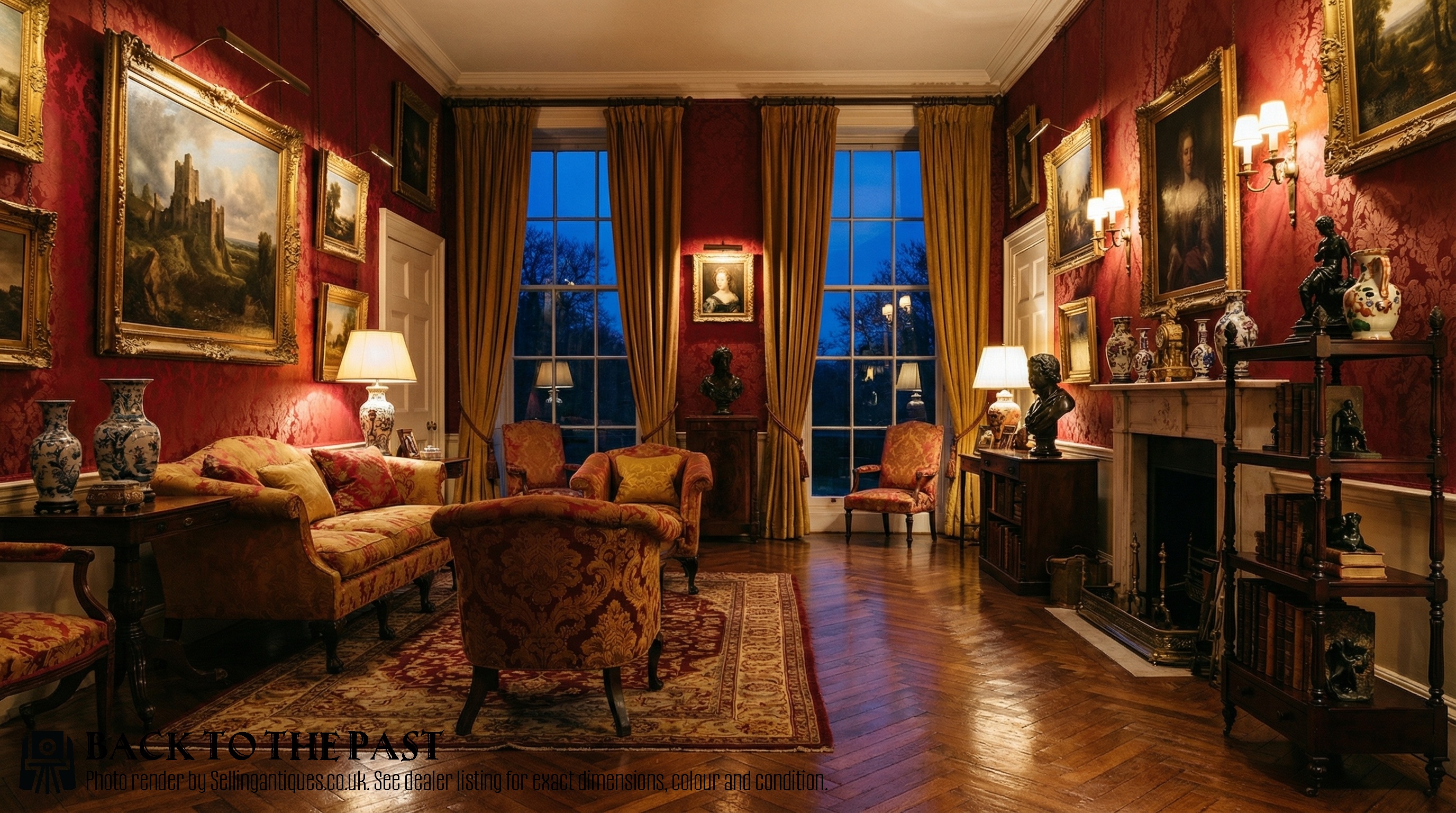
Makers designed these freestanding shelving units to utilise vertical space in parlours and drawing rooms while keeping smaller essentials tucked away.
Distinctions in quality
The standard of timber selection and veneer matching defines the upper tier of pieces, where dense grain figures and rich polishing set the visual tone.
Joinery detail in the drawer construction and the turning of the upright supports separate standard workshop output from finer cabinet work.
Listings span periods from Georgian and Regency up to Edwardian times, showing materials including mahogany, rosewood, walnut, brass, and glass.
Samson and Son London
The Etagere with Drawer Glossary
- Etagere
- A French term for a piece of furniture consisting of a set of open shelves for displaying small objects. These stands became popular in English interiors during the Regency and Victorian periods.
- Whatnot
- A nineteenth-century multi-shelved piece of furniture used for storage or display of ornaments. The terms whatnot and etagere frequently overlap in historical listings.
- Tier
- An individual level of shelving placed one above another in open furniture. Multiple tiers allow for the graduated display of books and decorative pieces.
- Veneer
- A thin layer of fine wood applied to a base timber to provide a decorative surface. Walnut and mahogany veneers appear commonly on nineteenth-century examples.
- Castor
- A small wheel mounted on a swivel attached to the base of furniture. Many freestanding display pieces incorporate brass castors for ease of movement.
Etagere with Drawer: Frequently Asked Questions
What is an etagere with drawer used for?
These pieces served traditionally as open display stands for holding books, ceramics, and decorative ornaments in principal reception rooms.
The integrated drawer provided discreet storage for small writing materials, letters, or personal items out of sight.
How do I tell a Victorian from a Georgian etagere?
Georgian and Regency examples tend to feature cleaner architectural lines, heavier timbers, and restrained turning on the upright supports.
Victorian pieces often introduce richer figured veneers, mirror backs, and more elaborate fretwork or turned column details.
Are these pieces stable enough for daily use?
Freestanding multi-tier shelving units are designed to rest firmly on four legs, frequently aided by original brass castors.
Heavier items belong on the lower tiers to maintain balance across the open graduated shelving structure.
What woods were commonly used?
Mahogany and rosewood dominate the surviving examples from both the Georgian and Victorian eras.
Walnut and painted finishes also appear across nineteenth-century workshop production.