



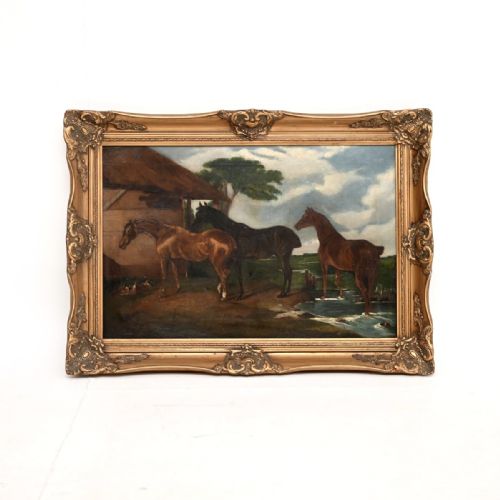
Equine Portrait Painting
An equine portrait painting captures the distinct character and conformation of a prized horse, bringing centuries of sporting heritage directly into your interior.
Equine Portrait Painting
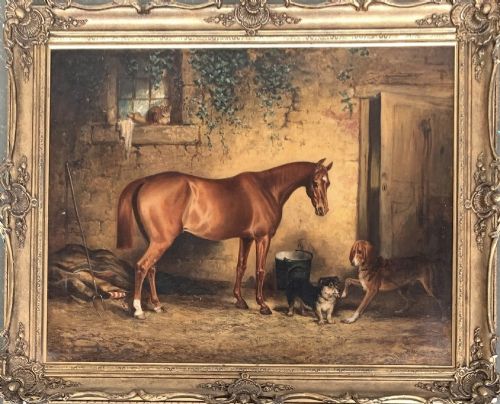
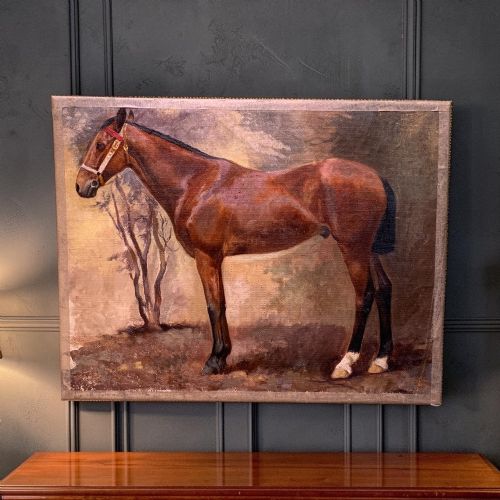
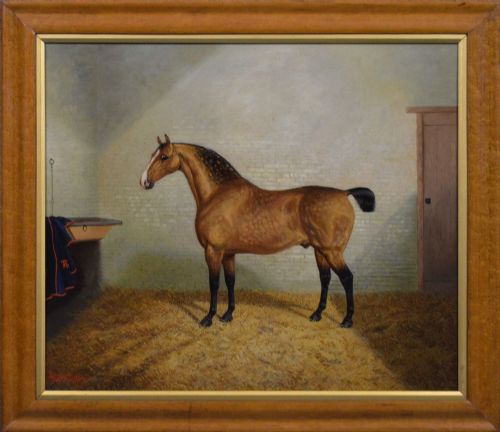
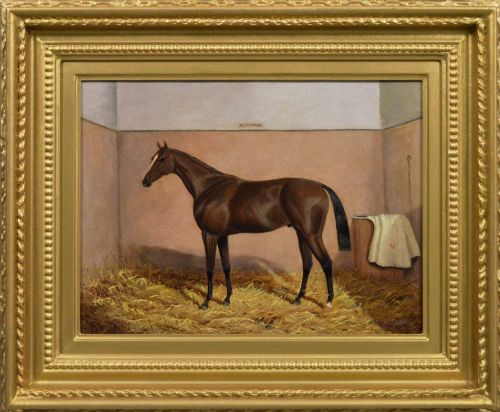
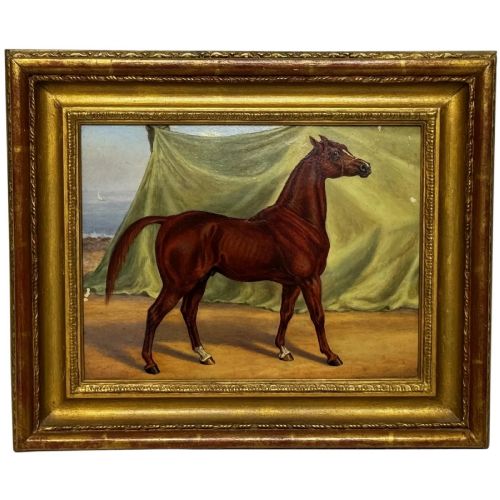
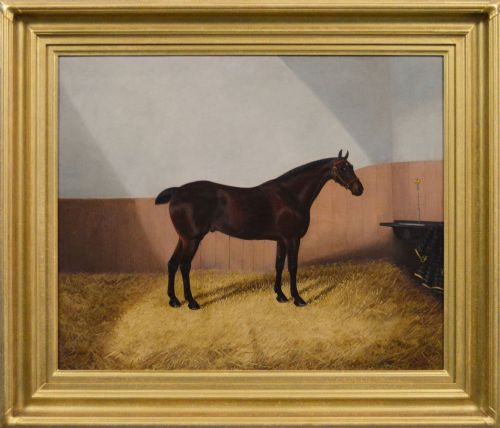
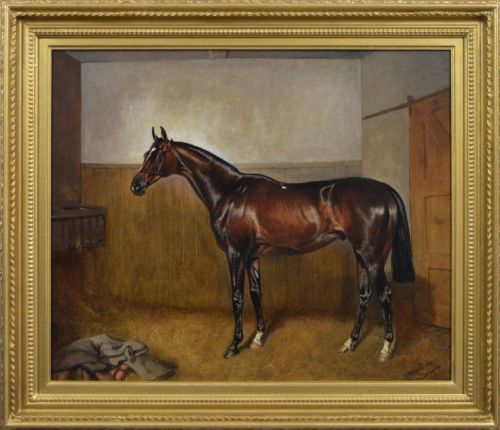
An equine portrait painting depicts individual horses, ranging from celebrated racehorses and champion hunters to stable familiars, rendered with careful attention to their specific anatomy and markings.
The versions most commonly met across these listings originate in the nineteenth and early twentieth centuries, spanning Victorian and Edwardian periods.
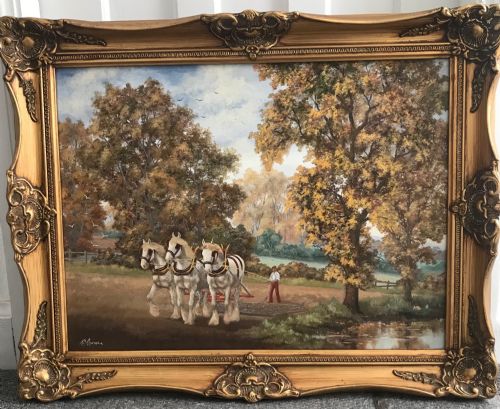
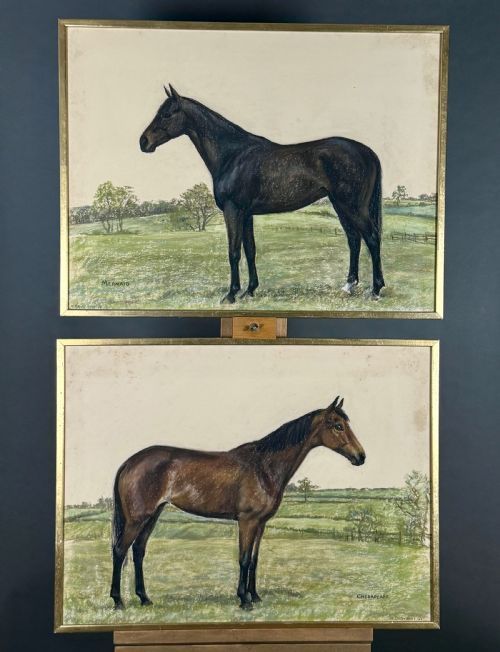
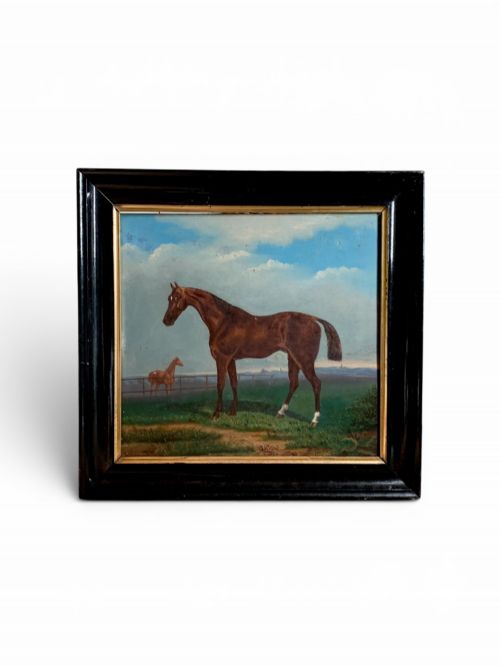
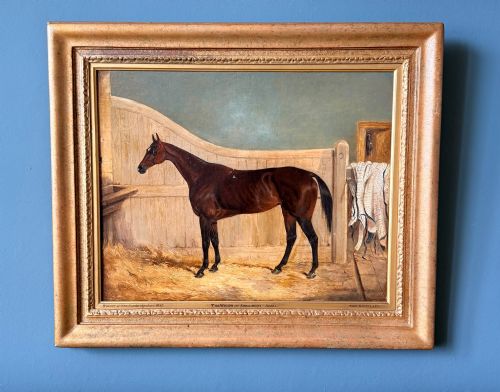
Compositions alternate between intimate stable interiors, rural landscapes, and racing scenes, often featuring named subjects with distinct provenances.
Materials and Construction
The works rely primarily upon oil paint applied to canvas, wood panels, or pine panels, capturing the sheen of a coat and the texture of surrounding straw or grass.
Framing frequently incorporates giltwood and gold leaf, complementing the traditional palette of the pastoral and sporting scenes.
Alternative mediums such as pastel on paper appear alongside watercolours, offering softer tonal transitions for specific animal studies.
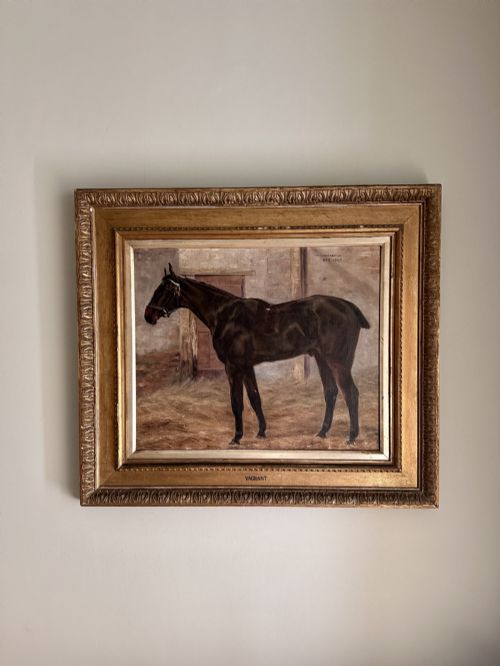
Several equine portraits record the names of distinct stable residents, ensuring that nineteenth-century racehorses like Flying Fox and Vagrant live on in paint.
Distinctions in Execution
Anatomical accuracy and the deft handling of muscle structure and light across the animal's coat separate superior examples from more formulaic compositions.
The sophistication of the background - whether a detailed stable interior or a sweeping landscape with grooms and handlers - contributes significantly to the visual depth of the artwork.
Henry Barraud·Albert Clark·Fred Fitzpatrick·John Alfred Wheeler·Thomas Walker Bretland·John Ferneley Senior·George E Sharpe·Benjamin Cam Norton·Clifton Tomson·Alfred Moginie Bryant·Abraham Cooper·Charles Bilger Spalding·Walter Herbert Wheeler·James Barenger·William Williams
The Equine Portrait Painting Glossary
- Canvas
- A heavy woven fabric stretched across a wooden frame to serve as a foundation for oil paint. It provides a flexible yet durable surface favoured by artists for centuries.
- Giltwood
- Wood carved and covered with a thin layer of gold leaf or metallic gilt. It adds a traditional decorative border to frame oil paintings.
- Stable Interior
- A genre of equine painting focusing on horses within enclosed shelter, often accompanied by feed buckets, tack, or stable hands. This setting highlights the daily management of the animals.
- Sporting Art
- A category of fine art dedicated to equestrian subjects, racing, hunting, and rural pursuits. These works record the history of breeding and field sports.
Equine Portrait Painting: Frequently Asked Questions
What is an equine portrait painting?
An equine portrait painting is a dedicated artwork focusing on an individual horse, often capturing specific animals like racehorses, hunters, or prize-winning stallions.
These pieces record the physical conformation and lineage of notable animals, serving as both fine art and historical documents of breeding.
How were horses depicted in the 19th century?
Nineteenth-century paintings typically showed horses either standing in detailed stable interiors or posed within expansive rural landscapes alongside jockeys or grooms.
Artists aimed for anatomical precision to satisfy owners who wished to commemorate their prized animals and sporting triumphs.
Where should I hang a horse painting?
These traditional works suit libraries, studies, or living rooms, particularly where period furnishings or neutral walls provide a complementary backdrop.
Ensure the artwork is placed away from direct sunlight to protect the oil paint and canvas from fading over time.
How do I identify the period of the artwork?
Dating relies upon stylistic clues within the clothing of any human figures, the construction of the canvas stretcher, and signatures or historical labels on the reverse.
Many pieces also reference specific historical races, owners, or estates that help anchor the date of creation.