


Equestrian Military Oil Painting
An equestrian military oil painting brings the drama of campaign and cavalry onto canvas through skilled brushwork.
Equestrian Military Oil Painting
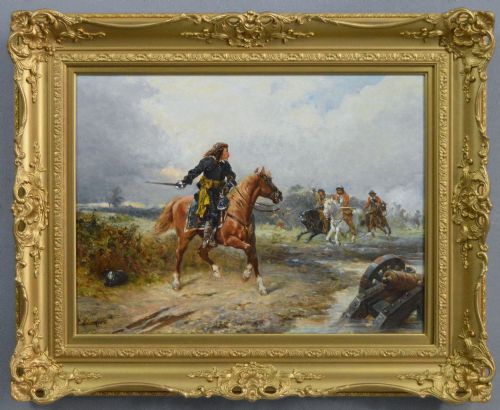
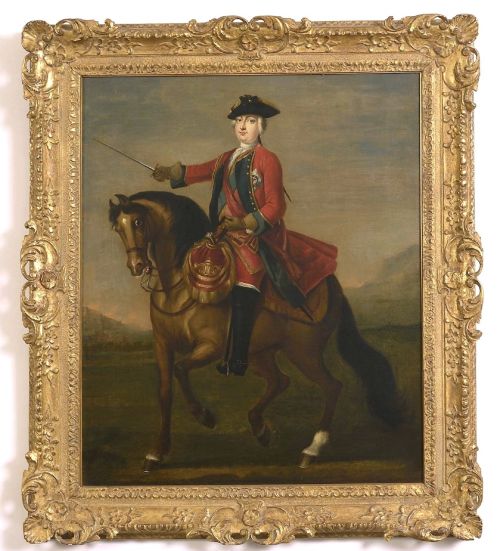
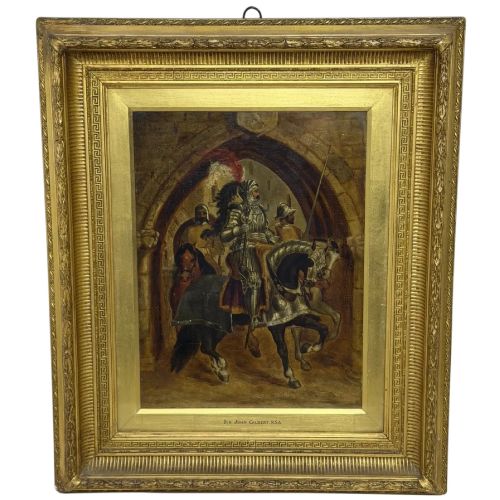
An equestrian military oil painting depicts mounted soldiers, cavalry charges, and portraits of officers alongside their mounts. These works span the seventeenth, eighteenth, and nineteenth centuries, capturing the pageantry and chaos of historic conflicts.
Buyers encounter compositions ranging from intimate studies of named chargers and their riders to sweeping scenes of seventeenth-century cavalry skirmishes and eighteenth-century battlefields. English, Dutch, and Italian schools feature prominently among the surviving works.
Subjects frequently merge portraiture with military history, recording specific commanders such as the Duke of Cumberland or Prince Eugene of Savoy. The focus rests squarely on the synergy between horse, rider, and the theatre of war.
Materials and Technique
Artists painted primarily with oil paint upon stretched canvas, utilising the medium's capacity for rich colour blending and fine detail. This technique allowed painters to render the sheen of horse coats and the glint of metal armour with striking realism.
Finished works were typically housed within wooden frames, frequently decorated with gilt or carved giltwood to complement the grandeur of the canvas. The preparation of the canvas and the layering of oil pigments ensured long-term durability for these large and complex compositions.
The listings encompass works from the seventeenth century through the mid-twentieth century, employing oil on canvas within wood and giltwood frames.
Distinctions in Quality
Superior examples demonstrate a rigorous understanding of equine anatomy and military accoutrements, rendering horses in motion and uniforms with absolute conviction. Weaker works often rely on rigid, formulaic postures for both mount and rider.
The sophistication of the brushwork and the handling of light define the upper tier of these paintings. Master painters orchestrate complex skirmish scenes with dynamic energy, whereas lesser hands produce static compositions lacking atmospheric depth.
John Wootton·Thomas Hudson·Sir John Gilbert·Jean Sobieski·Gilbert Scott Wright·Albert Ferdinand Le Dru·Philips Wouwerman·William Edward Millner·Harry Ashby
The Equestrian Military Oil Painting Glossary
- Equestrian
- Pertaining to horse riding or the representation of horsemen in art. This genre demands precise observation of equine muscle structure and movement.
- Giltwood
- Wood carved and covered with a thin layer of gold leaf or gold paint. Such frames add considerable visual weight and period authenticity to antique oil paintings.
- Cavalry Skirmish
- A minor battle between mounted troops, frequently chosen as a dynamic subject by seventeenth and eighteenth-century artists. These scenes emphasise movement, smoke, and combat chaos.
- Old Master
- An eminent European artist working before about eighteen hundred. These painters set enduring standards for composition and technical execution in oil.
Equestrian Military Oil Painting: Frequently Asked Questions
How do I date an equestrian military oil painting?
Dating relies on stylistic clues, costume details, and the type of canvas or stretcher used. Uniform styles and horse tack changed significantly between the seventeenth and nineteenth centuries.
Examination of the pigment application and frame construction also helps narrow the period of creation. Signatures and inscriptions, when present, provide direct links to the artist or subject.
Where should I hang a large military painting?
These works require substantial wall space and benefit from rooms with controlled lighting to protect the oil pigments. Placing them away from direct sunlight preserves the richness of the canvas.
Pairing them with period furnishings or traditional wood-panelled interiors enhances their historical character. Secure wall fixings are essential given the weight of large giltwood frames.
What is the difference between a portrait and a skirmish scene?
Portraits focus on a specific officer and their charger, often recording named individuals and historical campaigns. They serve as commemorations of rank and personal achievement.
Skirmish scenes concentrate on the action of battle itself, featuring multiple mounted figures in motion. These compositions prioritise narrative drama and landscape atmosphere over individual likeness.
How do I care for an antique oil painting?
Maintenance involves keeping the canvas in a stable environment with moderate humidity and temperature levels. Sudden environmental changes cause the canvas and paint layers to expand and contract at different rates.
Dusting should be done gently with a soft, dry brush by someone experienced in handling fine art. Professional conservators should address any deeper cleaning or structural repairs.