
Equestrian and Sporting Artwork
Equestrian and sporting artwork captures horses, hounds and field pursuits in oil, watercolour and print.
Equestrian and Sporting Artwork
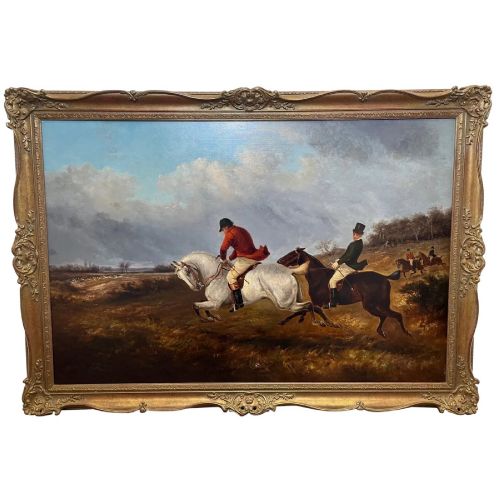
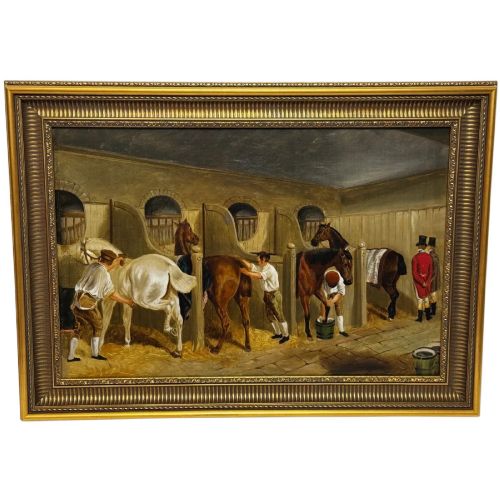
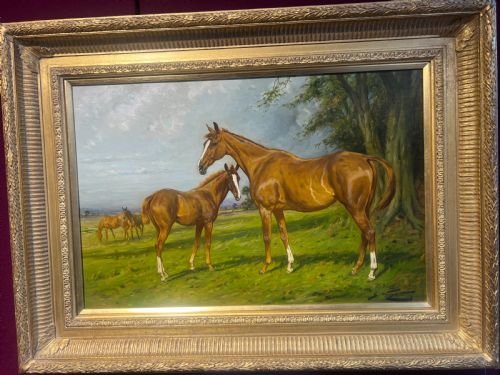
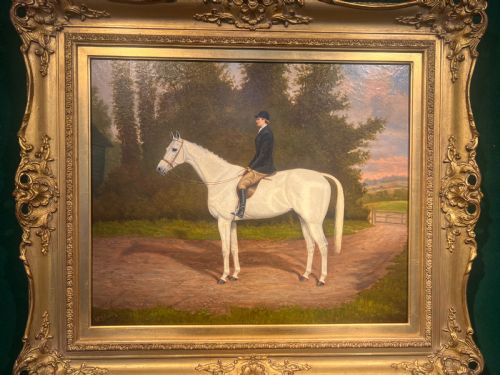
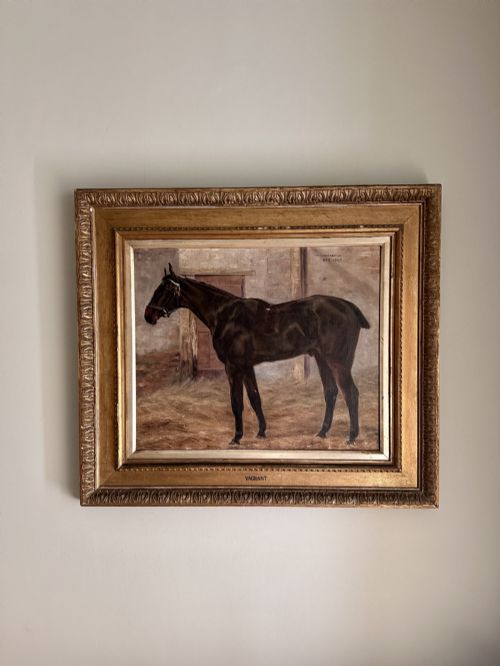
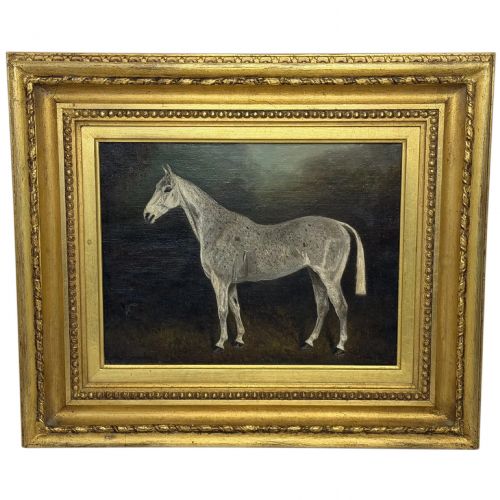
Equestrian and sporting artwork centres on horses, hounds, racing, hunting and coaching scenes produced across the nineteenth and twentieth centuries. Buyers encounter detailed oil paintings on canvas, delicate watercolours on paper, lithographs and hand-coloured engravings depicting specific thoroughbreds, stables and dramatic field moments.
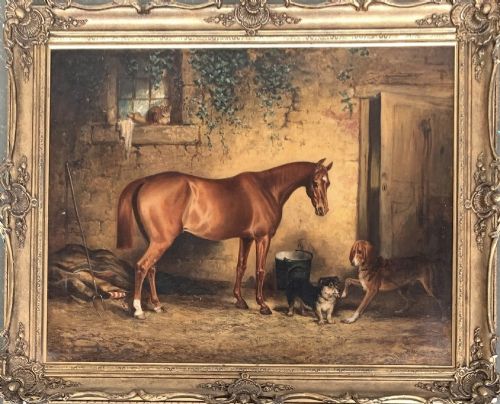
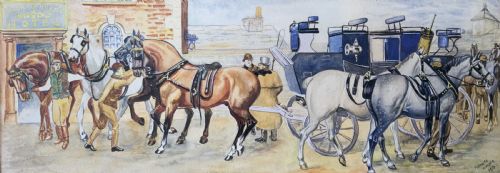
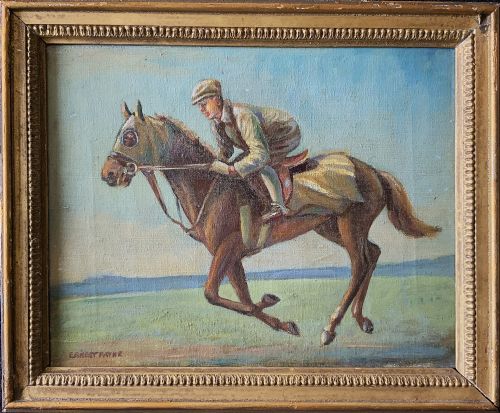
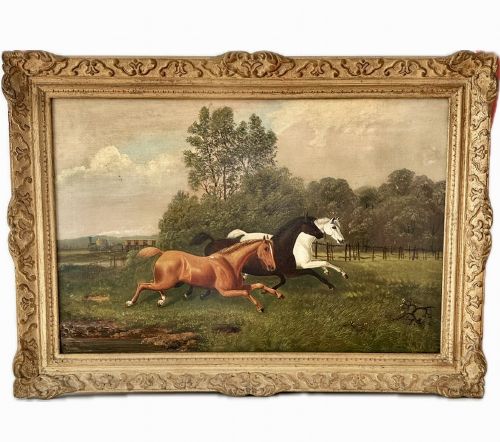
The selection ranges from Victorian oils of bay hunters in pastoral landscapes to Edwardian coaching scenes and mid-century racing pastels. Works frequently document named animals, famous racehorses and historic hunt meets recorded by specialist animaliers and portraitists of the period.
Pieces span intimate framed sketches to large-scale canvas portraits set in heavy giltwood frames. Traditional Victorian sporting art sits alongside later expressionist interpretations and crisp topographical prints from the early twentieth century.
Materials and methods
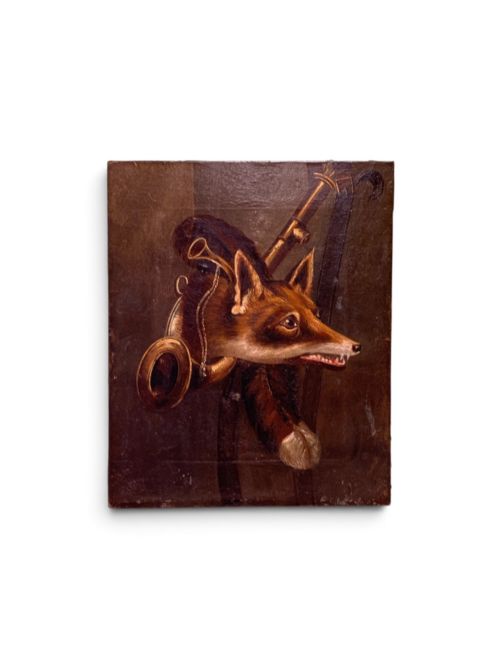
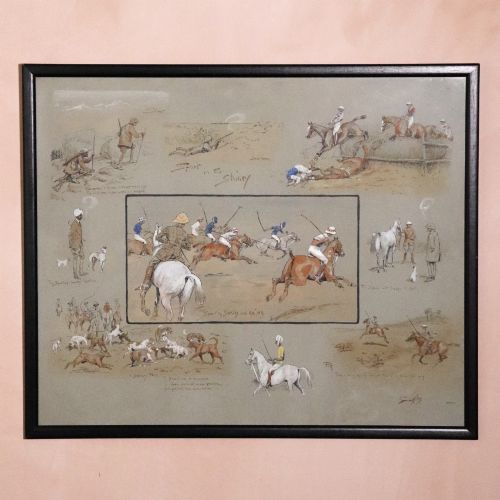
Painters utilised oil paint on canvas or wooden panels to build rich coats and musculature in equine subjects, often employing fine sable brushes for hair and harness details. Watercolours and gouache on paper capture lighter, more fluid action in polo matches and racing paddocks.
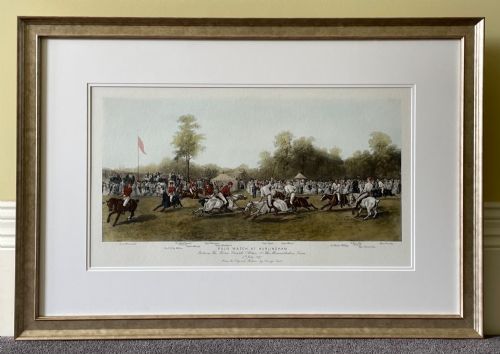
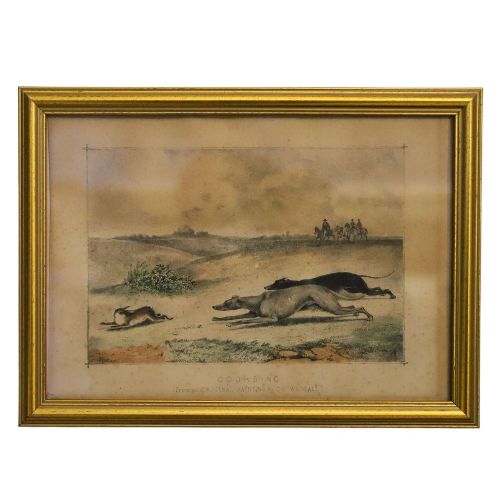
Printmakers applied lithographic and engraving techniques, sometimes adding hand-colouring to monochrome impressions of hunting scenes. Finished works were traditionally housed in wooden frames, frequently accented with giltwood mouldings.
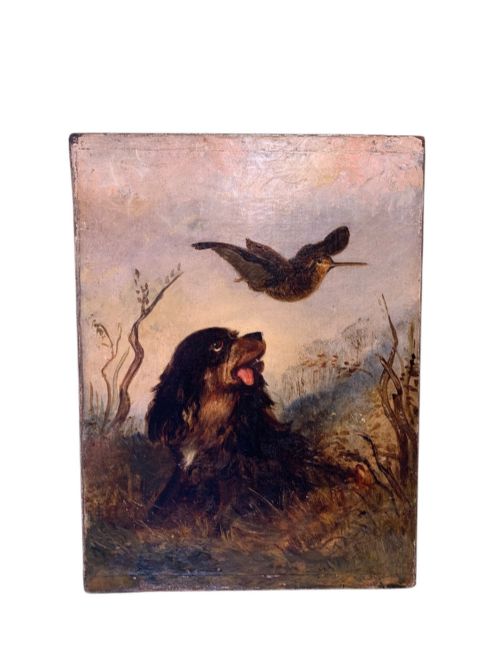
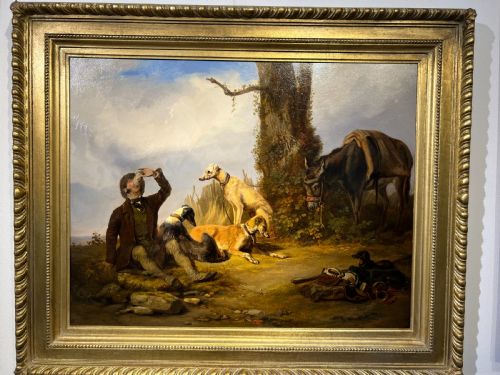
Several dogs manage to steal the focus from the horses entirely, lurking faithfully in corners of stables and hunt fields.
Variations in quality
Quality rests primarily on the anatomical accuracy of the horse, the fluidity of movement and the artist's command of light across hair and leather. Stronger works convey tension in a gallop or stillness in a stable with convincing depth and proportion.
The sophistication of the background landscape and the precision of the jockey or rider's posture further separate standard decorative pictures from accomplished artistic records of the period.
Thomas Smythe·Henry Barraud·Fred Fitzpatrick·C. H. Weigall·Ernest Payne·Philip Rideout·John Frederick Herring Snr·John Ferneley Senior·Alfred Munnings·John Rattenbury Skeaping·Cecil Charles Windsor Aldin·Albert Clark·Basil Nightingale
The Equestrian and Sporting Artwork Glossary
- Equine portrait
- A painting or drawing focused primarily on the likeness and conformation of a specific horse, often commissioned by its owner.
- Lithograph
- A print produced by drawing on limestone or metal with a greasy medium, allowing multiple impressions on paper.
- Giltwood
- Wood carved and coated with gold leaf or metallic powder, commonly used for traditional picture framing.
- Gouache
- An opaque water-based paint that dries to a matte finish, used by artists for solid areas of colour and sharp detail.
- Aquatint
- A printmaking technique that produces tonal areas resembling watercolour washes through the use of etched resin grounds.
Equestrian and Sporting Artwork: Frequently Asked Questions
What subjects appear most often?
Paintings and prints feature racehorses, hunters in stables, fox hunting meets, polo matches and coaching scenes.
Artists frequently recorded named thoroughbreds alongside their jockeys, trainers or royal owners on country estates.
How do I date these pieces?
Dates rely on artist biography records, clothing styles of riders, framing materials and inscribed dates on the canvas or paper.
Victorian works tend towards dark, rich varnishes and heavy gilt frames, while twentieth-century pieces adopt lighter paper supports and simpler wood surrounds.
Where should I hang them?
These works suit libraries, studies and dining rooms traditionally associated with country pursuits and equestrian collections.
Strong lighting helps illuminate dark oil varnishes on nineteenth-century canvases, while watercolours and prints benefit from placement away from direct sunlight.
Are prints considered original artwork?
Period lithographs, engravings and etchings produced by named artists or after established painters are collected as original printmaking art.
Hand-coloured engravings and signed artist prints hold distinct status separate from modern mass-produced reproductions.