


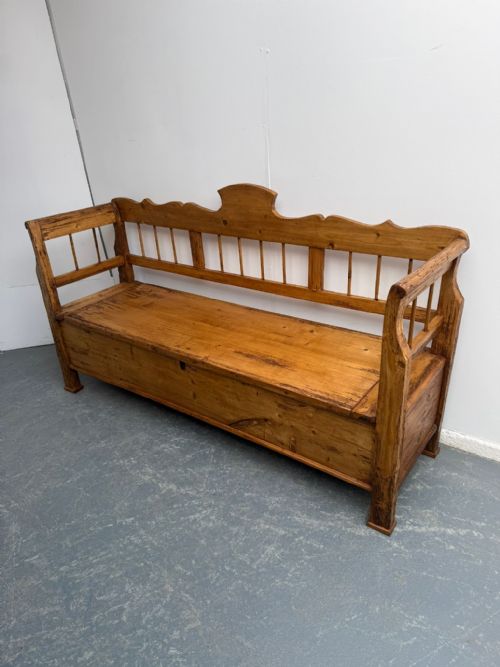

Entryway Storage Bench Seat
An entryway storage bench seat combines practical boot storage with hallway seating, offering the robust utility of oak settles and mahogany cabinets.
Entryway Storage Bench Seat
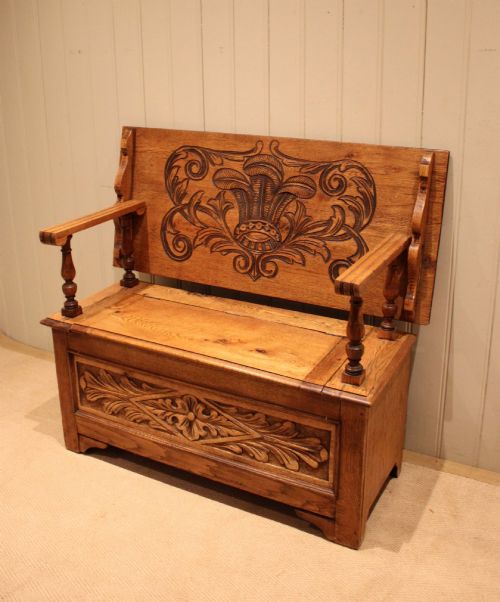
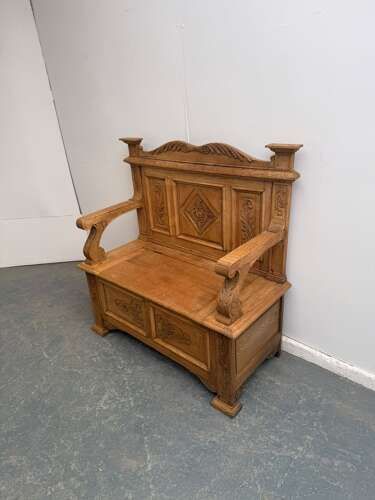
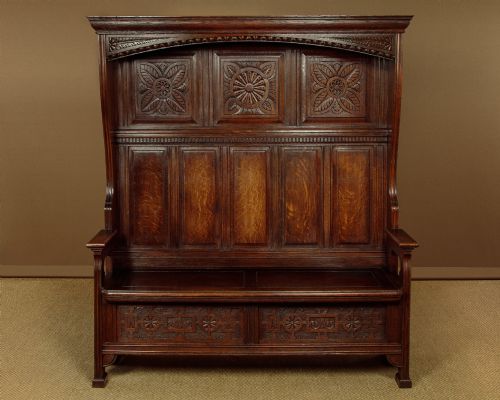
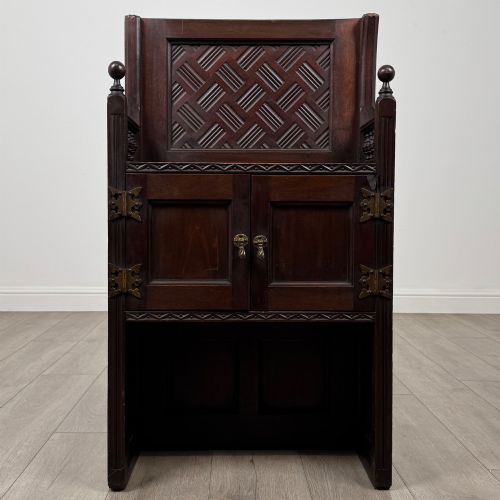
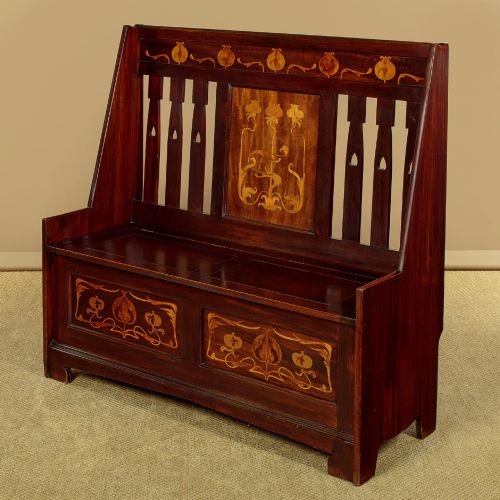
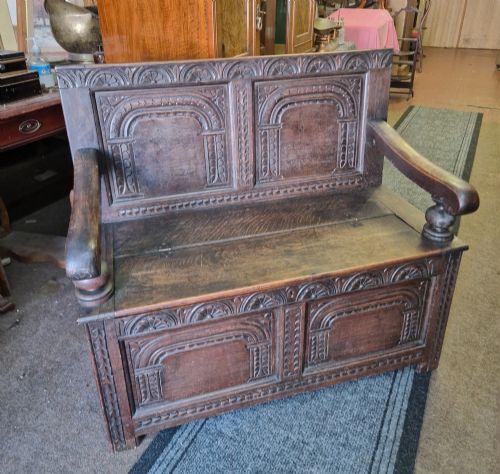
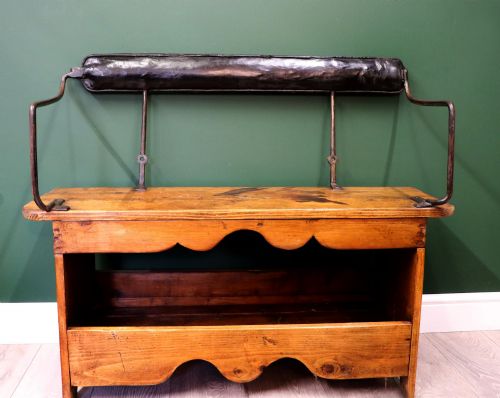
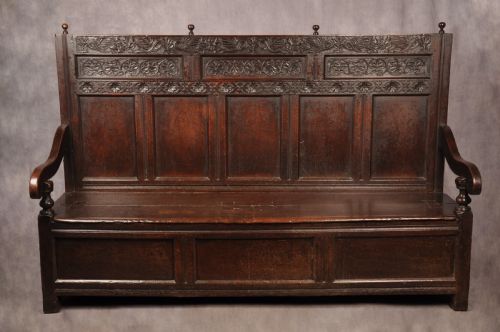
When you search for an entryway storage bench seat, you encounter an array of historical seating forms designed primarily for halls and passages. These pieces span centuries of domestic life, taking the form of settles, monks benches, and hall seats equipped with hidden compartments.
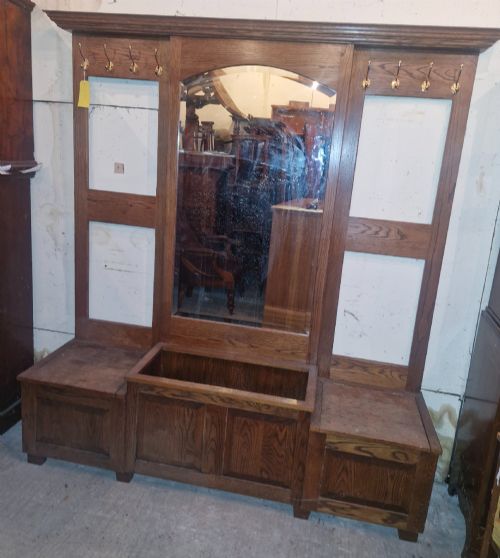
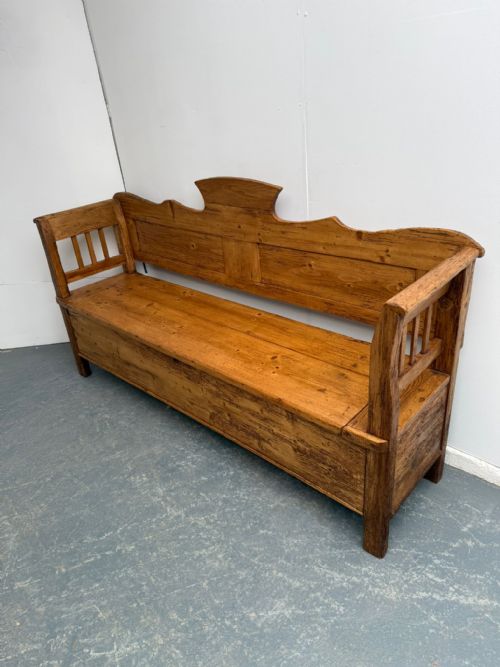
Beyond standard benches, the selection includes multifunctional hall stands, cabinet seating, and box settles originating from English, Irish, Italian, and Hungarian traditions. Each piece serves the dual purpose of seating and concealing boots, shoes, or household miscellany.
Materials and Construction
Makers relied heavily on solid hardwoods, predominantly oak and mahogany, supplemented by pine and walnut for secondary elements or regional country pieces. Boards were joined using traditional panelled construction, allowing the timber to expand and contract naturally within unheated hallways.
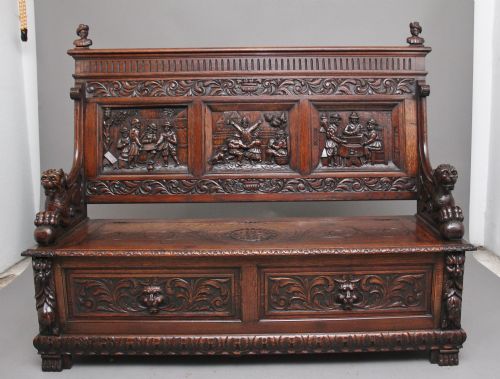
Surface finishes varied from waxed or stripped golden oak to original painted tavern surfaces and dark polished mahogany. Metal fixings such as brass hinges and iron latches secured lids and doors, while hand-carving added decorative relief to backs and arms.
Several pieces feature the peering face of the Green Man carved directly into the golden oak, watching over your muddy boots.
Judging Quality and Craftsmanship
Quality in these hall seats rests upon the weight of the timber and the integrity of the joinery rather than surface ornamentation alone. Superior examples utilise thick solid oak or Brazilian mahogany with tight panel joints that withstand heavy daily use in a busy entrance.
The sophistication of the hand-carving and the proportional balance of canopy tops or high panelled backs distinguish finer workshop pieces from simpler country variants. Original hardware, intact lift-up storage boxes, and well-preserved waxed or polished surfaces also elevate a piece.
James Shoolbred & Co.
The Entryway Storage Bench Seat Glossary
- Settle
- A wooden bench with a high back, solid arms, and a closed base often utilised for storage. It protected residents from hallway draughts.
- Monks Bench
- A convertible piece of furniture featuring a hinged top that folds down to transform the backrest into a table. They appear frequently in twentieth-century golden oak.
- Box Settle
- A bench fitted with a compartment beneath the seat accessed via a lift-up lid. This compartment provided practical storage for boots and textiles.
- Hall Stand
- A tall hallway fixture combining a seat, storage, hooks for garments, and occasionally a mirror or umbrella well. They emerged strongly during the Victorian and Edwardian eras.
- Green Man
- A decorative architectural motif depicting a human face disgorged from foliage, commonly carved into the oak woodwork of nineteenth-century revival seating.
Entryway Storage Bench Seat: Frequently Asked Questions
How do I date a hall bench?
Dating relies upon timber choice, construction methods, and stylistic revival markers. Pieces from the Georgian era show simpler country construction, while Victorian and Edwardian examples often display dense machine-assisted or hand-carving.
Examination of the interior boards, hinge types, and fastener styles further clarifies whether a piece originates from the seventeenth century or a later revival period.
Are these benches comfortable for daily use?
These historical benches feature upright wooden backs and solid seats designed for brief seating while changing footwear rather than lounging. Their primary function was spatial organisation and durability in high-traffic hallways.
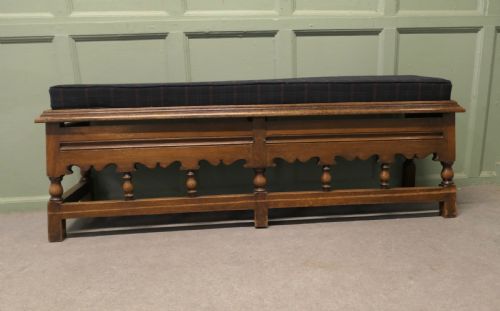
Many owners add loose cushions or pads to soften the wooden seat while preserving the exposed carved back and arms.
What wood were they made from?
Oak is the predominant material across these listings, appearing in golden, waxed, and carved variations from various centuries. Mahogany and walnut also appear in finer Edwardian and Victorian cabinet-style hall seats.
Pine and regional fruitwoods served as primary materials for simpler country and continental pieces, often receiving a wax or painted finish.