
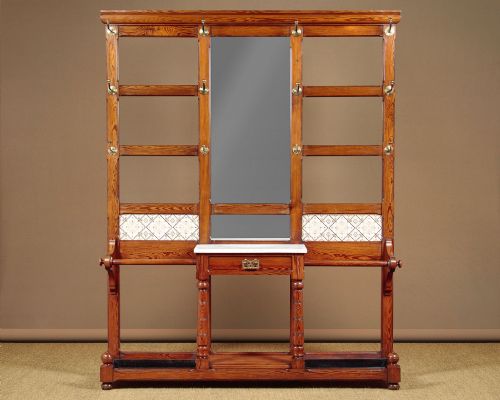
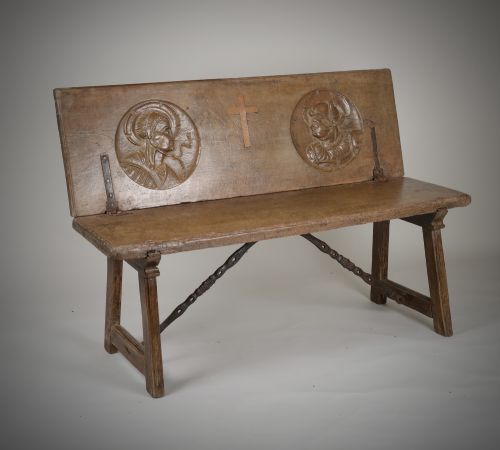
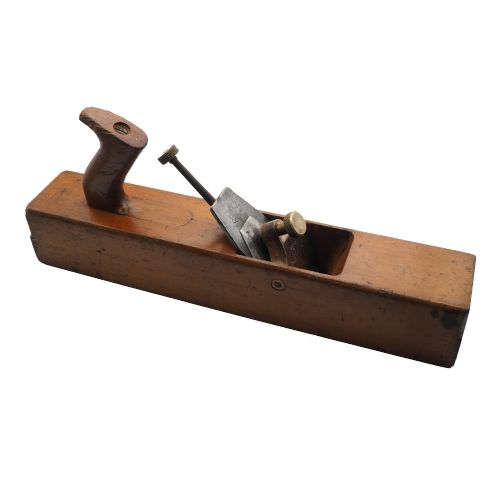
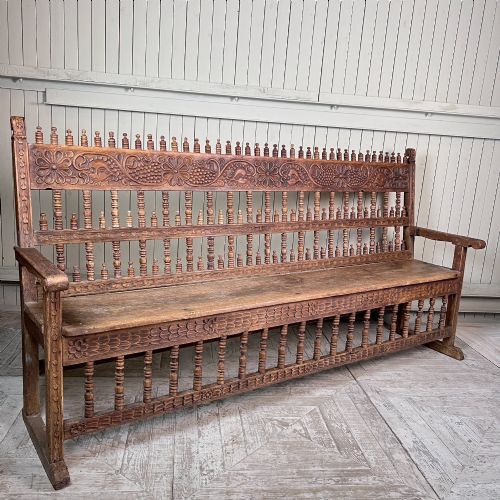
Brown Timber Bench
A brown timber bench brings enduring utility and grounded character to a hallway, kitchen or boot room.
Brown Timber Bench
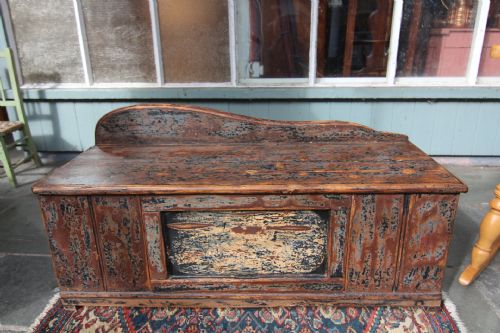
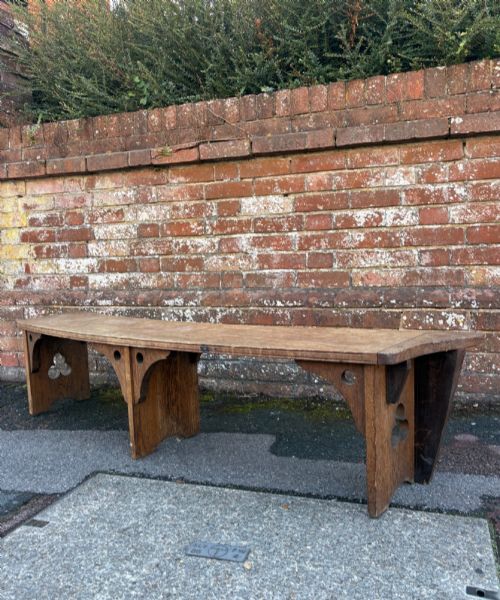
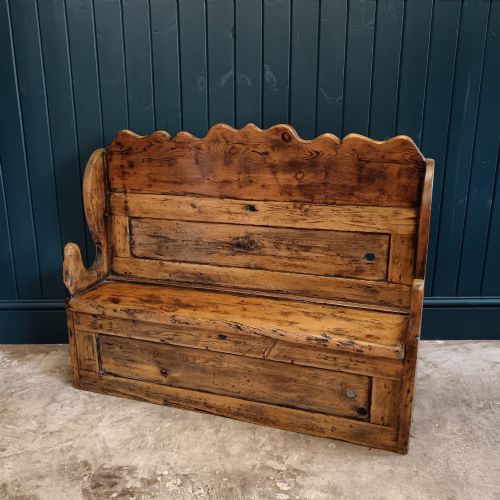
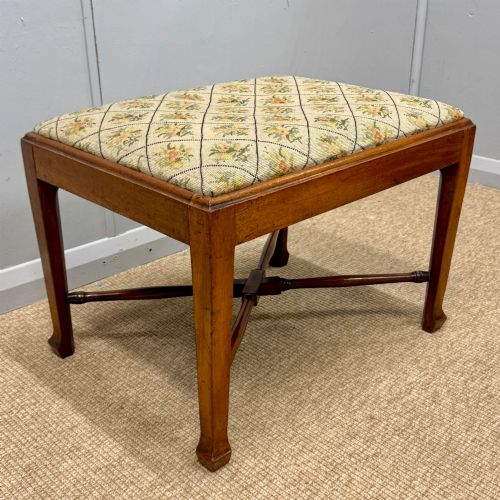
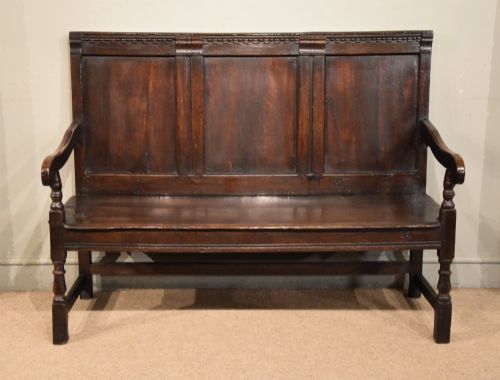
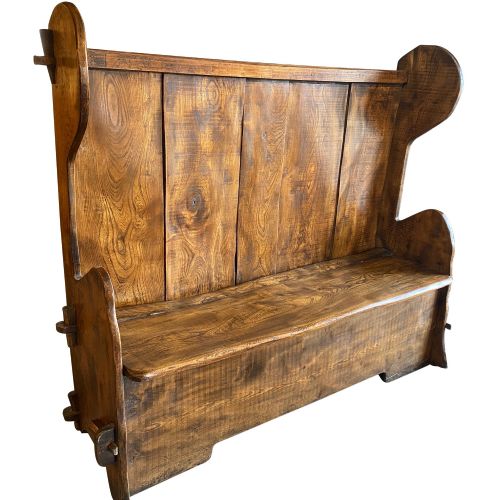
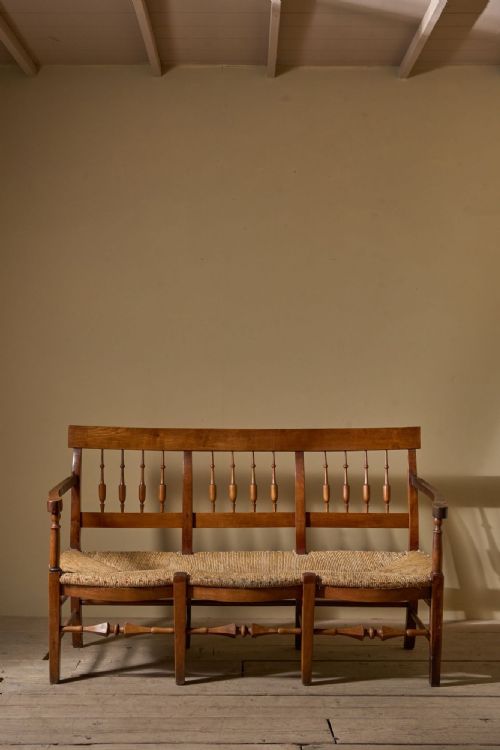
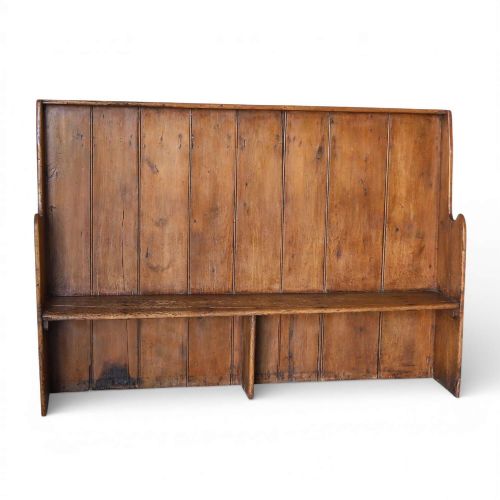
A brown timber bench spans robust utility seating, from high-back settles to simple plank forms designed for domestic life. When you search for a brown timber bench, you encounter sturdy seating shaped by rural vernacular traditions and formal cabinet-making alike.
The selections here draw primarily from nineteenth-century English, French and Spanish traditions, alongside substantial eighteenth-century oak examples. Forms range from storage boxes with integrated seats to open trestles, workbenches adapted for domestic use, and long communal dining benches.
Makers fashioned these pieces from utilitarian regional timbers to serve hardworking households, country estates and workshops. Surviving specimens show the deep patination of decades of daily use, offering straightforward construction built to last generations.
How they were made
Carpenters and joiners utilised solid domestic hardwoods like oak, elm, ash and pine, frequently combining contrasting woods within a single frame for structural strength. Planks were joined using traditional pegged mortise and tenon joints, dovetails, and sturdy box frames designed to withstand heavy loads.
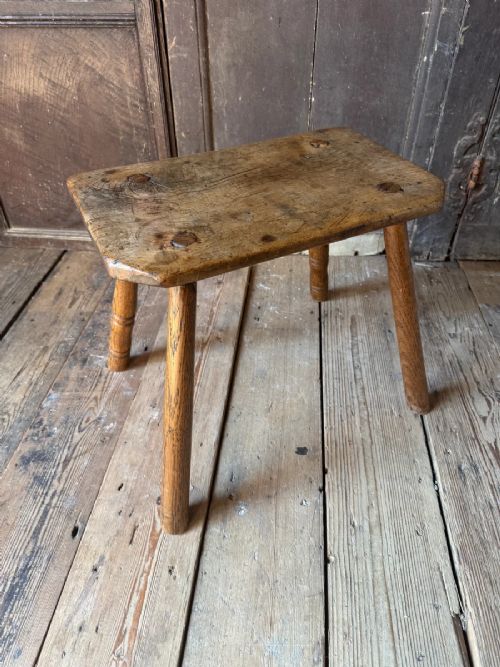
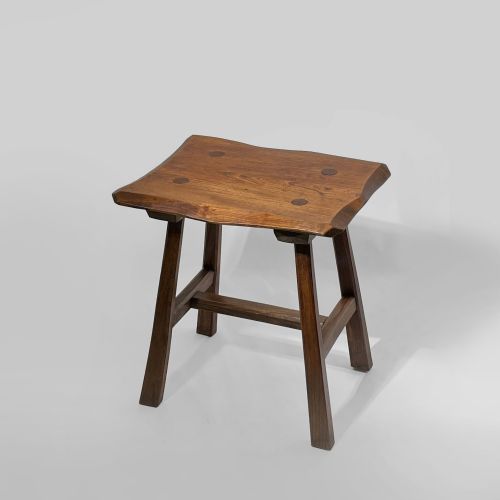
Surface finishes relied on natural oils, waxes and sheer friction over time to build rich patination rather than heavy modern varnishes. Artisans shaped seats from solid blocks of timber using adzes and drawknives, while workbenches incorporated functional vices and heavy timber tops.
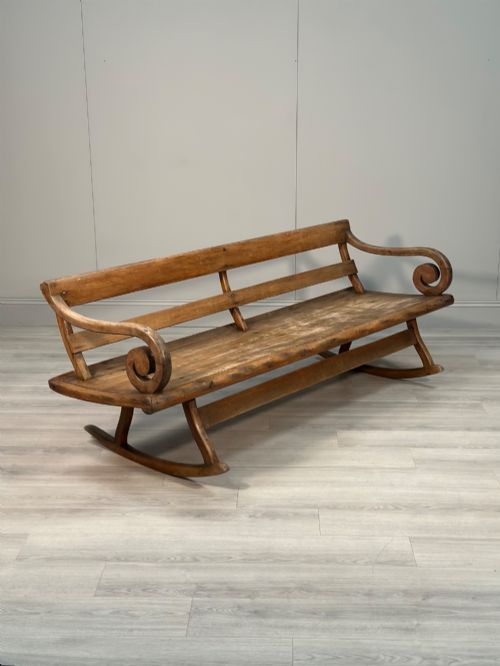
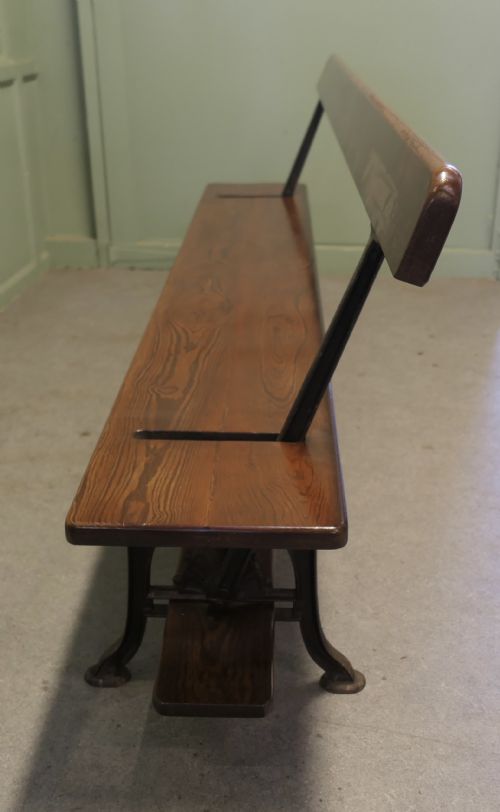
Several listings served unexpected past lives as tram or trolley bus reversible seating, watchmakers' tables, and jewellers' workbenches.
What varies in quality
Quality rests in the integrity of the original timber and the honesty of the construction, where unaltered surfaces and untouched patination elevate a piece. Pieces retaining their original fixings, unreplaced boards and structural soundness demonstrate superior craftsmanship compared to heavily restored or artificially distressed examples.
The balance of proportions and the quality of hand-tool work, such as sculpted seats or pegged joints, separate standard utility items from finer vernacular masterworks. A well-balanced frame with tight joints and deep, authentic wear signals a superior origin.
The Brown Timber Bench Glossary
- Settle
- A wooden bench with a high back, solid arms and frequently a box compartment beneath the seat to block cold draughts. These pieces served as primary fireside seating in traditional houses.
- Patina
- The lustrous surface sheen developed on timber through decades of handling, polishing, waxing and exposure to light. It is a sign of age and gentle maintenance.
- Vernacular
- Architecture and furniture built by local craftsmen using traditional regional methods and available native materials, prioritizing utility over high-style academic design.
- Mortise and tenon
- A fundamental woodworking joint where a projecting tongue fits snugly into a corresponding cavity to lock two pieces of timber at a right angle.
- Box settle
- A form of bench featuring a hinged lid on the seat box, combining seating with enclosed storage for blankets or household provisions.
Brown Timber Bench: Frequently Asked Questions
Where should I place a timber bench?
These benches suit narrow hallways, boot rooms, and farmhouse kitchens where sturdy seating and practical utility are essential.
They also function effectively at the foot of a bed or alongside a rustic dining table, providing durable daily use.
How do I care for antique timber?
Maintain the wood by applying natural beeswax occasionally to nourish the grain and preserve the rich surface patination.
Keep pieces away from direct heat sources and strong sunlight to prevent the timber from drying out or splitting.
What is the difference between a settle and a bench?
A settle incorporates a solid high back and enclosed sides designed to shield the sitter from cold indoor draughts.
Standard benches offer open seating without high backs, prioritising ease of movement and versatile placement around a room.
Are these benches sturdy enough for daily use?
Most pieces were originally built for rigorous domestic, agricultural or workshop tasks, making them exceptionally solid.
Their heavy timber frames and traditional joinery ensure they easily withstand modern household routines.