


Entry Hall Lantern
An entry hall lantern sets the tone for an entire interior, casting a welcoming glow through glass and metal from the nineteenth and twentieth centuries.
Entry Hall Lantern
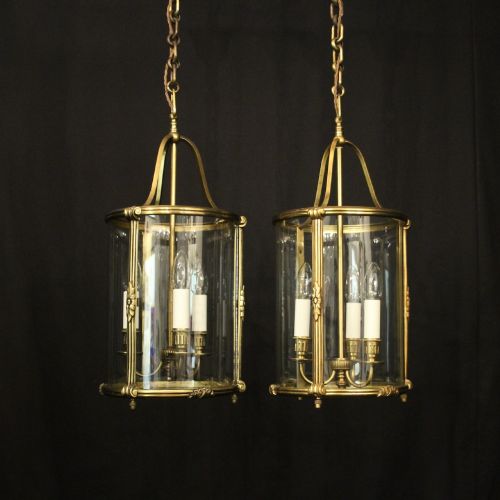
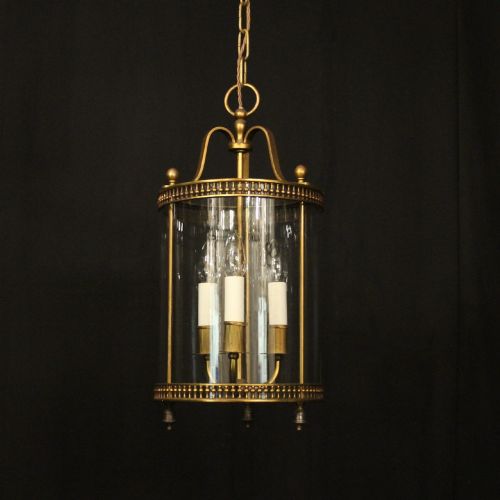
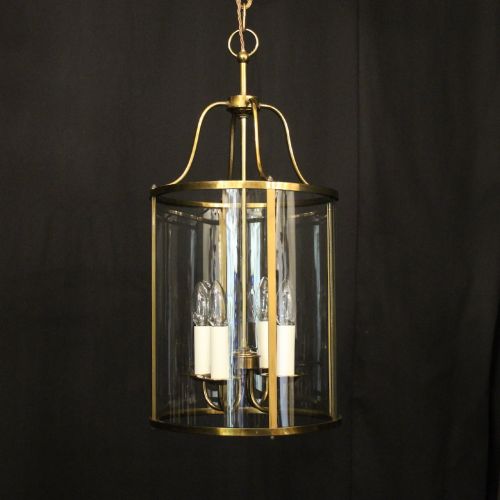
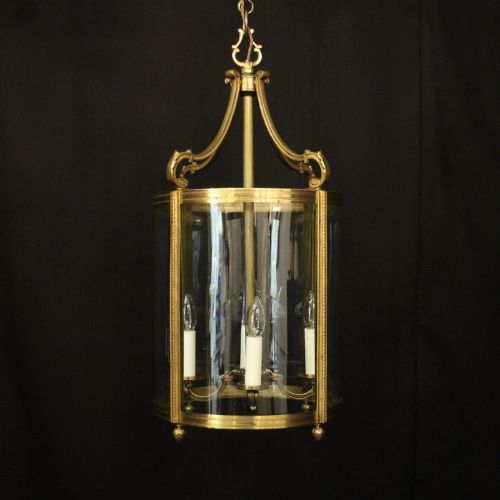
When you search for an entry hall lantern, you encounter ceiling-hung lighting designed specifically for passageways, vestibules and stairwells. The pieces listed here span the nineteenth and twentieth centuries, taking the form of hanging lanterns, pendant lights and ceiling lights.
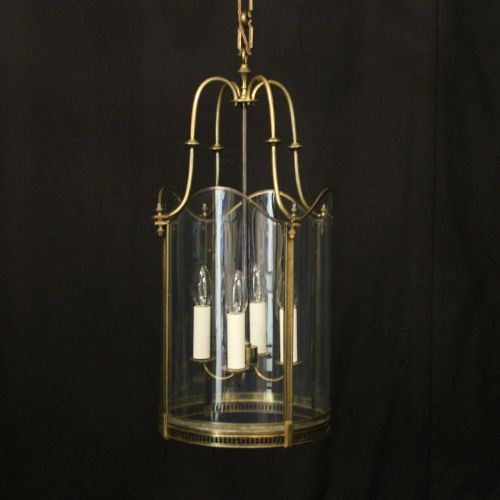
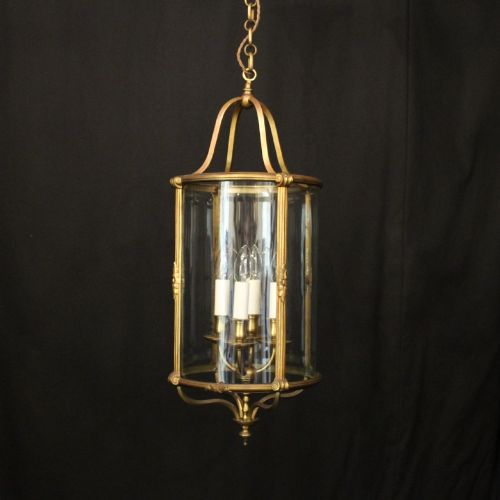
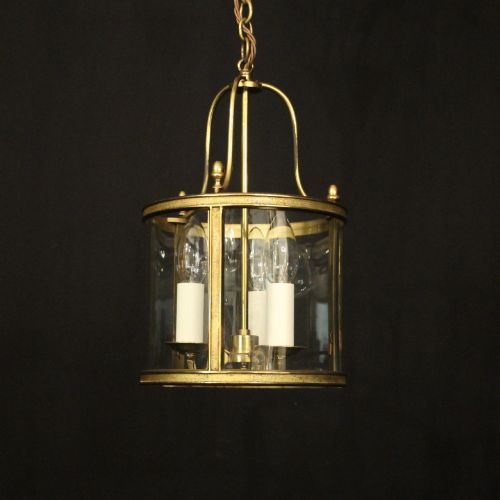
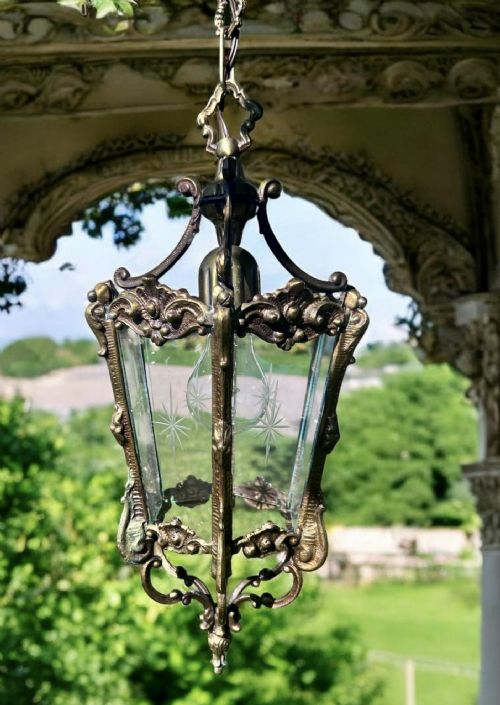
You are most likely to meet French designs on this page, particularly those finished in gilded bronze, gilt brass or standard brass. These fixtures often incorporate convex or bevelled glass panels held within elaborate metal frames.
Alongside continental examples, the selection includes English and Italian pieces drawing on styles from the Victorian and Edwardian eras, as well as Gothic Revival and French Neoclassical aesthetics.
Materials and construction
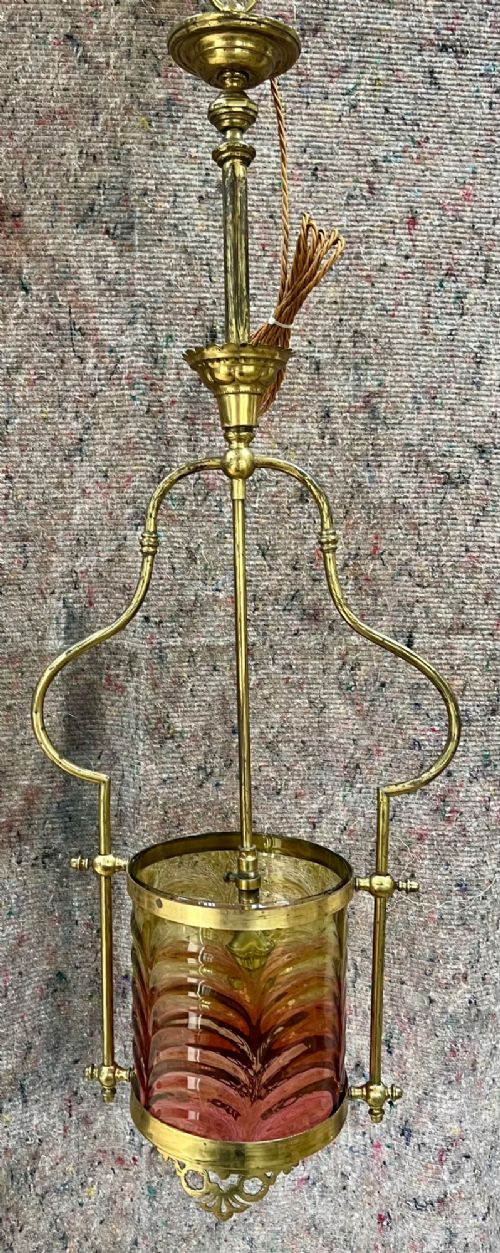
The primary structural framework relies on cast and worked metals such as brass, bronze, copper and wrought iron. Many of these metal frames receive a gilded finish, creating the characteristic gilt brass and gilded bronze surfaces seen across the period pieces.
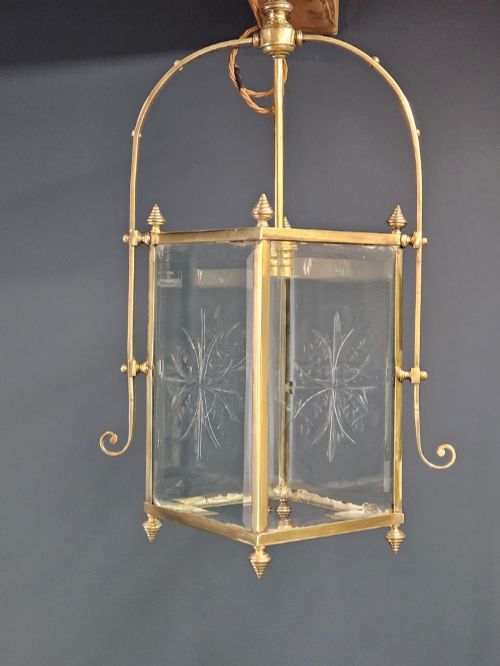
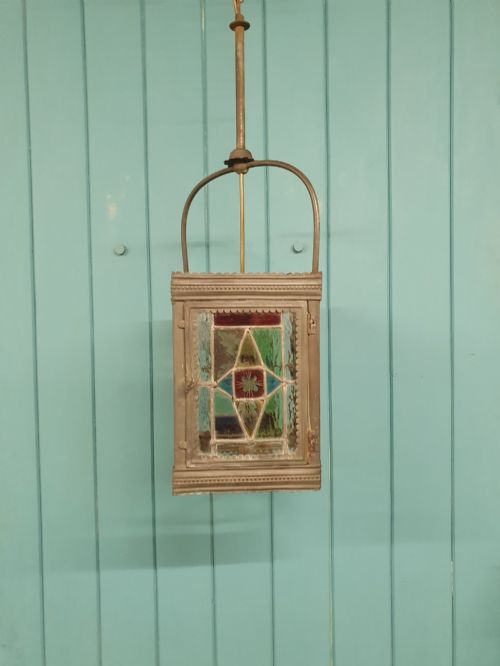
Panels of glass are fitted directly into the metal armature, utilising clear, cut, etched or bevelled panes to diffuse the internal illumination. Early examples also employ leaded construction to secure smaller sections of glass within the hanging frame.
Several lanterns carry the subtle marks of Chelsea workshops from around nineteen hundred, illuminating hallways just as they did over a century ago.
Distinctions in quality
The sophistication of the metal casting and the depth of the gilding set the standard for these fixtures. Finer examples display crisp chasing and heavy bronze frames, whereas simpler pieces rely on lighter brass sheet or straightforward wrought iron.
The treatment of the glass further distinguishes the range. Thick, bevelled, or convex panes demonstrate greater craftsmanship than standard flat glass, requiring specialist cutting to fit the curves and angles of the lantern body.
The Entry Hall Lantern Glossary
- Convex glass
- Curved glass panels that project outward to soften the light and expand the visual presence of the lantern. This technique creates subtle optical distortions across the surface.
- Gilded bronze
- Bronze metal treated with a thin layer of gold leaf or gilt wash to impart a rich metallic sheen. It combines structural strength with a decorative surface finish.
- Bevelled glass
- Glass panes featuring an angled edge ground down along the perimeter. This treatment catches and refracts light as it passes through the fixture.
- Gothic Revival
- An architectural and decorative style drawing on medieval forms, characterised in these lights by pointed arches and robust metalwork. It emerged strongly during the nineteenth century.
- Rococo style
- An ornate design movement featuring asymmetrical scrollwork and naturalistic motifs derived from eighteenth-century French aesthetics. Pieces in this style emphasise fluid, curving lines.
Entry Hall Lantern: Frequently Asked Questions
How high should I hang an entry hall lantern?
Suspension height depends primarily on your ceiling clearance and the proportions of the hallway. Most designers position the bottom of the fixture well above head height to maintain clear passage.
For standard ceilings, the lantern sits centrally in the space to distribute light evenly across thresholds and doorways.
Are these lanterns wired for modern electricity?
Most antique hanging fixtures arrive adapted for contemporary electrical standards while retaining their original frames and candle-style internal fittings.
Wiring is typically evaluated and updated by specialists to ensure safe integration with modern home circuits.
How do I identify a French hall lantern?
French pieces frequently exhibit characteristic neoclassical or rococo decorative elements, including cast bronze mounts, urn motifs, and elaborate gilded frames.
They often incorporate convex glass panels and multiple internal light sources designed for grand vestibules.
What is the difference between brass and bronze lanterns?
Brass is an alloy of copper and zinc, yielding a brighter, yellower metallic tone that polishes to a warm shine. Bronze is an alloy of copper and tin, offering a heavier, darker foundation suited to intricate casting.
Both metals frequently receive surface gilding to unify the appearance of the finished lantern.