
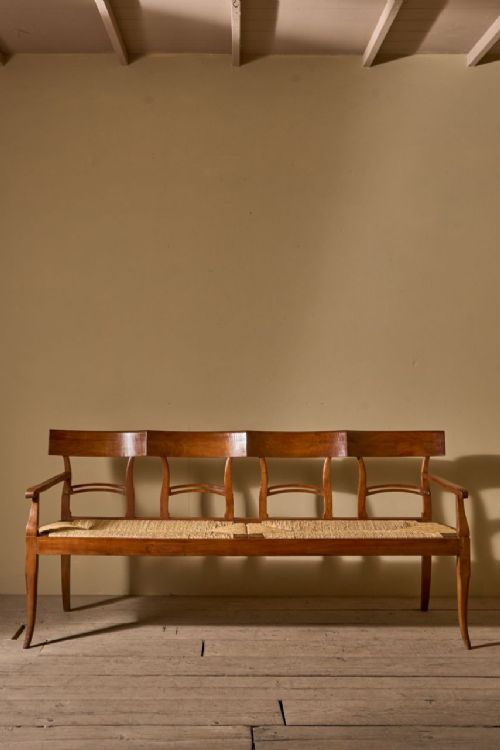
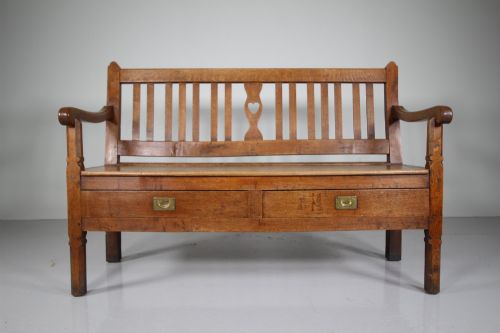

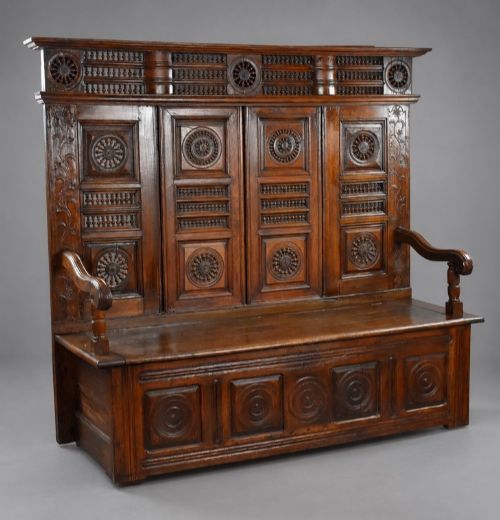
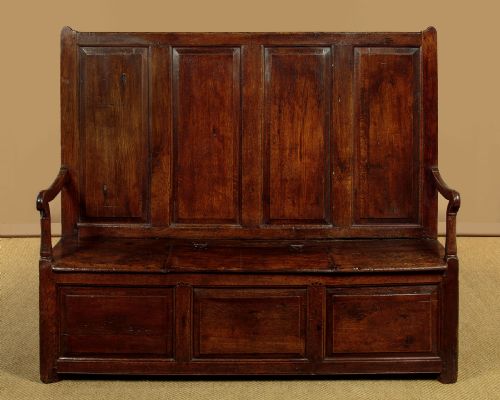
Entry Hall Bench
An entry hall bench offers a practical welcome, combining seating and storage in styles ranging from Georgian oak to painted pine.
Entry Hall Bench
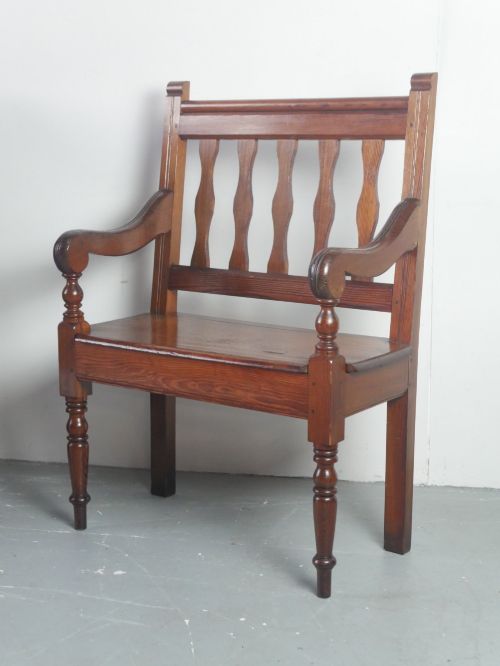
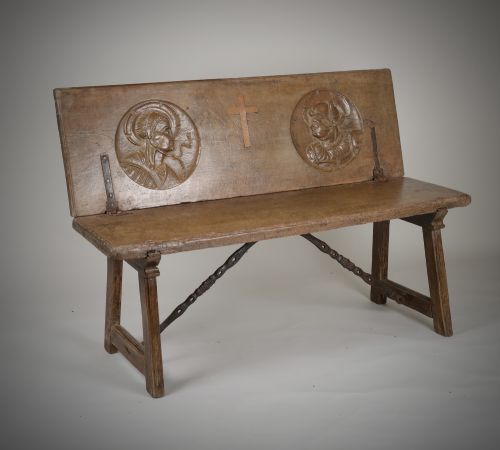
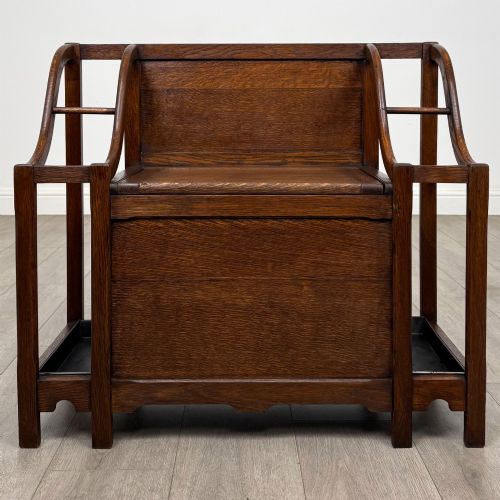
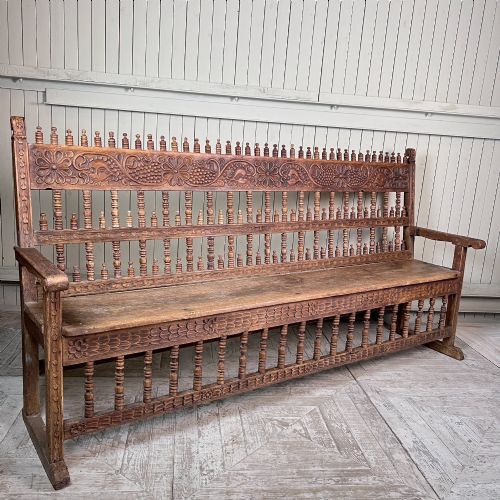
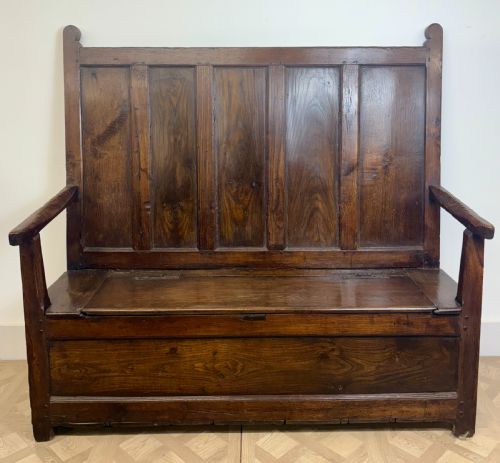
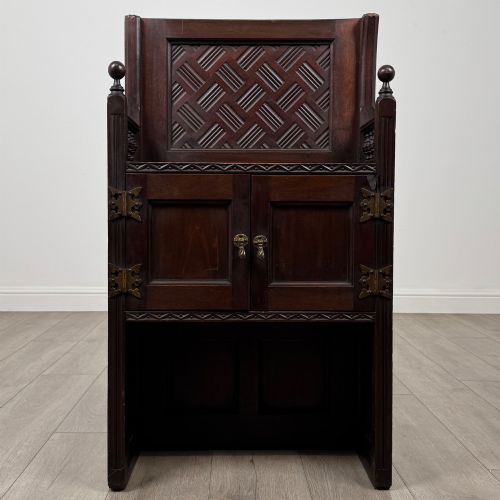
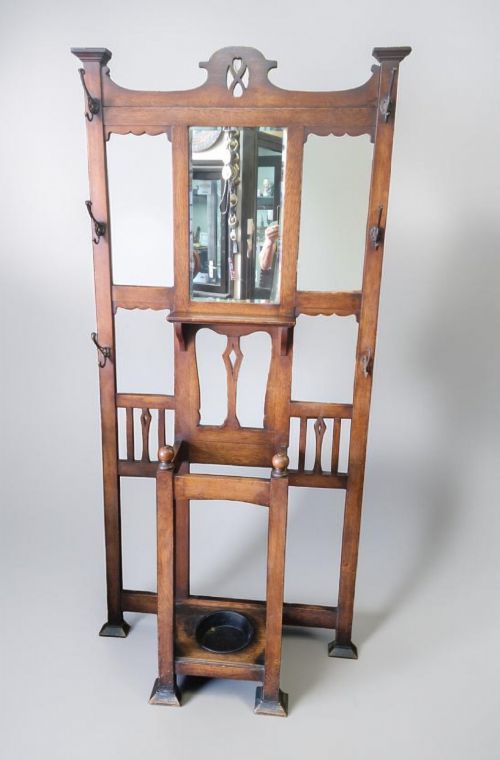
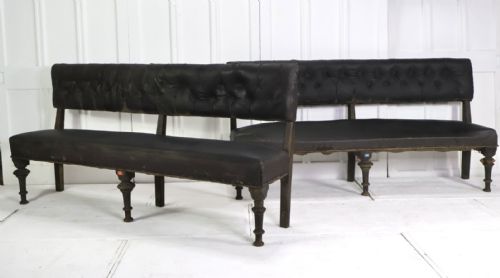
An entry hall bench serves as a functional seating piece positioned near the entrance of a home, frequently doubling as storage. You will encounter forms ranging from simple wooden settles to elaborate hall stands incorporating umbrella racks and mirrors.
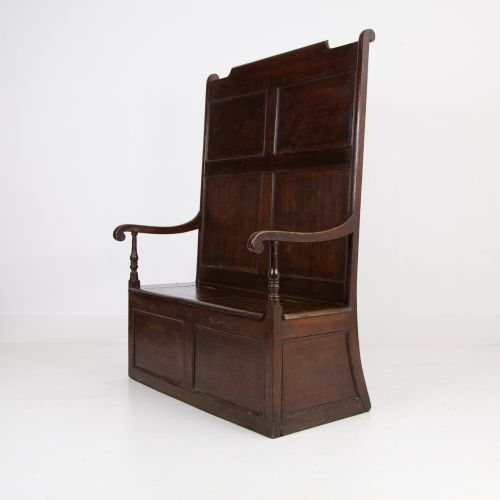
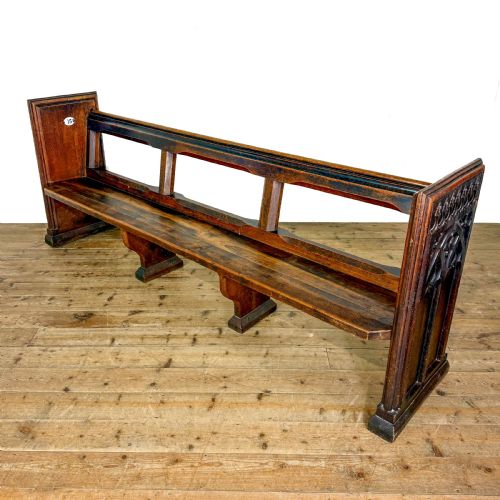
The selection on this page relies heavily on 19th century and Victorian examples alongside 18th century pieces. Oak and pine dominate the forms, appearing in regional styles such as Welsh box settles and Hungarian painted benches.
Materials and construction
Makers relied primarily on solid hardwoods and softwoods like oak, pine, mahogany, and ash to build these durable seating pieces. Joinery techniques involved traditional mortise and tenon joints, panelled construction, and pegged frames designed to withstand heavy daily use.
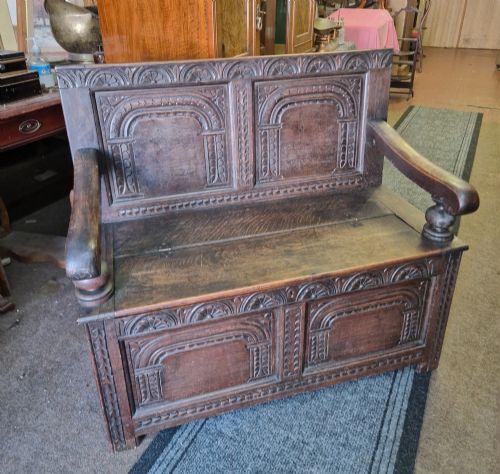
Surface treatments vary from waxed and polished natural grains to original painted finishes in grey, blue, and cream. Details such as carved panels, rush seating, and incorporated brass or iron hardware reveal the specific period and regional workshop traditions.
Hungarian pine settles arrive bearing layers of old blue, grey, and cream paint, proving past owners loved a colourful hallway.
What determines quality
Quality rests upon the integrity of the timber, the crispness of the hand-carved ornamentation, and the survival of original surfaces. Pieces retaining their initial painted finish or rich, untouched patina command greater interest than those stripped or heavily restored.
Structural soundness also dictates worth, particularly in hinged lift-up seats and box settles where joints endure constant movement. The sophistication of the design, whether a Glasgow School oak settle or a carved Flemish panelled back, elevates the piece.
The Entry Hall Bench Glossary
- Box settle
- A wooden bench featuring a high panelled back, armrests, and a hinged seat opening to a storage chest beneath. This form kept drafts at bay in older hallways.
- Hall stand
- A combined item of furniture providing a bench seat, hooks for coats and hats, and frequently a central mirror or umbrella wells. These appeared in grander entrance halls.
- Monks bench
- A convertible piece of furniture designed to transform from a bench with a high back into a table by pivoting the backrest downwards.
- Rush seating
- Woven seat construction utilising dried marsh rushes twisted around a frame. It provides a resilient, textured surface seen on country chairs and benches.
- Gothic Revival
- A design movement drawing inspiration from medieval architecture. Pieces display pointed arches, tracery, and heavy carved oak.
Entry Hall Bench: Frequently Asked Questions
Where should I place an entry hall bench?
Position your bench in a hallway, entryway, or boot room where it provides a convenient place to sit while removing shoes. Ensure there is adequate clearance for doors to open and for any lift-up seats to operate freely.
Because many examples incorporate high backs, wall clearance and sightlines from adjacent rooms should be considered. Pieces with integrated coat hooks work best against a solid wall near the main entrance.
How do I use the storage in a box settle?
The lift-up seat grants access to a deep compartment originally intended for blankets, boots, and outdoor garments. Ensure the hinges and lid remain unobstructed to prevent strain on the historical timber.
Avoid overloading the internal compartment with excessively heavy items that might stress the baseboards. Lining the interior with breathable fabric helps protect stored textiles from friction against rough wood.
How do I clean and maintain an antique wooden bench?
Dust the surfaces regularly with a soft, dry cloth to prevent grit accumulation in carved crevices and joints. Apply a traditional beeswax periodically to nourish unpolished hardwoods and maintain their soft sheen.
Keep wooden furniture away from direct heat sources and drastic humidity changes to prevent the timber from splitting. Painted surfaces require gentle cleaning with a damp cloth, avoiding harsh chemical solvents that strip historical pigment.
How do I tell an 18th-century settle from a Victorian revival piece?
Examine the construction marks, tool traces, and timber shrinkage patterns visible on the underside and interior panels. Earlier 18th-century pieces often display hand-sawn board widths and irregular pegged joinery unique to regional workshops.
Victorian revival furniture frequently utilises more uniform machine-sawn components and standardised hardware. Stylistic clues such as crisp Gothic tracery or heavier proportions also help distinguish 19th-century interpretations from earlier originals.