



Georgian Hallway Bench
A georgian hallway bench provides a sturdy seat and practical storage, drawing on centuries of vernacular craftsmanship.
Georgian Hallway Bench
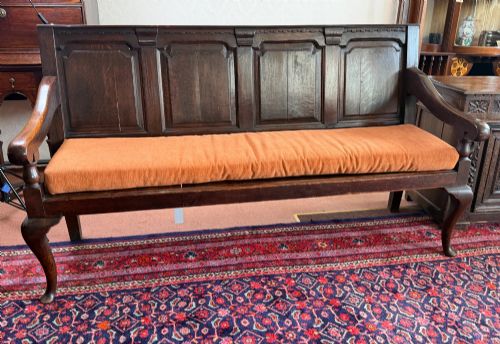
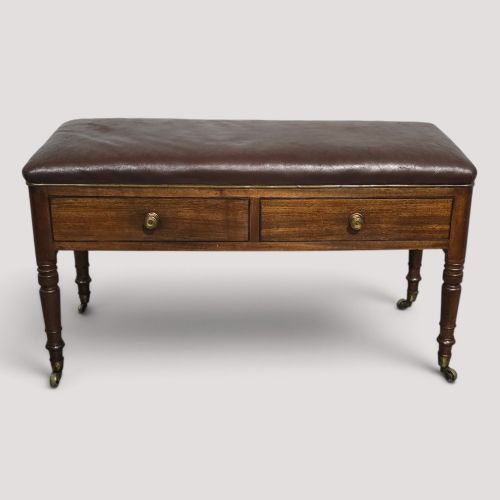
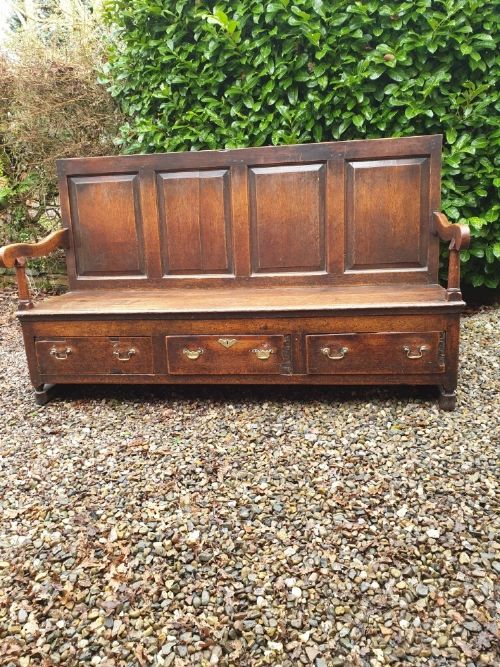
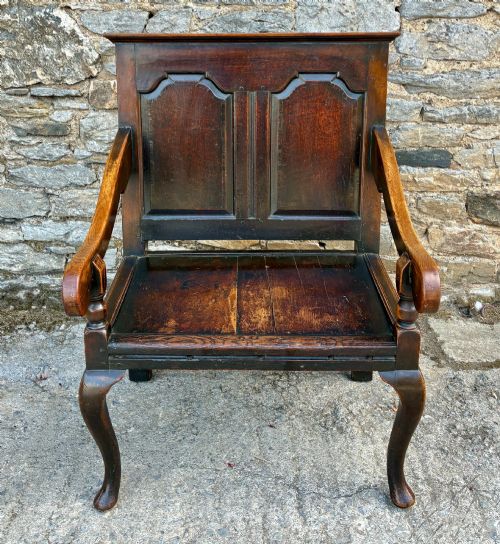
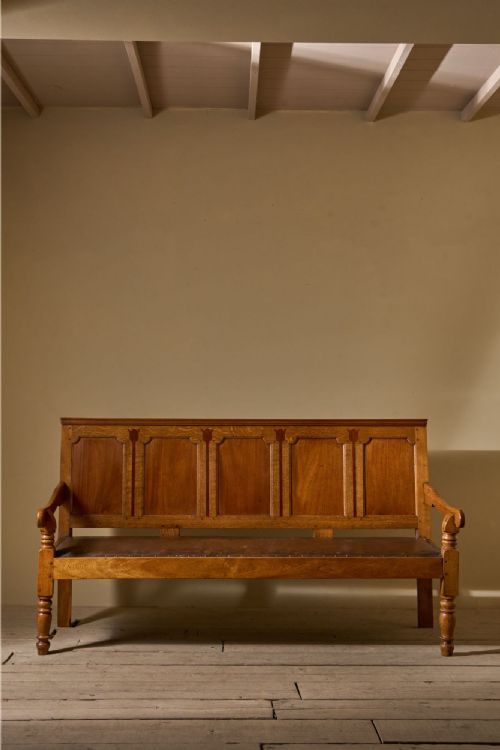
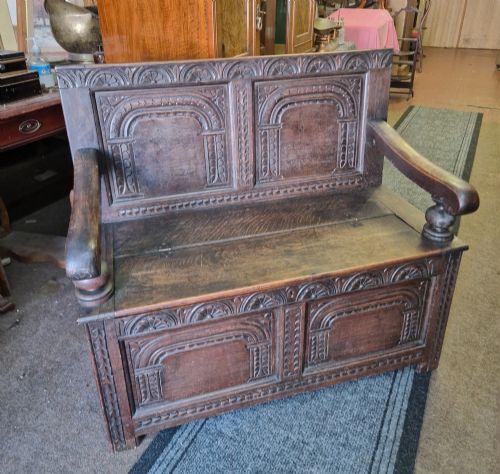
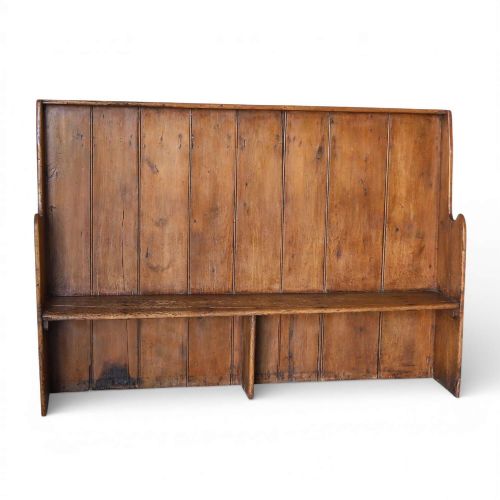
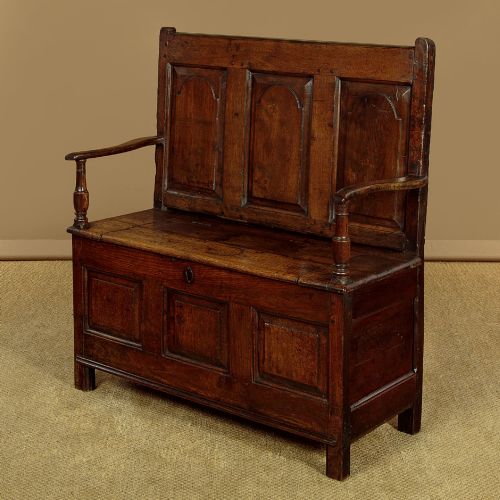
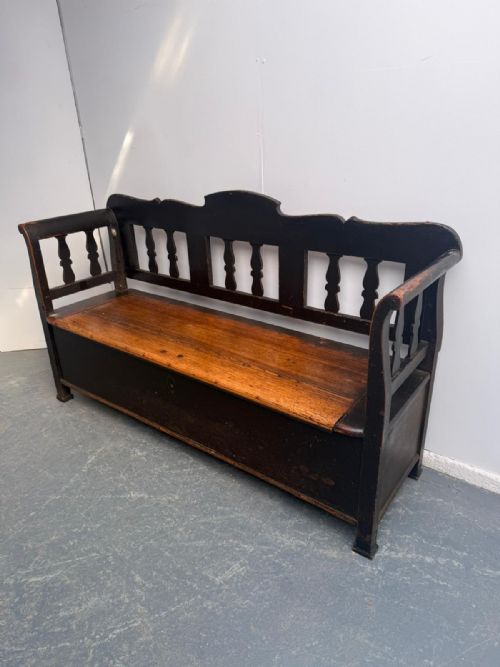
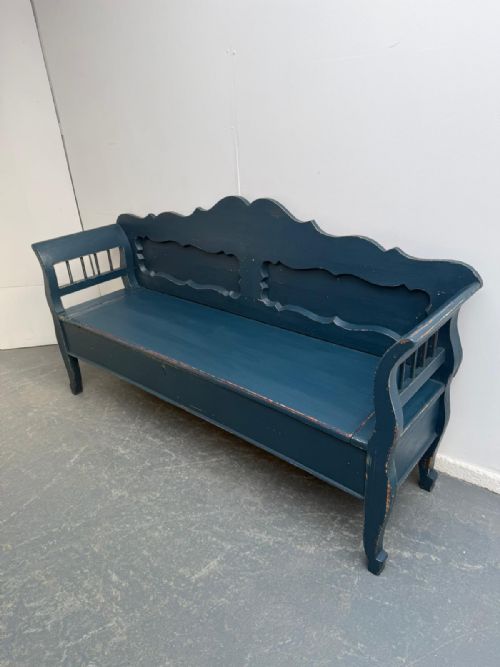
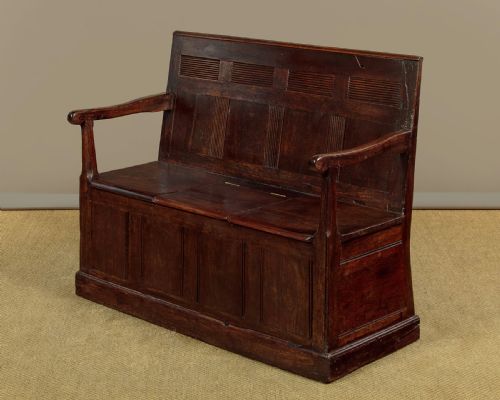
A georgian hallway bench encompasses robust settles, box settles, window seats, and hall benches originating from the eighteenth and nineteenth centuries. These pieces reflect regional English, Welsh, and European vernacular traditions, alongside refined Regency and revival designs.
The oak box settle and the high-back pine settle dominate the selection, offering panelled backs and integrated seat storage. Lighter mahogany window seats and long hall benches also appear, spanning periods from the early georgian era through to Edwardian interpretations.
Materials and Construction
Makers relied primarily on solid oak, mahogany, and pine, frequently combining oak and elm for structural resilience in tavern and country pieces. Joinery typically involved pegged mortise and tenon frames, panelled backs, and box compartments hinged for daily utility.
Surfaces exhibit varying finishes, from honey brown patinated oak and bleached timber to original painted schemes in black, blue, or folk-art decoration. Upholstery appears on select window seats and settees utilising fabric, velvet, and brass or iron fixings.
Listings feature oak, mahogany, pine, and walnut pieces spanning the Georgian, Regency, and Edwardian periods alongside European folk art examples.
Distinguishing Quality
Quality rests upon the integrity of the timber, the depth of the natural patina, and the retention of original elements such as panels, hinges, and painted finishes. Heavy country oak and pine examples derive distinction from honest wear and structural heft.
Refined mahogany pieces achieve distinction through crisp carving, crossbanding, and stylistic attribution to notable makers like Gillows. Altered proportions or replaced boards lower the standing of vernacular seating.
Gillows
The Georgian Hallway Bench Glossary
- Settle
- A wooden bench with a high panelled back and solid arms, often featuring a box seat for storage. This form kept draughts away from inhabitants in older hallways and parlours.
- Crossbanding
- A decorative border of veneer arranged so that the grain runs at right angles to the surrounding wood. It frames drawer fronts and panel edges on finer mahogany pieces.
- Box Settle
- A bench incorporating a compartment beneath the seat accessed by lifting the lid. It served as a trunk for household linens and dry goods.
- Window Seat
- A narrow bench designed to fit within a window recess, frequently sharing stylistic details with contemporary dining chairs and hall seats.
- Patina
- The surface sheen and mellow colour developed by wood over decades of handling and wax polishing. A deep patina indicates age and regular care.
Georgian Hallway Bench: Frequently Asked Questions
What is a georgian hallway bench?
A georgian hallway bench is a traditional wooden seat, often taking the form of an oak settle, box bench, or mahogany window seat. These items furnished domestic entrance halls and country houses.
They provided practical seating alongside integrated storage compartments for boots and textiles, protecting occupants from draughts in large rooms.
Where were these benches used?
These benches were placed in entrance halls, corridors, and parlours of country houses, farmhouses, and public taverns. Their sturdy construction suited high-traffic areas.
Settle benches with high backs blocked cold air near doorways, while narrower window seats were positioned to utilise light from deep window apertures.
How do I tell an 18th-century settle apart?
Eighteenth-century settles typically feature heavy oak construction with pegged joinery, multi-panelled backs, and hand-planed boards. Box compartments use traditional hinges and substantial timber.
Later revival pieces and nineteenth-century interpretations often display machine sawing, lighter pine, or stylistic details borrowed from earlier centuries without the same depth of wear.
Can I use an antique settle daily?
Antique settles and hall benches were built for heavy domestic and tavern use, making them robust enough for modern hallways. Solid oak and pine frames handle regular seating comfortably.
Care should be taken with painted finishes and upholstered window seats, ensuring velvet and fabric surfaces are protected from heavy friction and direct sunlight.