

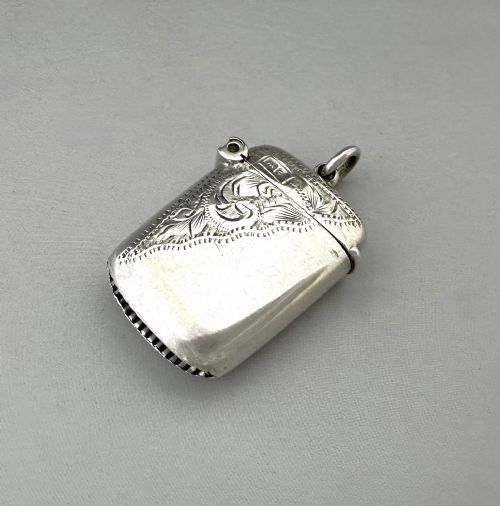
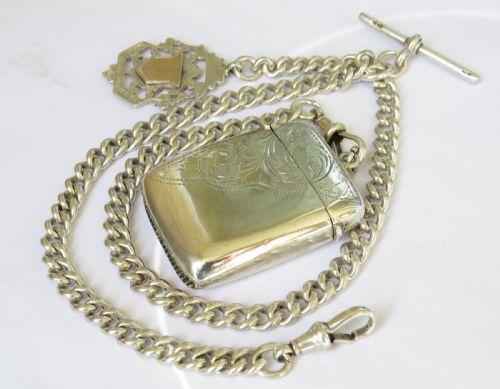
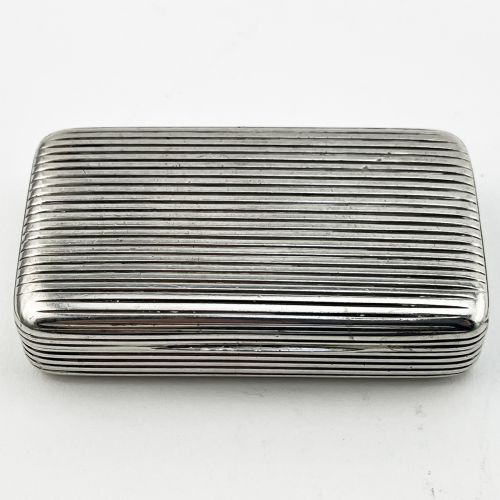
Engraved Vesta Case
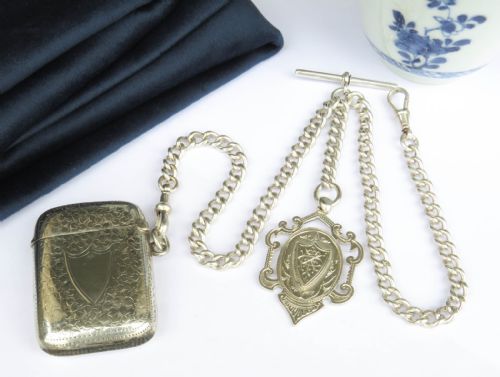
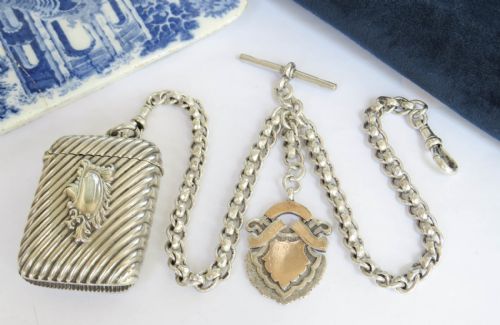
An engraved vesta case carried in a waistcoat pocket or attached to a watch chain keeps matches dry and ready for use.
Engraved Vesta Case
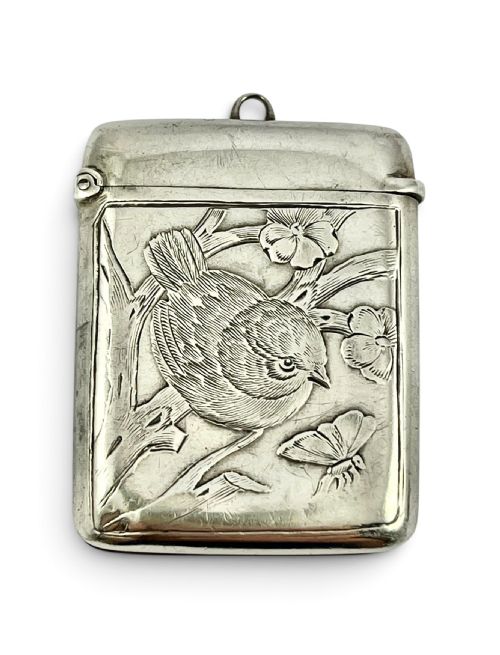
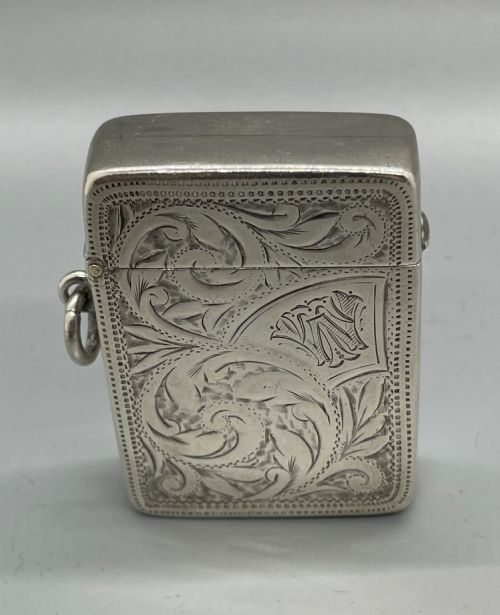
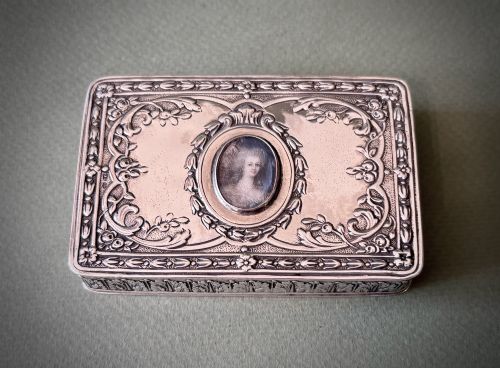
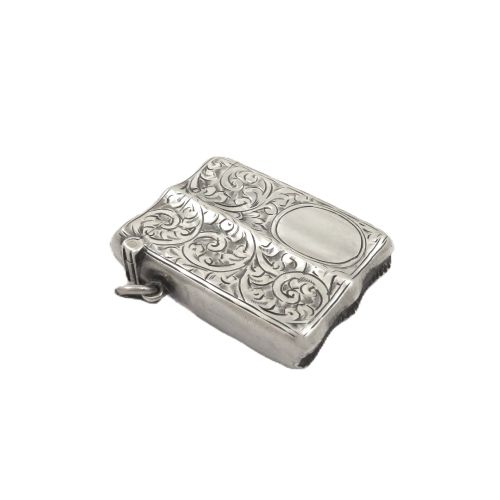
An engraved vesta case is a small metal container designed to hold wax matches, commonly known as vestas, which became essential accessories during the nineteenth and early twentieth centuries. The items found here span the Victorian and Edwardian periods through to the 1930s, reflecting shifts in design from ornate revival styles to cleaner geometric forms.
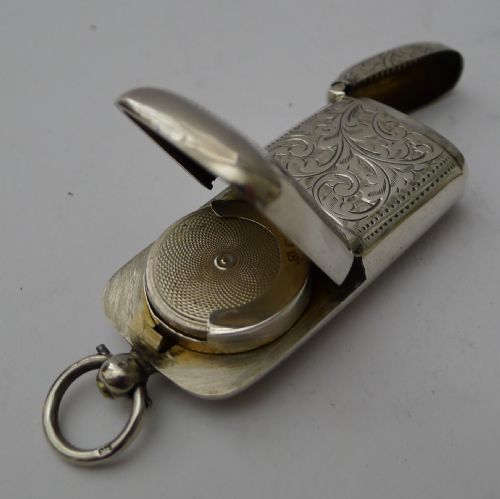
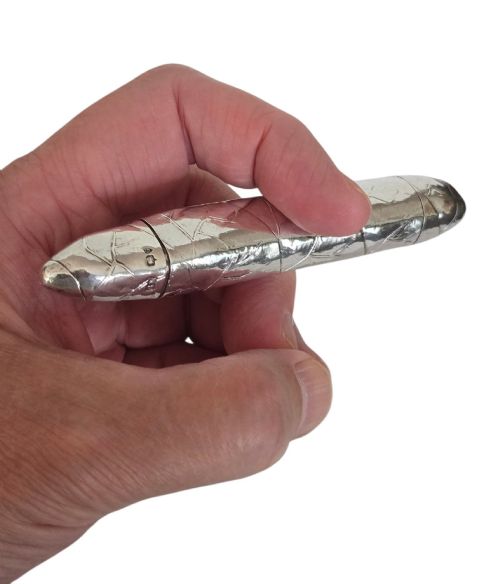
Pocket versions dominate the selection, often appearing alongside pocket watch chains, alberts, and watch fobs. These containers range in shape from standard rectangular boxes to novelty forms such as horseshoes, hearts, and animals, alongside functional combination pieces that incorporate stamp holders or sovereign cases.
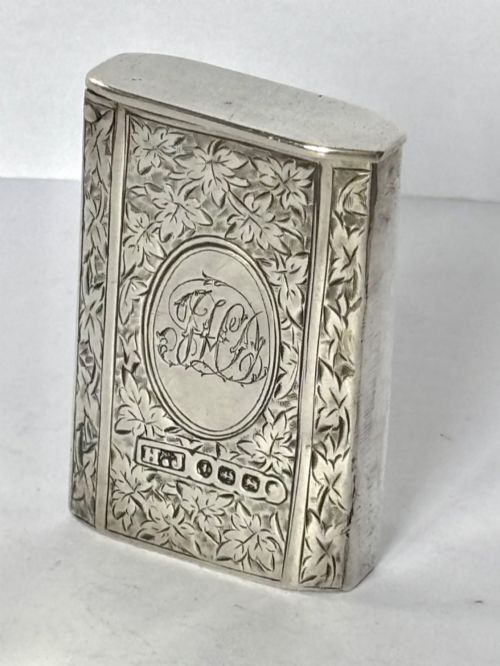
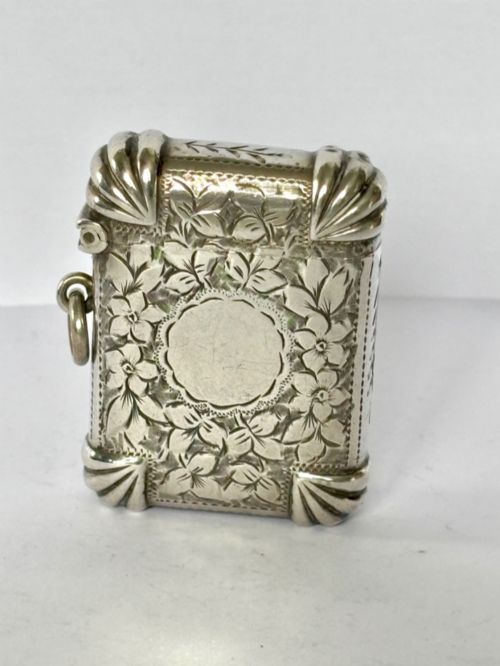
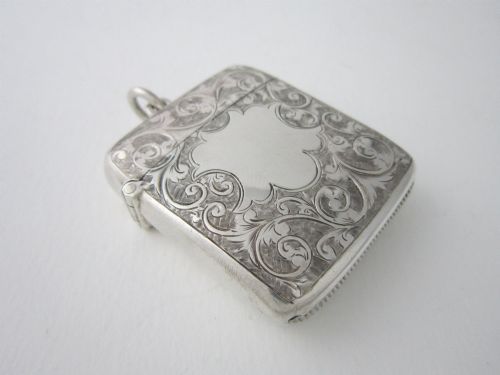
Makers utilised sterling silver predominantly, occasionally integrating rose gold accents, enamel, or glass components. Engraved surface decoration defines the category, displaying foliate scrolls, ivy leaves, crests, and figurative scenes such as golfers.
How they were made
Silversmiths constructed these objects primarily from sterling silver, shaping sheet metal through folding, pressing, and soldering. Hinged lids incorporated internal springs to snap shut securely, keeping the contents dry in damp weather.
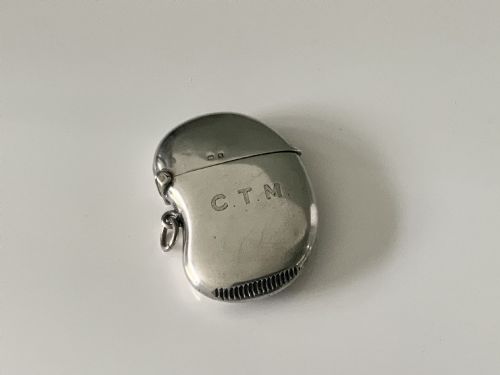
Surface ornamentation relied on manual techniques such as hand engraving, chasing, and occasionally enamel application. Artisans cut patterns directly into the metal using gravers, producing intricate foliate scrolls, crests, and personal monograms.
Engraved Vesta Case Retail Price Guide 2026
Typical asking prices for engraved vesta case among the pieces listed under this phrase on Sellingantiques today, from the lower quarter to the upper quarter. They describe what is for sale here now, not the wider market.
Some Victorian owners carried trick vesta cases designed with secret opening mechanisms to baffle unsuspecting friends.
What varies in quality
The precision and depth of the hand engraving distinguish finer examples from standard production pieces. Crisp, deep cuts that retain their sharpness show superior craftsmanship compared to shallow or worn surface markings.
The mechanical integrity of the hinge and the snap of the lid determine practical quality. A well-adjusted spring closure holds the lid firmly in alignment, whereas inferior pieces suffer from loose hinges or misaligned closures.
Howard James Birmingham·Ev Pledge And Son·Sampson Mordan And Co·Alfred Clark·William Hair Haseler
The Engraved Vesta Case Glossary
- Vesta case
- A small pocket container designed to hold matches, featuring a textured striking strip usually located on the base. These items became necessary following the invention of safety and strike-anywhere matches in the nineteenth century.
- Albert
- A watch chain worn across the waistcoat, named after Prince Albert. These chains frequently secure pocket accessories such as vesta cases and sovereign holders.
- Sovereign case
- A small round container engineered to hold British gold sovereign coins. Certain combination pieces house both coins and matches in separate compartments.
- Hallmark
- An official stamp applied to precious metals indicating the standard of purity, the assay office, and the date of testing. These marks provide precise dating evidence for British silver.
- Chasing
- A metalworking technique where the artisan depresses the material from the front using hammers and punches to create raised designs. This method often complements engraved decoration on silver surfaces.
Engraved Vesta Case: Frequently Asked Questions
How do I date an antique silver vesta case?
Examine the hallmarks stamped on the metal, which typically include a maker's mark, a standard mark indicating sterling silver, an assay office symbol, and a date letter.
Matching the date letter against official assay office tables reveals the exact year the piece was hallmarked.
Were vesta cases only carried by men?
While pocket versions were standard accessories for gentlemen's waistcoats, smaller designs were also suspended from chatelaines or watch chains worn by women.
Novelty shapes and petite proportions often catered to a diverse clientele during the Victorian era.
What is the textured area on the bottom for?
The striated or cross-hatched metal surface on the base serves as a match striker.
Users scraped the tips of wax vestas across this rough panel to ignite them before closing the lid.
How should I clean engraved silver?
Wash the item gently using warm water and mild soap with a soft brush to lift dirt from the engraved recesses.
Avoid abrasive polishes that can wear away crisp hand engraving and diminish the depth of the decorative motifs.