






Engraved Rummer Glasses
Engraved rummer glasses are substantial drinking vessels suited to ale, wine and spirits, prized for robust bowls and detailed wheel-engraving.
Engraved Rummer Glasses
When you search for engraved rummer glasses, you encounter sturdy drinking vessels produced across the Georgian, Regency and Victorian periods. The pieces appearing here span from the late eighteenth century into the nineteenth century, reflecting various regional English workshops alongside Bohemian examples.
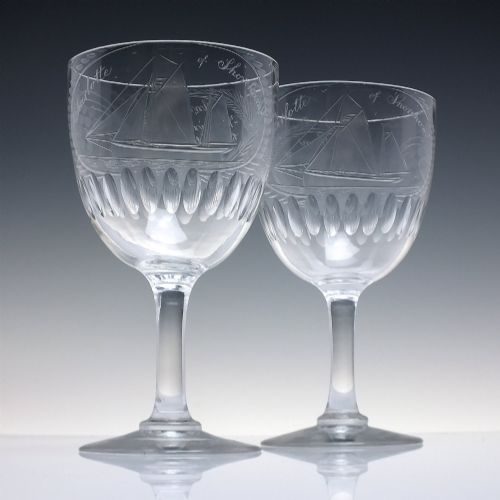
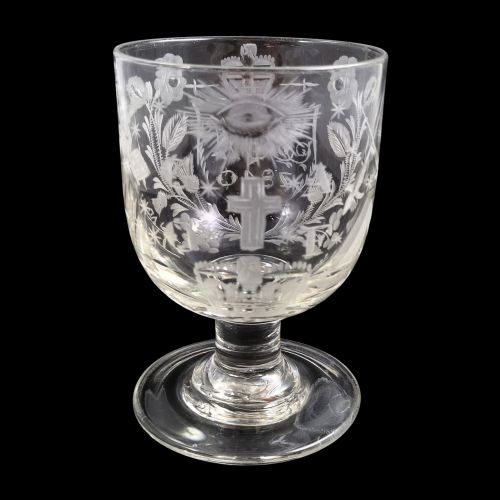
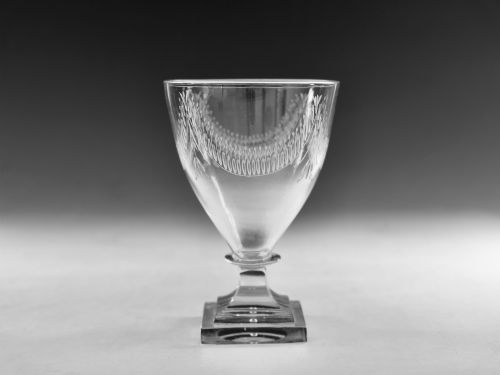
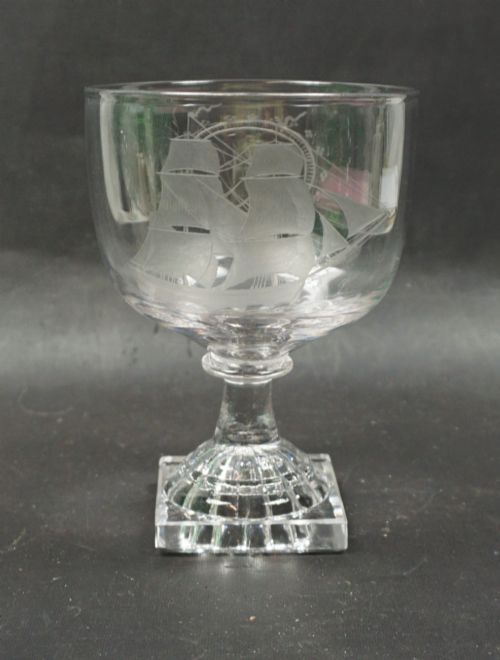
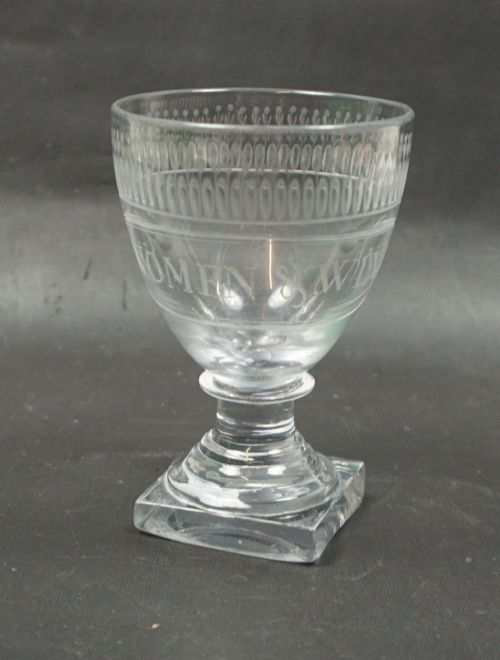
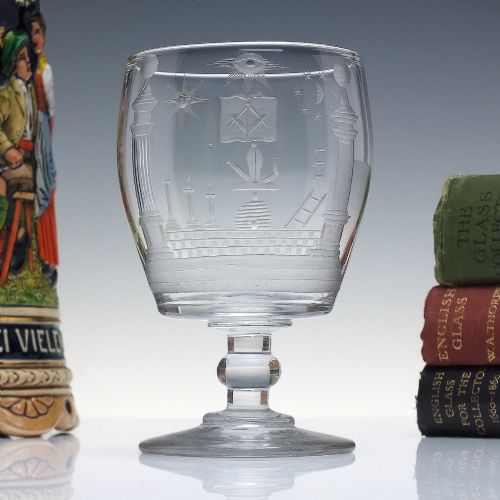
You are most likely to meet heavy lead-glass or crystal rummers featuring broad bowls set on plain stems or square lemon-squeezer feet. Decoration often includes wheel-engraved motifs such as hops and barley, sailing ships, armorial crests or Masonic symbols.
The selection ranges from large serving rummers and ovoid-bowl goblets down to smaller drinking glasses and ale glasses. Forms vary from simple bucket shapes to panel-cut and etched designs originating from around eighteen-hundred up to nineteen-hundred.
Materials and technique
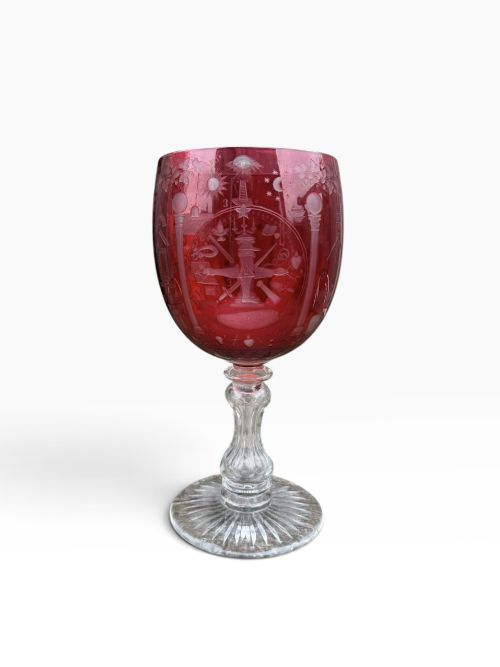
Makers utilised lead glass, lead crystal, flint glass and clear glass, alongside coloured variants such as cranberry and amber glass. These heavy metal-rich compositions allowed for deep, stable vessel walls capable of enduring robust daily use.
Engraved Rummer Glasses Retail Price Guide 2026
Typical asking prices for engraved rummer glasses among the pieces listed under this phrase on Sellingantiques today, from the lower quarter to the upper quarter. They describe what is for sale here now, not the wider market.
One remarkably honest eighteenth-century glass declares its social priorities to anyone holding it by being engraved simply with the toast 'Women & Wine'.
Quality variations
The calibre of a piece rests heavily on the clarity of the metal and the crispness of the wheel-engraving. Crisp botanical details, such as sharply defined hops and barley, or intricate depictions of sailing ships and bridges, mark out superior craftsmanship.
Proportion and weight also dictate standing, with well-balanced lemon-squeezer bases and substantial crystal bodies commanding attention. Pieces retaining smooth, clean glass surfaces without excessive bubble inclusions or uneven thickness represent the stronger end of the range.
The Engraved Rummer Glasses Glossary
- Rummer
- A heavy drinking glass or goblet with a large bowl used for ale, wine or spirits. They typically date from the Georgian and Victorian eras.
- Lemon-squeezer base
- A square, moulded foot with indented corners resembling a citrus squeezer. This form is frequently found on Georgian rummers.
- Lead crystal
- Glass containing lead oxide which increases brilliance, weight and clarity. It provides a resonant ring when struck.
- Wheel-engraving
- A technique where a glass vessel is held against rotating small wheels of stone, copper or wood to cut designs into the surface. It creates distinct tactile depth.
- Ale glass
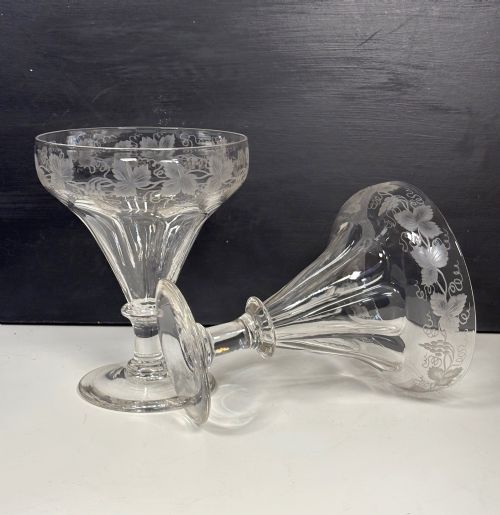
- A tall drinking vessel specifically shaped for serving beer or ale. They often feature narrow bowls and engraved botanical motifs like hops and barley.
Engraved Rummer Glasses: Frequently Asked Questions
What were rummer glasses used for?
These large vessels were traditionally used for serving wine, punch, ale and spirits in domestic and tavern settings. Their substantial capacity and sturdy build made them practical for communal or heavy everyday toasts.
Over time, specific forms evolved to suit particular drinks, from heavy table rummers to slender ale glasses decorated with agricultural motifs.
How do you date a Georgian rummer?
Dating relies on combining the silhouette of the bowl, the stem formation and the style of the foot. Pieces from the late eighteenth century often feature distinct ovoid or bucket bowls paired with lemon-squeezer bases.
Later nineteenth-century examples frequently adopt panel-cut sides or heavier Victorian proportions. Engraving styles and lead-metal weight also offer strong chronological markers.
What is a lemon-squeezer base?
A lemon-squeezer base is a square, pressed foot with sharp corners and distinct indented panels on the underside. This technical innovation appeared frequently on English rummers around eighteen-hundred.
Master glassmakers formed these bases using moulds before attaching them to the blown bowl above.
How should I display antique rummers?
Displaying these glasses requires stable shelving that can support the considerable weight of lead crystal and flint glass. Placing them away from direct foot traffic prevents accidental tipping of these historic vessels.
Good interior lighting helps highlight the wheel-engraved details and catch the clarity of the clear or coloured glass.