


Engraved Lead Crystal Stemware
These engraved lead crystal stemware pieces range from Georgian balusters to Edwardian coupes, bringing historic wheel-engraved motifs to the table.
Engraved Lead Crystal Stemware
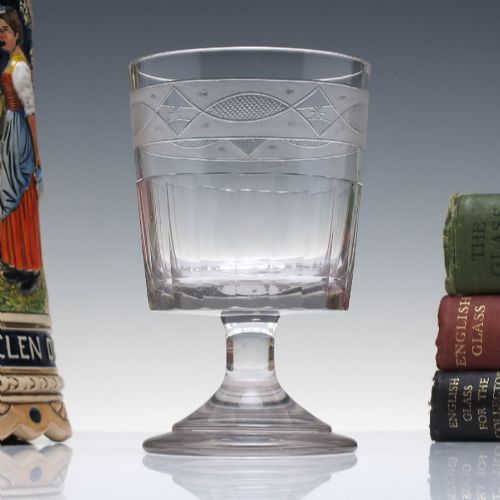
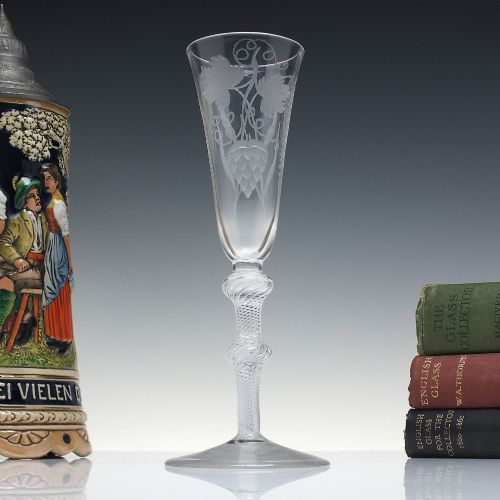
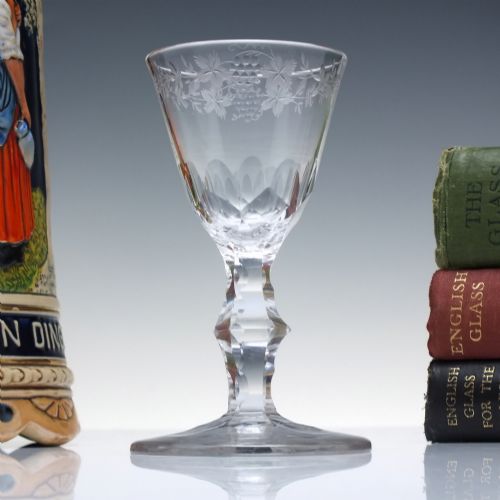
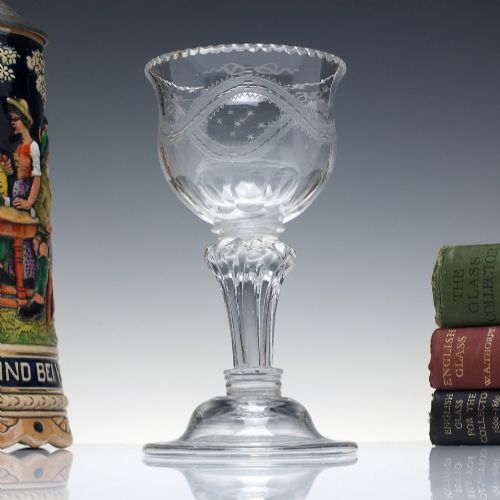
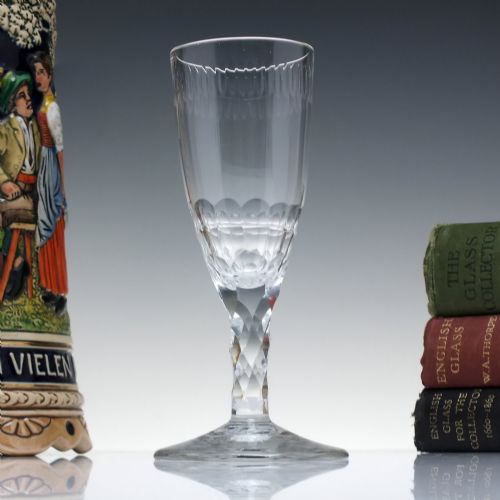
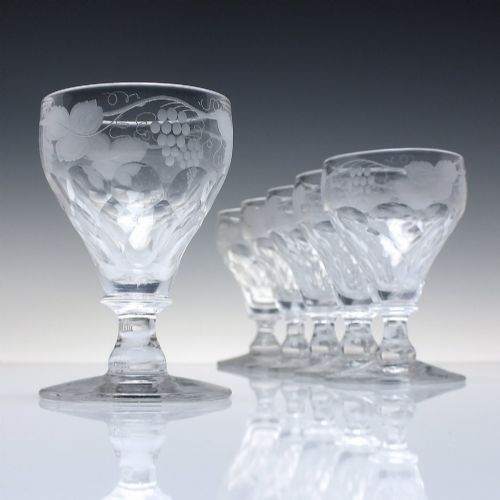
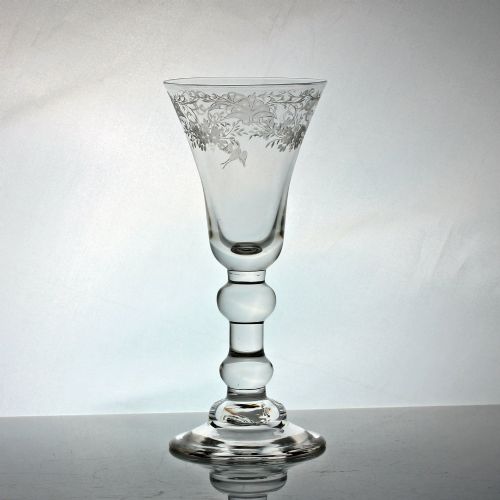
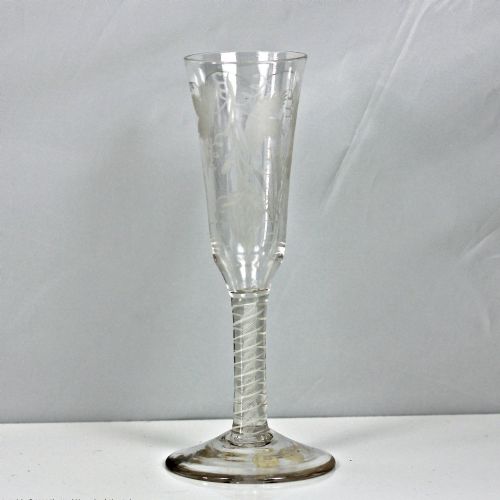
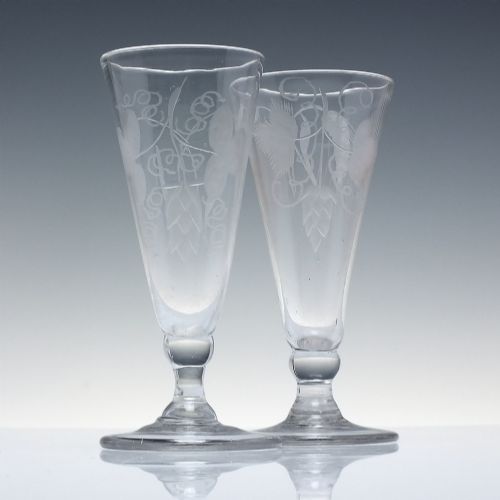
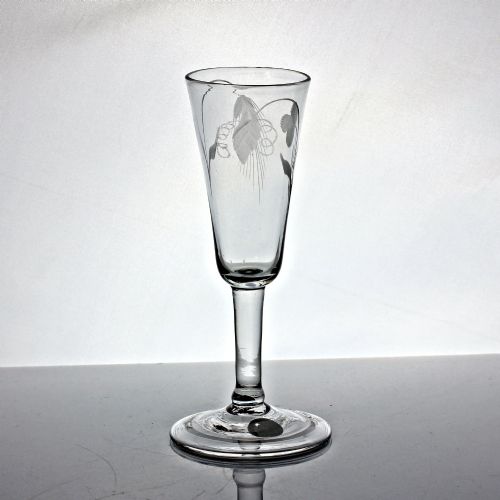
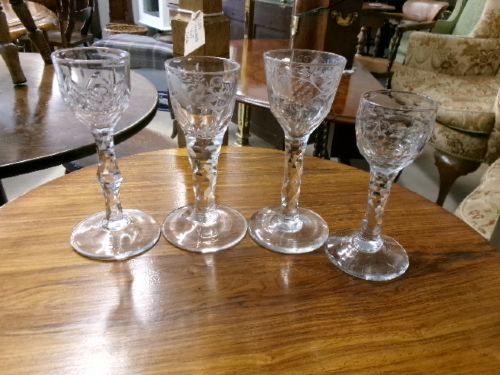
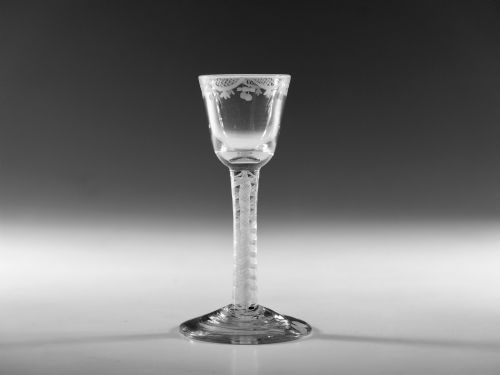
When you search for engraved lead crystal stemware, you encounter a lineage stretching from mid-eighteenth-century tavern glasses to twentieth-century champagne coupes and sets. The earliest examples surface as Georgian ale glasses, rummers, and sweetmeats decorated with wheel-cut hops, barley, or armorials. These pieces include baluster stems, air twists, and opaque twists, alongside later facet-cut forms.
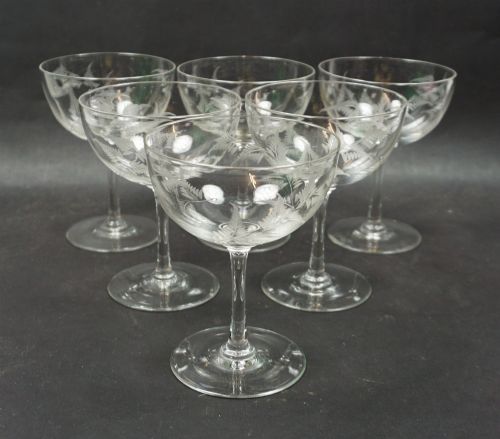
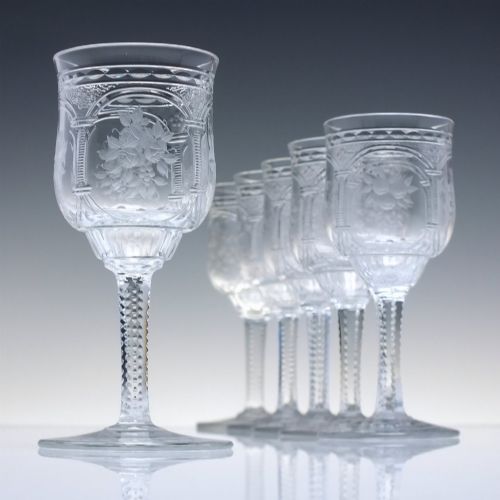
The material shifts across eras from early lead glass and flint glass to refined lead crystal and clear glass. Later Victorian and Edwardian iterations bring intaglio engraving and delicate fern patterns to champagne coupes and dram glasses. Sets of matching port glasses, wine glasses, and rummers reflect how domestic dining habits evolved from communal vessels to matched suites.
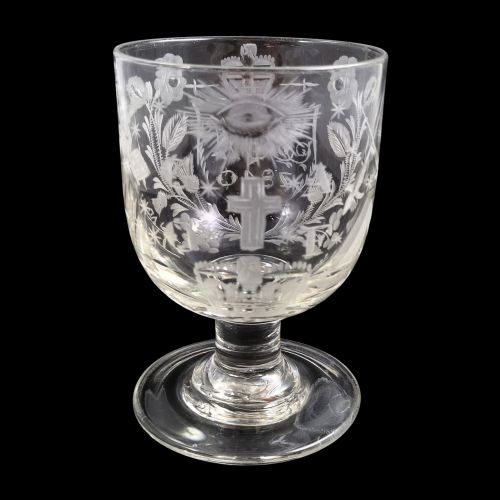
The forms meet a collector expecting both functional drinkware and historic table glass. Tumblers, flutes, and heavy baluster goblets sit alongside commemorative items like George V coronation goblets. Each object preserves techniques of the glassmaker's bench, whether through air bubbles trapped in twists or heavy domed feet.
Materials and working methods
Makers formed these pieces from lead glass, flint glass, and lead crystal, utilising formulations that permitted deep wheel-engraving and sharp facet-cutting. Operators blew molten metal into moulds or free-hand, shaping bowls, stems, and feet while the material remained pliable. Twists were drawn from coloured or opaque enamel rods embedded within the metal.
Engravers applied surface decoration using rotating copper wheels fed with an abrasive paste, cutting intricate motifs such as ferns, ships, bridges, and floral emblems. Workers then polished the cut surfaces to achieve clarity, occasionally leaving the frosted matte finish of intaglio work to contrast with clear lead crystal.
Engraved Lead Crystal Stemware Retail Price Guide 2026
Typical asking prices for engraved lead crystal stemware among the pieces listed under this phrase on Sellingantiques today, from the lower quarter to the upper quarter. They describe what is for sale here now, not the wider market.
Jacobite glasses hid secret political sympathies in fragile stems, toasting exiled kings over invisible engraved roses.
Distinguishing quality in historical glass
Quality rests in the crispness of the wheel engraving and the balance of the metal. Superior pieces display fluid, confident lines in subjects like hop and barley motifs, whereas lesser examples show static or shallow surface scratching. Weight distribution between bowl, stem, and foot also indicates the maker's control over the molten lead glass.
John Walsh Walsh·Baccarat Vallee
The Engraved Lead Crystal Stemware Glossary
- Air twist
- A stem containing elongated threads of air formed by drawing out bubbles trapped within the molten lead glass.
- Baluster
- A heavy, swelling stem shape derived from architectural supports, common in early eighteenth-century English drinking vessels.
- Facet cut
- A decorative surface treatment comprising flat planes ground and polished onto stems, bowls, or feet to refract light.
- Opaque twist
- A stem containing fine white or coloured enamel glass rods twisted through the clear metal.
- Rummer
- A large, capacious drinking glass on a short stem and foot, utilised for ale, wine, or punch during the Georgian and Regency periods.
Engraved Lead Crystal Stemware: Frequently Asked Questions
How do I clean antique crystal stemware safely?
Wash these pieces by hand in warm water using a mild detergent, supporting the bowl and stem rather than twisting them. Avoid dishwashers, as thermal shock and harsh detergents damage historical lead glass.
Place a cloth at the bottom of the sink to cushion the heavy foot of rummers or goblets. Dry them immediately with a lint-free linen cloth to maintain clarity.
Can I use these glasses for everyday dining?
Many people enjoy using Georgian and Edwardian stemware for special occasions, though older lead crystal requires careful handling. Stems from the eighteenth century have delicate air twists or opaque twists that demand respect.
Store them securely on stable shelving where bases do not touch, preventing rim chips. Hand-washing keeps the fragile wheel-engraved surfaces intact for daily use.
How do I tell an air twist from an opaque twist?
An air twist contains clear, elongated threads of air trapped inside the stem during the pulling process. You spot them by looking closely through the clear metal for spiralling tubular bubbles.
An opaque twist incorporates solid white or coloured enamel glass rods drawn into the stem. These appear opaque and distinct against the surrounding clear flint glass.
What period do hop and barley engravings belong to?
Hop and barley motifs appear most frequently on Georgian ale glasses and rummers dating from the mid-to-late eighteenth century. These agrarian themes reflected the contents of the vessel, typically ale or beer.
Engravers utilised copper wheels to render the detailed ears of grain and hop cones on baluster and facet-cut stems. This iconography remained popular through the Regency era on heavy table rummers.