

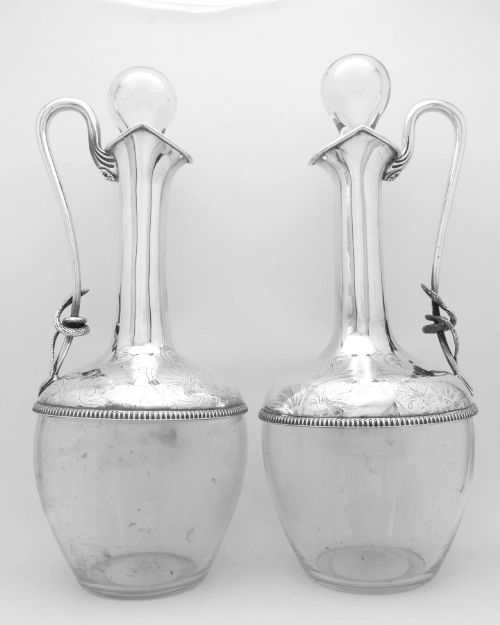


Engraved Glass Wine Pitcher
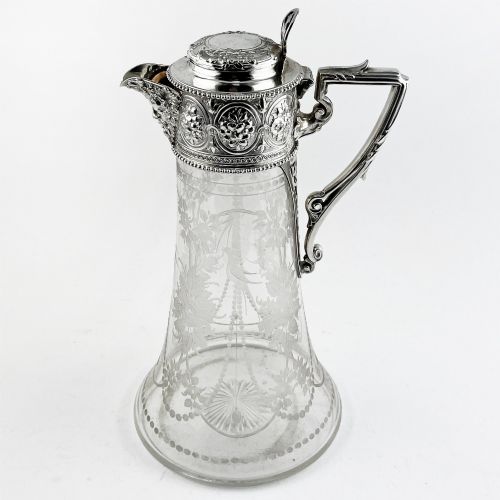
An engraved glass wine pitcher brings period ceremony to the table, combining heavy cut crystal with chased silver mounts.
Engraved Glass Wine Pitcher
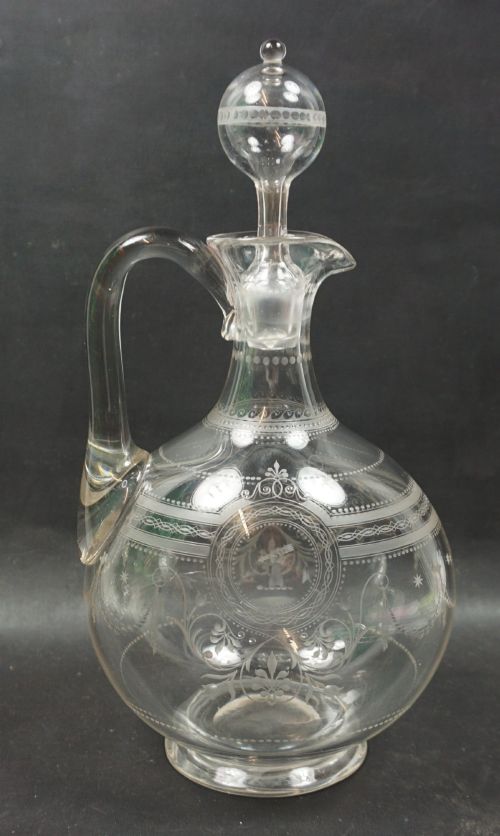
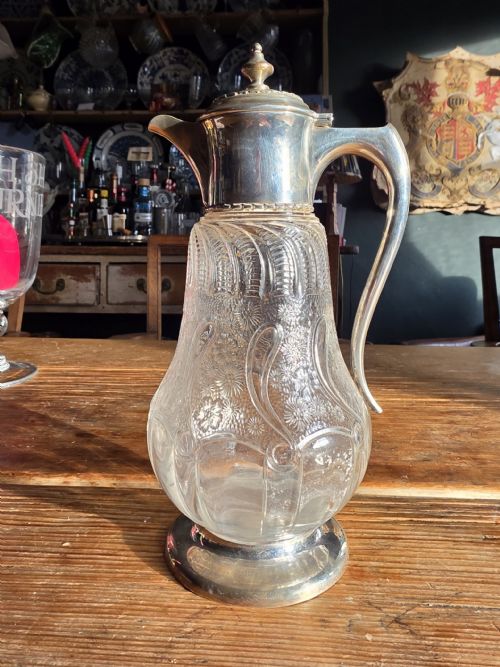
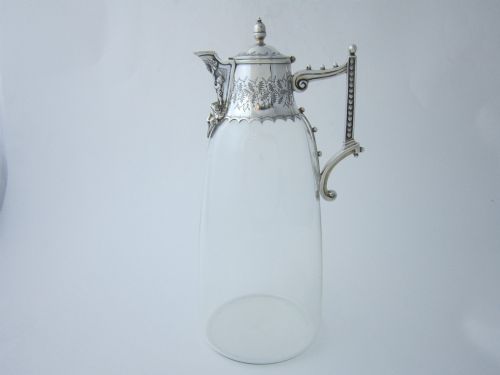
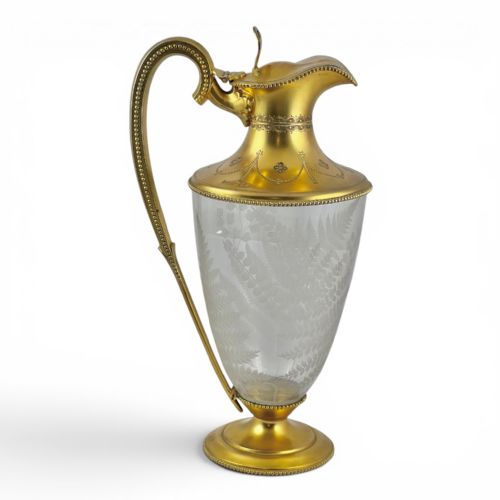
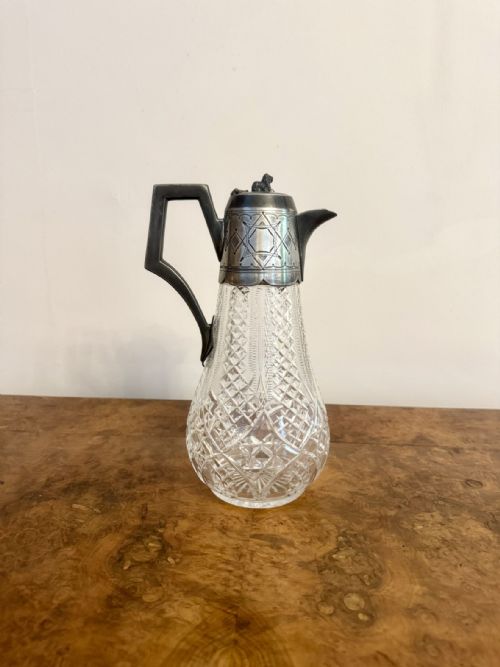
An engraved glass wine pitcher for this search typically appears as a Victorian or Edwardian claret jug, combining glass vessels with silver plate or sterling silver mounts. These serving vessels span from the 1860s through the Edwardian period, incorporating forms like ewers and decanters.
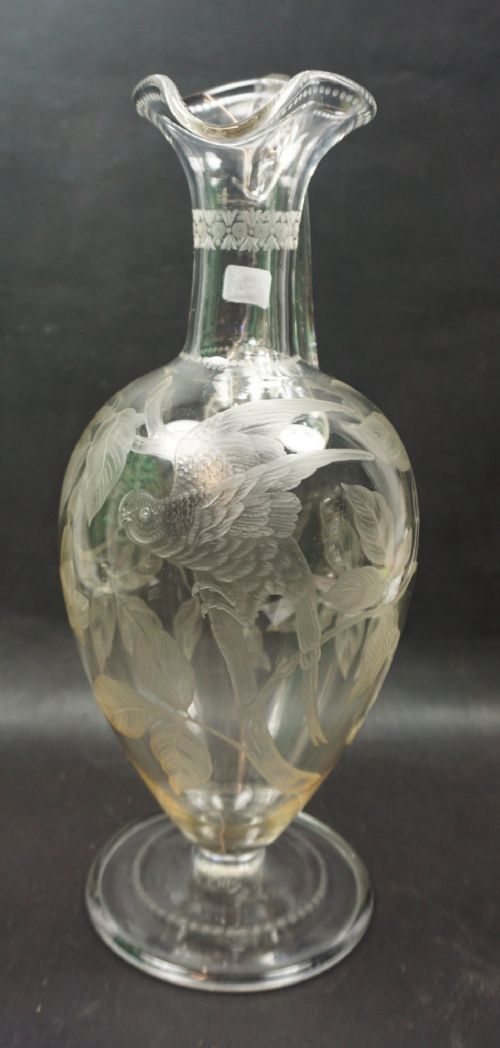
Makers and manufacturers paired blown or moulded glass bodies with hinged lids, handles, and collars. The engraved surface decoration frequently depicts botanical motifs such as fruiting vines and floral patterns.
The objects serve as functional wine-pouring vessels from the nineteenth and early twentieth centuries. Surviving examples demonstrate the stylistic shift from Victorian Rococo Revival through to Art Nouveau.
Materials and construction
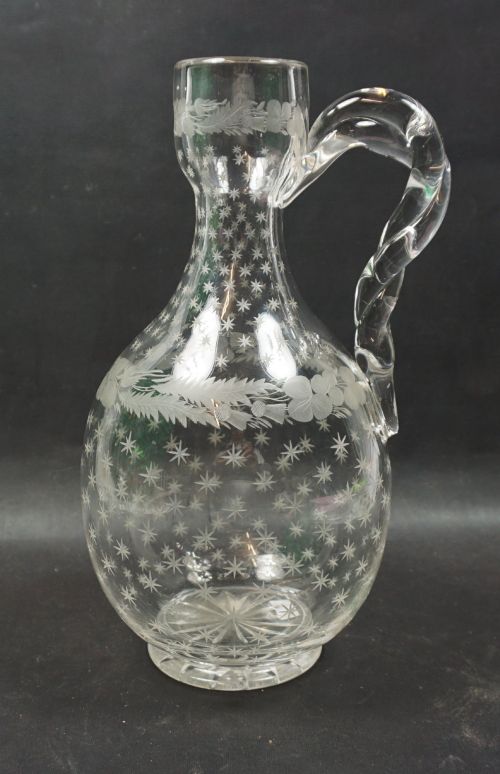
The bodies utilise glass, cut glass, crystal, lead crystal, and coloured variations such as cranberry glass. Craftsmen shaped these vessels through blowing and intaglio cutting or etching.
Mounts and handles consist of silver plate, sterling silver, silver gilt, and solid silver. Silversmiths cast and engraved these mounts, incorporating specific details like serpent handles and bacchus masks.
Makers secured the metal collars and hinged lids to the glass necks using adhesives or mechanical collars. Intaglio engraving and wheel-cutting decorated the glass body beneath the silver handle and spout.
Engraved Glass Wine Pitcher Retail Price Guide 2026
Typical asking prices for engraved glass wine pitcher among the pieces listed under this phrase on Sellingantiques today, from the lower quarter to the upper quarter. They describe what is for sale here now, not the wider market.
Some Victorian jugs feature coiled serpent handles frozen in silver mid-strike.
Judging execution and materials
Quality rests in the depth and clarity of the glass cutting alongside the crispness of the metal engraving. Heavier lead crystal and solid sterling silver mounts distinguish finer productions from lighter silver-plated and moulded glass alternatives.
The integration between the silver mount and the glass body demonstrates the maker's skill. Robust hinge mechanisms and well-fitted collars indicate superior workshop standards during the Victorian and Edwardian eras.
William Comyns·Asprey and Co. Ltd·William Davenport
The Engraved Glass Wine Pitcher Glossary
- Claret jug
- A specialised pouring vessel designed for serving red wine, typically featuring a glass body and a metal handle with a hinged lid. These pieces were central to nineteenth-century dining rituals.
- Silver plate
- A base metal coated with a thin layer of silver, commonly utilised for the handles and collars of nineteenth-century jugs. This technique offered the appearance of solid silver at a lower production cost.
- Intaglio
- A technique where the design is sunk below the surface of the glass, creating a sharp motif when light catches the cut edges. It requires steady hand-cutting on a rotating wheel.
- Bacchus mask
- A decorative facial motif representing the classical god of wine, frequently cast into the silver spouts or mounts of serving jugs. The imagery connects the vessel directly to its vinous purpose.
Engraved Glass Wine Pitcher: Frequently Asked Questions
What is a claret jug?
A claret jug is a table pitcher specifically designed to hold and serve red wine during formal meals. Victorian households utilised them to transfer wine from storage bottles before pouring.
The form combines a glass or crystal vessel with a metal handle, collar, and hinged lid. Makers shaped the glass through blowing and cutting while mounting them in silver or silver plate.
How do I date these pitchers?
Dating relies on the assay marks stamped onto the silver mounts and the stylistic markers of the glass body. Victorian pieces show heavier ornamentation, while Edwardian and later examples lean towards cleaner lines.
Design motifs also indicate the period of manufacture, moving from mid-nineteenth-century floral engravings to later Art Nouveau influences around nineteen hundred. Hallmarks on solid silver provide the most precise chronological indicator.
Are these pitchers safe for wine?
These historical vessels function adequately for serving wine provided the interior is thoroughly cleaned. The materials used, primarily glass and silver, remain stable when exposed to wine.
Users should check the seal between the metal collar and the glass body to ensure stability during pouring. Hand washing protects the historical silver mounts and fragile crystal surfaces.
What is cranberry glass?
Cranberry glass is a red transparent glass created by adding gold to the molten batch during production. It gained popularity in Victorian tableware and drinking services.
Pitchers utilising this material often feature etched or engraved decorations that contrast with the rich pinkish-red hue. The technique required precise temperature control in the glasshouse.