





Engraved Glass Ale Glasses
These engraved glass ale glasses carry the hops and barley of Georgian toasts into modern hands.
Engraved Glass Ale Glasses
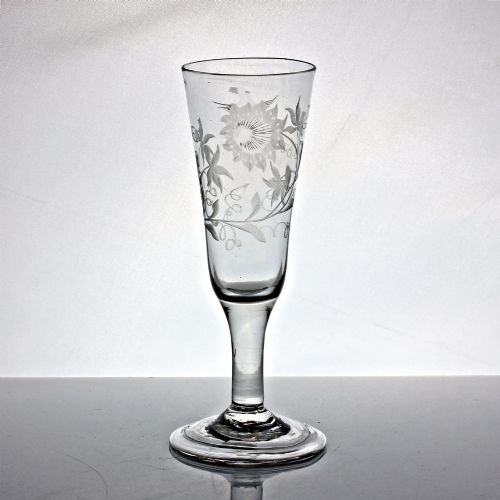
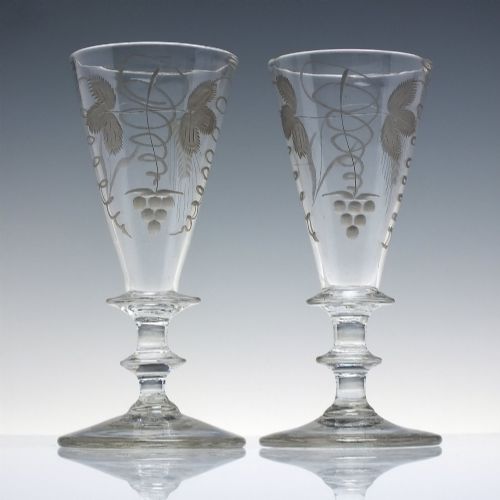
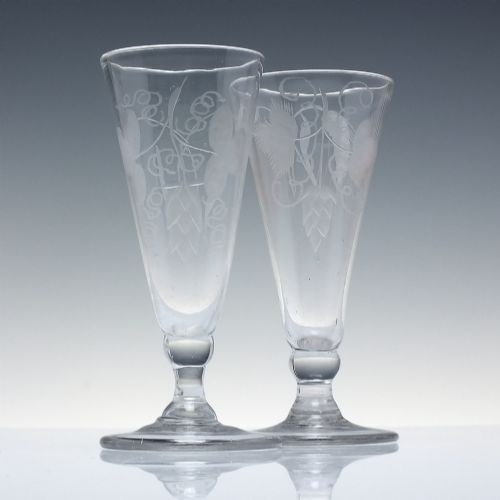
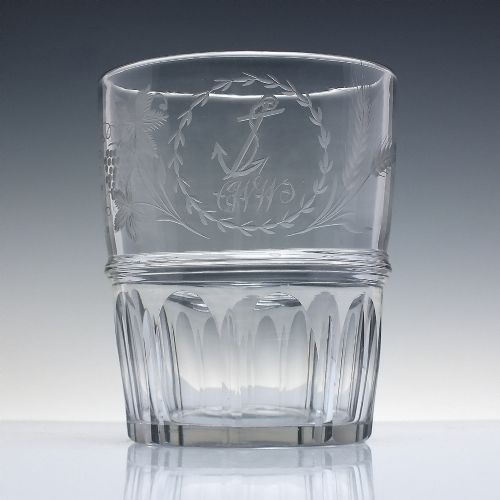
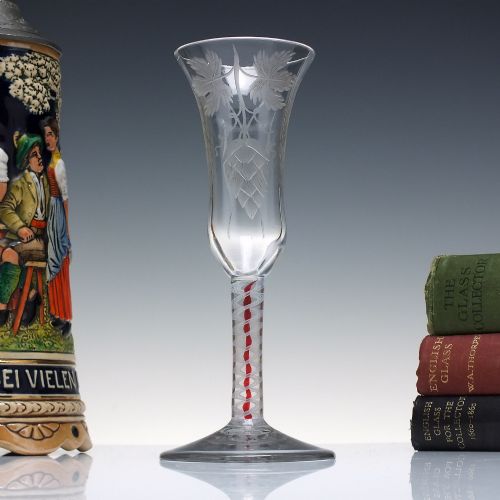
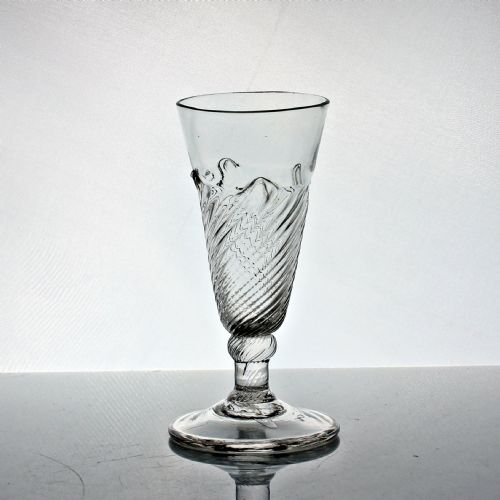
Engraved glass ale glasses are drinking vessels shaped to hold beer, stout or barley wine, appearing most frequently in Georgian forms on this page. Collectors encounter slender flutes, dwarf glasses, and heavy rummers bearing botanical cuts of hops and barley.
The selection ranges from mid-eighteenth-century specimens with air twist stems to Edwardian pairs and later twentieth-century examples. English traditional makers produced these pieces in lead glass and clear crystal to showcase the engraved detail.
How they were made
Maker's workshops formed these drinking vessels from lead glass, lead crystal, and flint glass, shaping clear metal into stems, tumblers, and flutes. The material provided the heft and clarity necessary for detailed surface work.
Engravers applied wheel-cutting to depict hops and barley motifs across the bowl. Certain eighteenth-century pieces incorporated air twists and opaque twists within the stem, formed by drawing bubbles through the molten glass.
Listings feature lead crystal, flint glass, and enamel glass across Georgian, Regency, and Edwardian periods.
What varies in quality
The distinction between ordinary and superior pieces rests on the depth and precision of the wheel engraving, particularly in botanical motifs like hops and barley. Crisp, deeply cut decoration maintains its definition against the light far better than shallow work.
Stem formation also dictates standard, with complex double series opaque twists and coloured twists commanding greater attention than plain stems. The clarity of the lead glass and the balance of the bowl upon its foot complete the assessment.
The Engraved Glass Ale Glasses Glossary
- Air twist
- A stem formation created by trapping elongated air bubbles within the molten metal before drawing and twisting the glass. This technique was popular in eighteenth-century drinking vessels.
- Opaque twist
- A decorative stem style containing white or coloured enamel threads pulled through the glass during manufacture. Double series versions combine multiple twist patterns.
- Rummer
- A large, heavy drinking glass with a short stem and a capacious bowl. These pieces frequently feature engraved hop and barley motifs for serving stronger brews.
- Facet cut
- Geometric surface cutting applied to stems or bowls to catch the light. This style emerged strongly in the Regency period.
Engraved Glass Ale Glasses: Frequently Asked Questions
How do I date an ale glass?
Dating relies heavily on the form of the stem, the composition of the glass, and the style of engraving. Eighteenth-century examples often display air twists or opaque twists, whereas later pieces favour plain stems or facet cutting.
The metal itself changes across eras, with heavy lead glass characteristic of Georgian production. Edwardian and later pieces present distinct proportions and lighter crystal weights.
What were hop and barley glasses used for?
These vessels served ales, beers, and barley wines at social gatherings and dining tables. The engraved motifs directly referenced the contents of the glass.
Larger rummers and decanters accommodated heavier portions and communal sharing. Taller flutes kept the carbonation alive in lighter brews.
Are eighteenth-century glasses safe to use?
Many collectors prefer to display these antique drinking vessels rather than risk thermal or physical shock during modern dining. Lead glass from the Georgian era is durable but vulnerable to sudden temperature changes.
Hand washing in lukewarm water is essential if utilised. Modern use remains a personal choice for careful owners.
What is a dwarf ale glass?
A dwarf ale glass is a shorter, sturdier variant of the standard drinking flute, featuring a compressed stem and a stout foot. They were designed for stability on tavern and dining tables.
Despite their reduced height, they often carry the same detailed hop and barley engraving as their taller counterparts.