


Engraved Flint Glass
Engraved flint glass pieces are lead crystal drinking vessels and decanters carrying wheel or diamond point surface cuts, desired for their clarity and historical weight.
Engraved Flint Glass
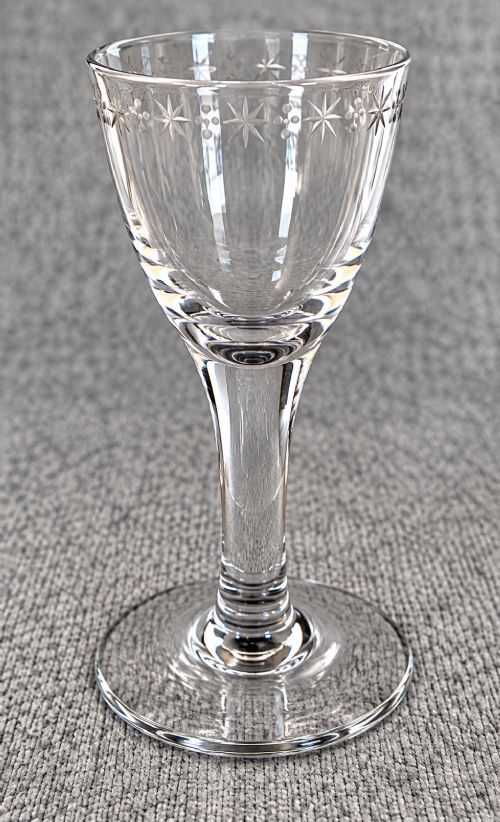
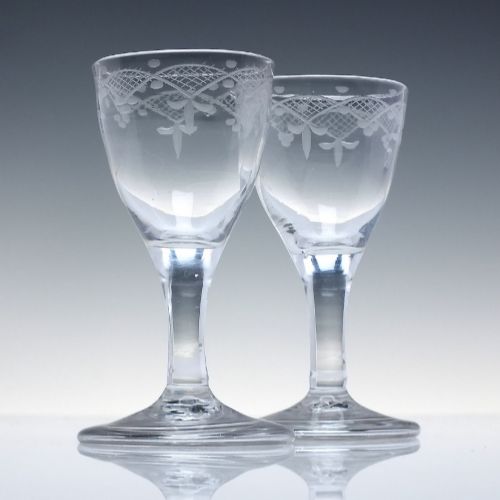
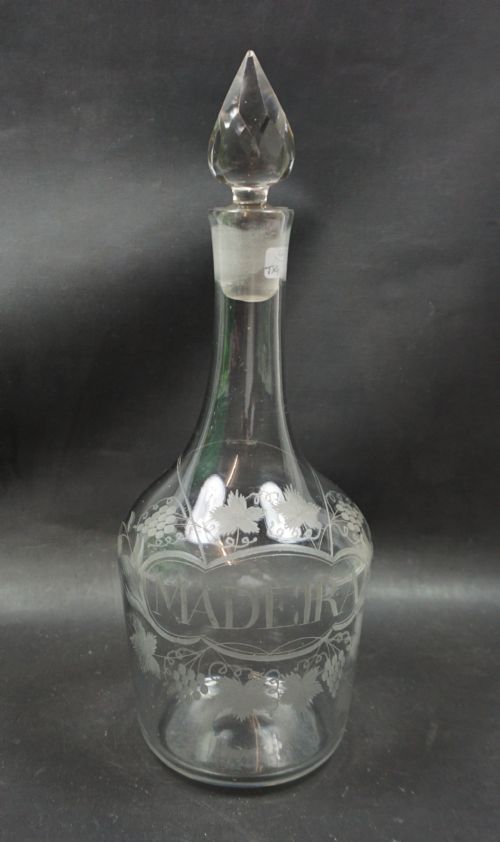
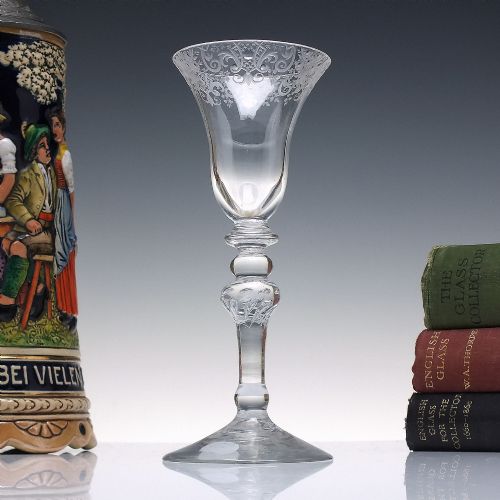
When you search for engraved flint glass, you find historical drinking vessels and serving pieces spanning the eighteenth and nineteenth centuries. The selection on this page consists chiefly of wine glasses, dram glasses, ale glasses, rummers, and decanters originating from the Georgian and Victorian eras.
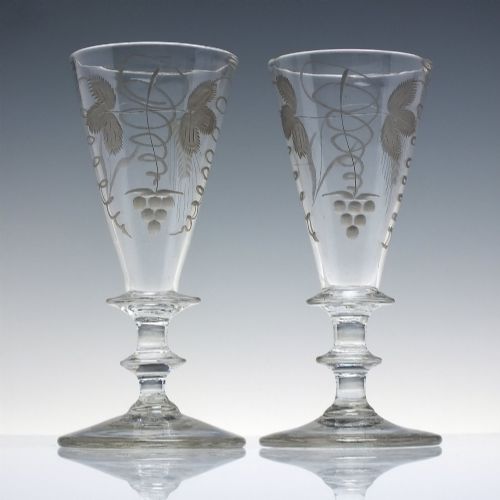
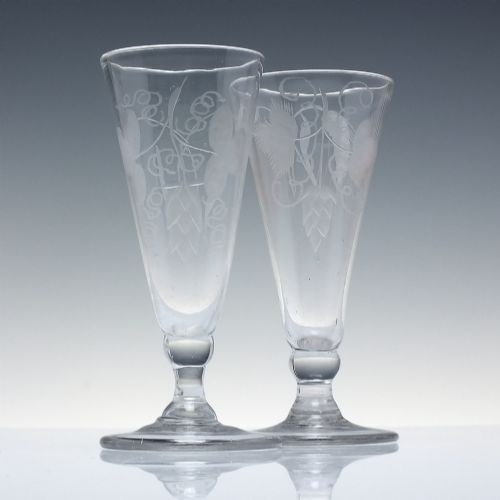
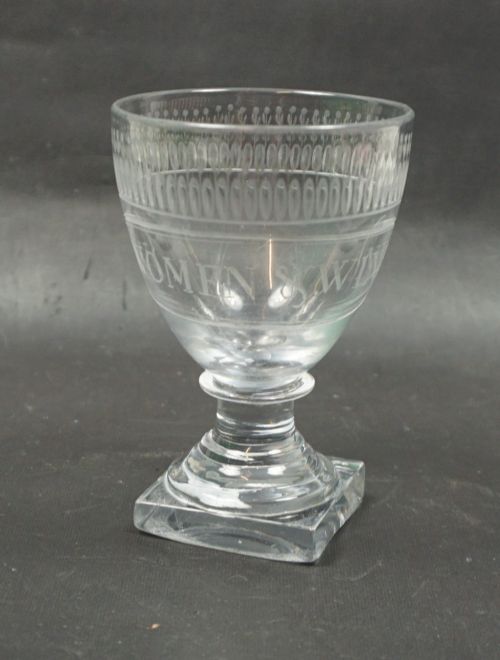
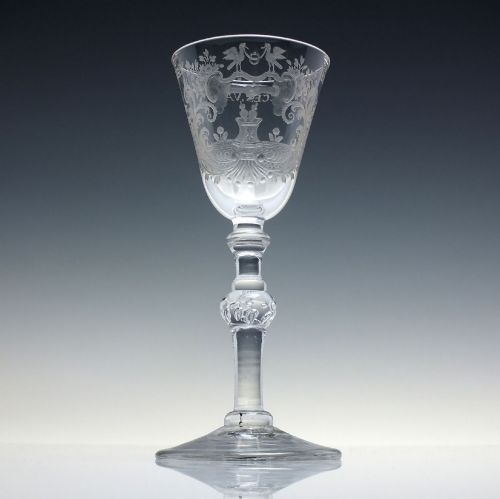
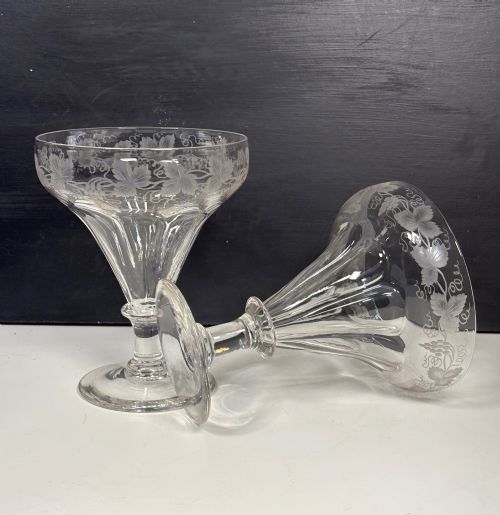
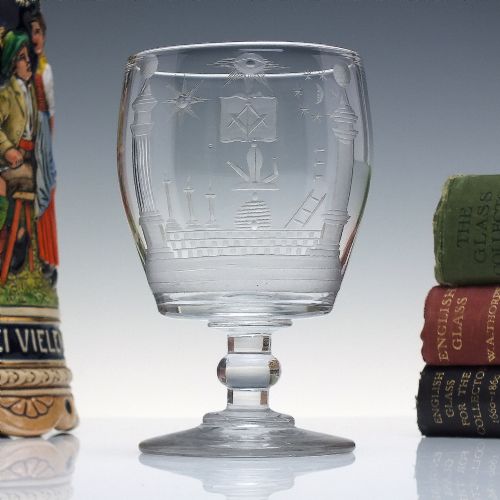
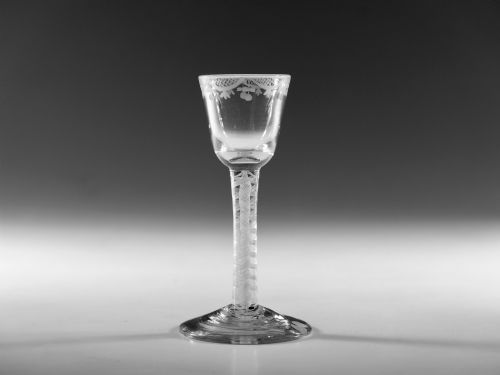
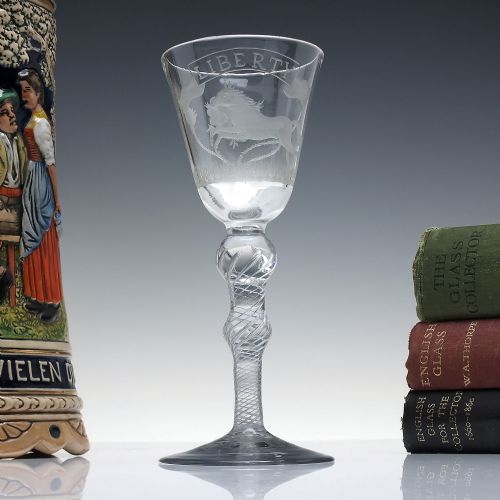
The forms range from delicate dram glasses with folded feet to heavy rummers with square lemon squeezer bases and large ovoid goblets. Many examples carry wheel engraving depicting specific motifs such as hop and barley, Masonic symbols, or Jacobite emblems.
The material across these items is predominantly clear lead glass or flint glass, giving the objects a distinct refractive quality. Pieces date from the early eighteenth century through to the Victorian period, demonstrating a continuity in British glassmaking traditions.
Assessing quality in historical glassware
Quality in these drinking vessels rests upon the clarity of the lead glass and the crispness of the wheel engraving. Superior examples demonstrate a heavy, resonant metal free from excessive cloudiness or heavy bubbles.
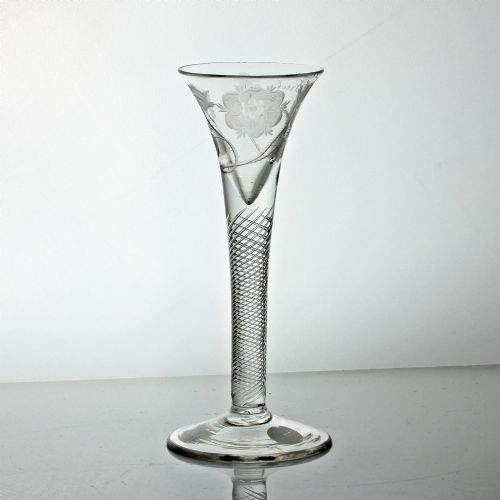
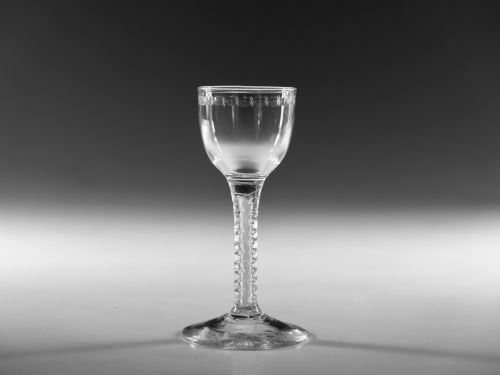
The complexity of the form dictates the upper tier of the range, such as multi-spiral air twists, intricate opaque twists, and deeply cut decorative motifs. The precision of the foot and stem construction relative to the bowl proportion marks the distinction between standard utility items and finer display pieces.
Listings feature lead glass and clear crystal objects spanning the eighteenth and nineteenth centuries, including decanters, dram glasses, and rummers.
The Engraved Flint Glass Glossary
- Flint glass
- A heavy, brilliant lead glass developed to increase clarity and refractive index in decorative tableware. This material forms the primary substance for the drinking vessels and decanters found here.
- Air twist
- A decorative stem formation containing an elongated spiral of tiny air bubbles trapped within the glass. Makers achieved this effect by drawing and twisting heated rods during manufacture.
- Opaque twist
- A stem style featuring white or coloured enamel glass threads twisted into spiral patterns inside the clear metal. Double series variants combine multiple internal threads for greater visual complexity.
- Lemon squeezer foot
- A square, moulded glass base with sloping sides resembling a kitchen juicer. These bases appear frequently on nineteenth-century rummers and serving bottles.
- Ratafia glass
- A narrow, flute-like drinking vessel designed for sweet herbal cordials and liqueurs. These glasses typically feature long stems and small bowls suited to potent after-dinner drinks.
Engraved Flint Glass: Frequently Asked Questions
What is flint glass?
Flint glass is a dense, high-clarity lead glass originally produced with flint as a silica source to improve brilliance.
This formulation allows the material to catch and refract light much more effectively than standard soda glass.
How do I date an old glass?
Dating relies on observing a combination of the vessel form, stem construction, foot type, and engraving style. Eighteenth-century pieces often display pontil marks, folded feet, or air twist stems.
Victorian items typically feature heavier moulded elements, square bases, and distinct nineteenth-century decorative motifs.
What are Jacobite glasses?
Jacobite glasses are political drinking vessels engraved with secret symbols supporting the exiled Stuart claimants to the British throne. Common motifs include specific flowers, buds, and Latin mottoes.
Supporters used these glasses for covert toasts during the eighteenth century.
Can I use antique glassware?
While these pieces were made for practical dining and drinking, historical lead glass requires careful handling and hand washing to preserve the surface. Many collectors choose to display them or reserve them for very occasional use.
Sudden temperature changes can crack old glass.