











Engraved Crystal Drinking Glass
These engraved crystal drinking glass pieces carry centuries of cut and wheel-carved decoration in lead crystal and clear glass.
Engraved Crystal Drinking Glass
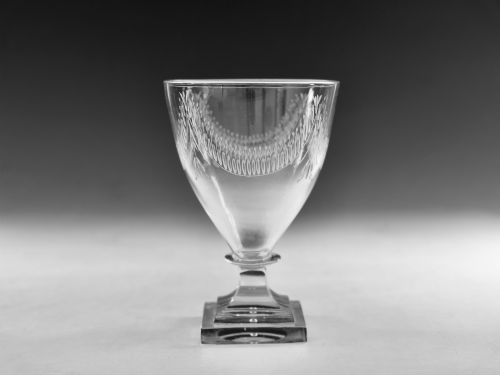
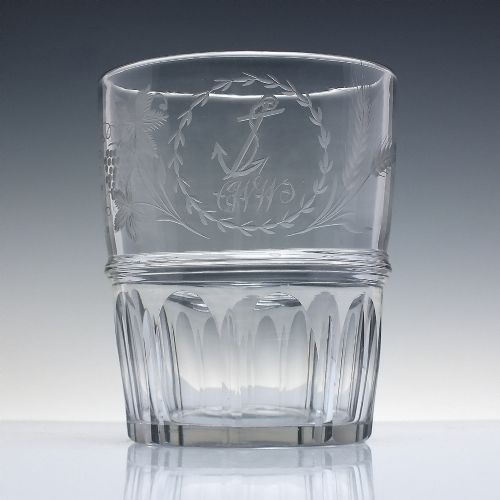
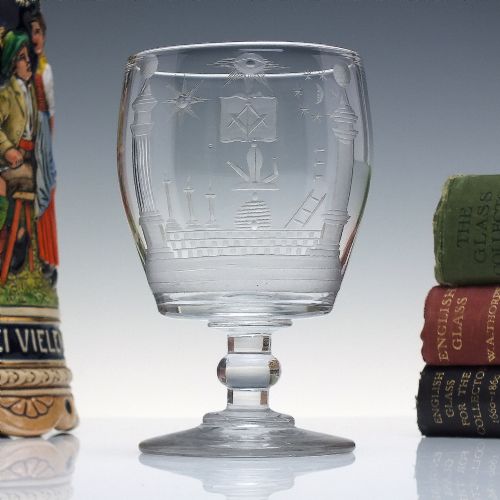
An engraved crystal drinking glass encompasses forms from small wine glasses and ale flutes to heavy rummers and tumblers. These vessels span the eighteenth and nineteenth centuries, alongside Edwardian and Art Deco suites.
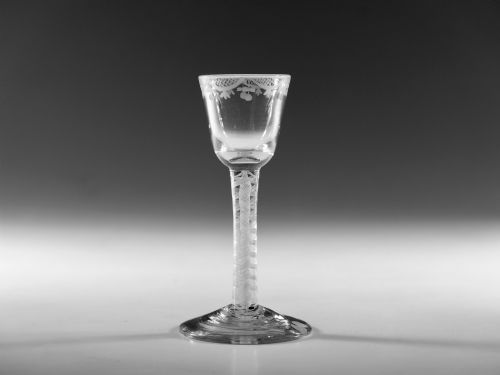
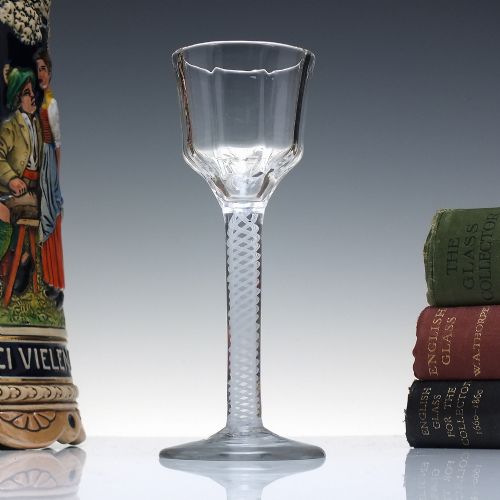
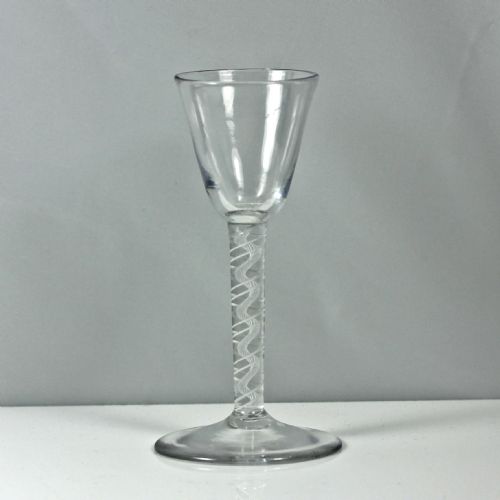
The eighteenth-century pieces frequently present opaque twists, air twists, and plain stems supporting bowls engraved with floral or political motifs. Rummers and heavy tumblers from the Georgian and Victorian eras dominate the heavier drinking vessels on offer.
Materials and Techniques
Makers utilised lead glass, flint glass, and heavy lead crystal to form the basic vessel before applying surface decoration. The weight and refractive quality of these lead-rich materials allowed deeper wheel-cutting and finer engraving.
Engraving was executed using rotating copper wheels charged with abrasive pastes, creating intaglio designs, floral sprays, or armorial crests. Air twists and opaque twists were drawn into the stems during hot glass manipulation.
Engraved Crystal Drinking Glass Retail Price Guide 2026
Typical asking prices for engraved crystal drinking glass among the pieces listed under this phrase on Sellingantiques today, from the lower quarter to the upper quarter. They describe what is for sale here now, not the wider market.
Jacobite glasses hid treason in plain sight beneath harmless garden roses.
Evaluating the Hand
Quality rests in the precision and depth of the wheel engraving, where crisp lines distinguish superior work from shallow surface scratches. The clarity of the crystal metal itself and the absence of heavy internal cloudiness or manufacturing flaws mark better pieces.
Proportion and balance in the stem and foot dictate the overall success of the vessel. Early glasses show careful control in the distribution of metal, particularly in air and opaque twist stems where symmetry is paramount.
The Engraved Crystal Drinking Glass Glossary
- Rummer
- A heavy drinking glass with a capacious bowl used for beer, ale, or wine during the Georgian and Victorian periods. Rummers often feature square lemon squeezer feet or facet-cut stems.
- Air Twist
- A stem formation containing fine threads of entrapped air spiralling down the length of the glass. This technique was achieved by drawing bubbles through hot metal prior to pulling the stem.
- Opaque Twist
- A stem containing white or coloured enamel rods twisted within the clear glass matrix. These canes create dense internal patterns beneath the bowl.
- Intaglio
- A method of engraving where the design is carved directly into the glass surface rather than left in relief. This technique produces deep, tactile pictorial scenes on heavy crystal.
- Lemon Squeezer Base
- A square, pressed glass foot with sloping sides resembling a kitchen squeezer, found on heavy nineteenth-century rummers and decanter sets.
Engraved Crystal Drinking Glass: Frequently Asked Questions
What is an 18th century Jacobite glass?
These are wine glasses engraved with secret symbols supporting the exiled House of Stuart, such as roses, buds, and the word Fiat. Collectors prize them for their historical association with clandestine loyalty networks.
They appear in various stem forms, including air twists and plain stems containing teardrops. Each symbol carried specific meaning for those who drank from them.
How do I care for antique crystal?
Wash these pieces by hand in warm water using a mild detergent, avoiding harsh scrubbing brushes and modern dishwashers. Sudden temperature changes will crack old lead glass.
Store them upright on stable shelves away from direct vibration. Dry them promptly with a lint-free cloth to maintain clarity.
What distinguishes flint glass from lead crystal?
Flint glass and lead crystal both contain lead oxide, which increases density, weight, and light refraction compared to standard soda-lime glass. The terms were often used interchangeably by historical makers.
Both materials produce a clear resonant ring when struck gently. They provide the ideal heavy matrix for wheel engraving.
How were ale glasses used in the Georgian period?
Ale glasses and rummers served hopped beers and ales at formal dining tables and in public houses. Their tall bowls accommodated the lively head of traditional brews.
Many feature hop and barley motifs engraved directly onto the bowl. This decoration signaled the contents of the vessel to the drinker.