


Engraved Caddy Spoon
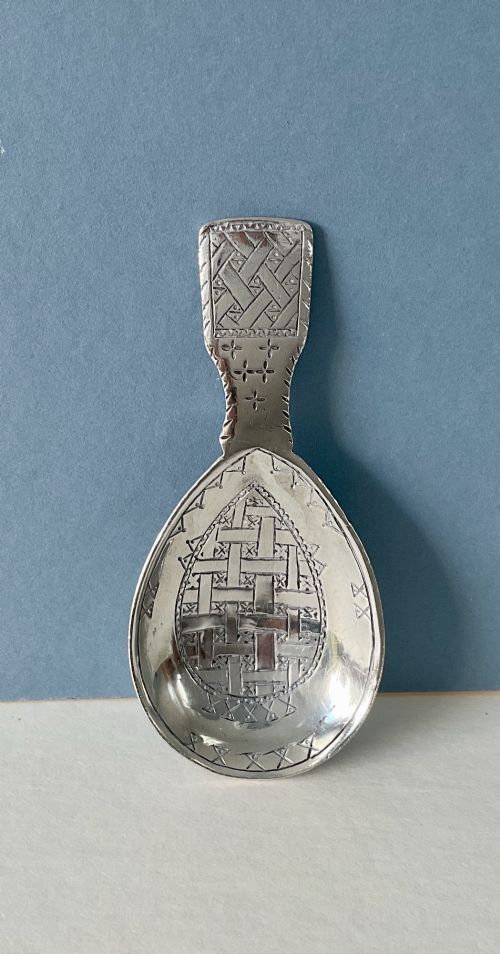
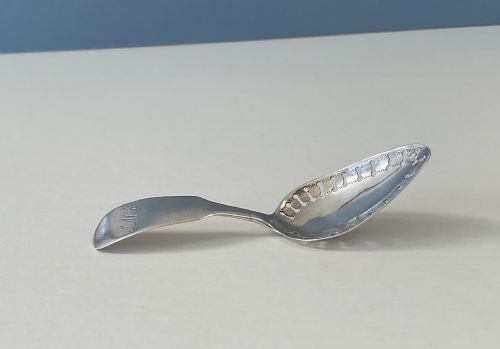
An engraved caddy spoon is a small silver implement made to measure dry tea leaves, combining precise utility with delicate surface decoration.
Engraved Caddy Spoon
An engraved caddy spoon is a small receptacle designed for measuring tea leaves from a caddy into a pot. When searching for this object, a buyer encounters pieces originating primarily from the Georgian, Victorian, and Edwardian periods.
Regional origins span London, Sheffield, Birmingham, Newcastle, Glasgow, and Dublin, alongside Scottish Provincial pieces. These small items reflect the domestic rituals of tea preparation across the eighteenth, nineteenth, and early twentieth centuries.
What varies in quality
Quality in an engraved caddy spoon rests on the crispness of the hand-engraving and the structural integrity of the bowl and handle. Deeper, more precisely executed lines on the silver indicate superior craftsmanship by the silversmith.
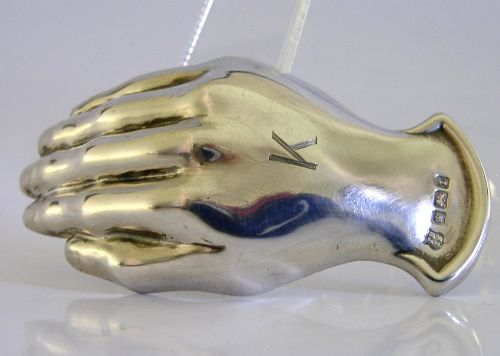
The weight of the silver and the clarity of the hallmarks also define the standing of a piece. Novelty forms and regional pieces from specific towns show distinct levels of design ambition and regional variation.
Silversmiths occasionally shaped solid silver spoons into tiny jockey caps to measure tea leaves.
John Walton·William Neale·George Unite·George Wintle
The Engraved Caddy Spoon Glossary
- Hallmark
- A series of official marks stamped onto silver items to guarantee the metal standard, assay office, and year of manufacture. These stamps provide a reliable timeline for dating antique pieces.
- Sterling silver
- A silver alloy containing a specific proportion of pure silver and other metals to ensure durability. This material forms the primary substance for the majority of these spoons.
- Bright-cutting
- An engraving technique using faceted cuts that reflect light to create a sparkling pattern. This method appears frequently on Georgian handle designs.
- Assay office
- An official body that tested and stamped precious metals to verify their purity. Offices in London, Birmingham, Sheffield, and other cities left distinct town marks.
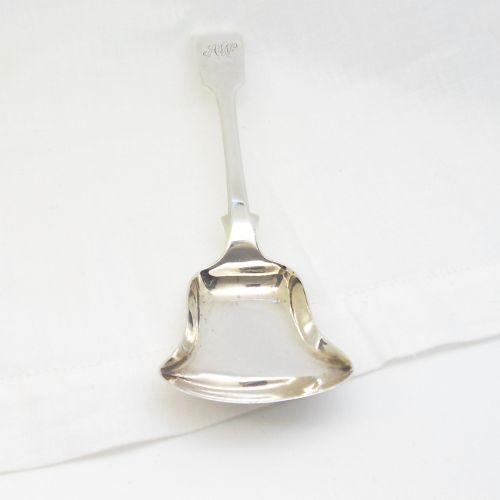
- Sugar shovel
- A variant spoon form with an elongated, shovel-shaped bowl used for serving sugar alongside tea. These pieces share similar engraved decoration with standard caddy spoons.
Engraved Caddy Spoon: Frequently Asked Questions
How do I know the date?
You can determine the date of a caddy spoon by examining the stamped hallmarks on the silver. These official marks include a specific letter code for the year of assay and a town mark for the office.
Additional clues come from the style of the engraving and the overall shape of the bowl, such as the distinct shell or rectangular forms popular in the eighteenth and nineteenth centuries.
Were they only made of silver?
While the vast majority of surviving pieces are fashioned from sterling silver or solid silver, some examples utilise silver plate. Material choice depends on the period and the workshop producing the utensil.
Silver variants dominate the available evidence, stamped with hallmarks from assay towns across England, Scotland, and Ireland.
How were they used?
They were used in the parlour or drawing room to transfer dry tea leaves from a tea caddy into the teapot. Their compact size allowed them to fit inside or alongside the caddy.
As tea drinking became a structured social ritual, these spoons became visible accessories that matched the refinement of the tea service.