







Engraved Ale Glasses
These engraved ale glasses bring seventeenth-century tavern custom straight to the modern table.

Engraved Ale Glasses
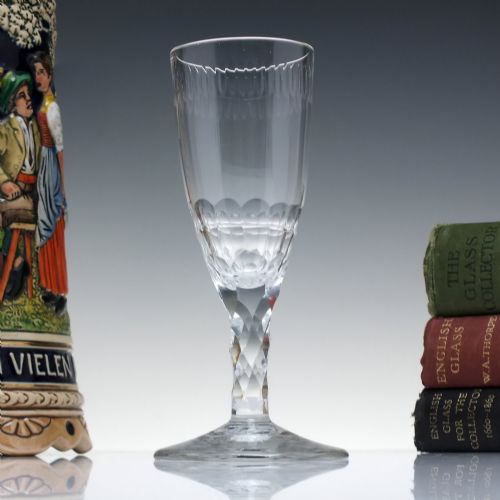
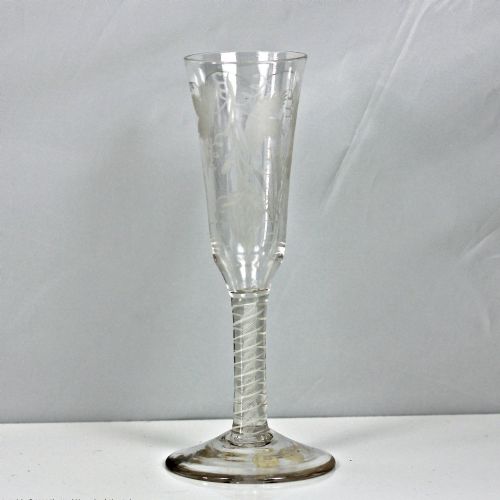
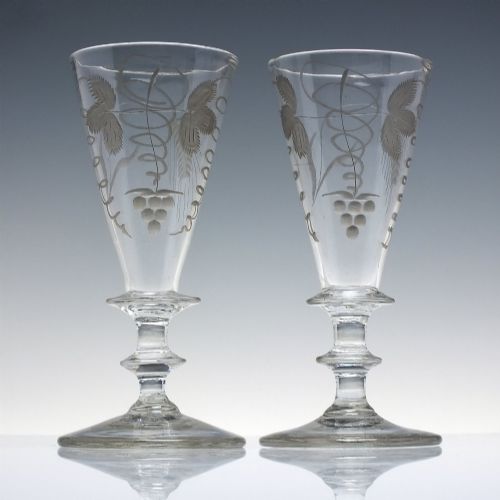
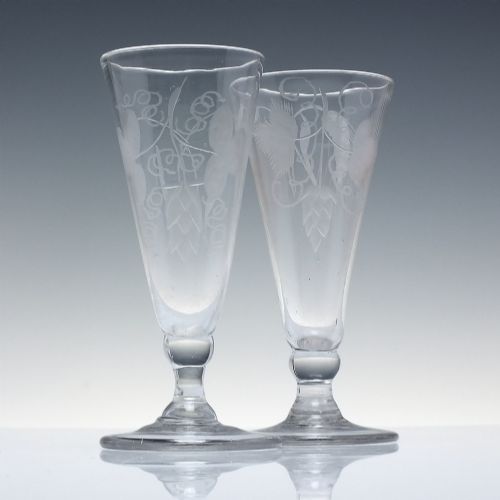
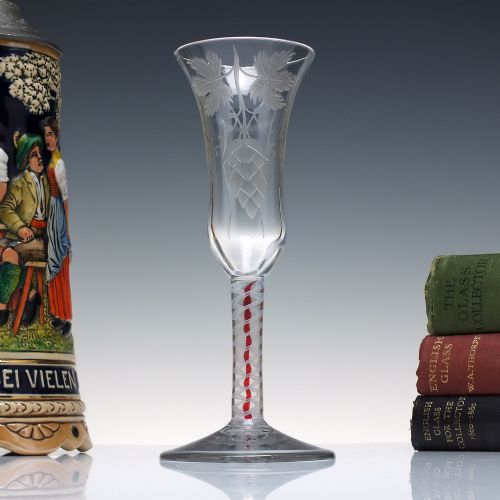
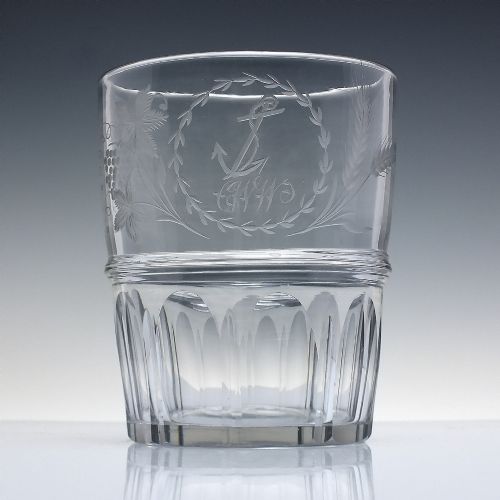
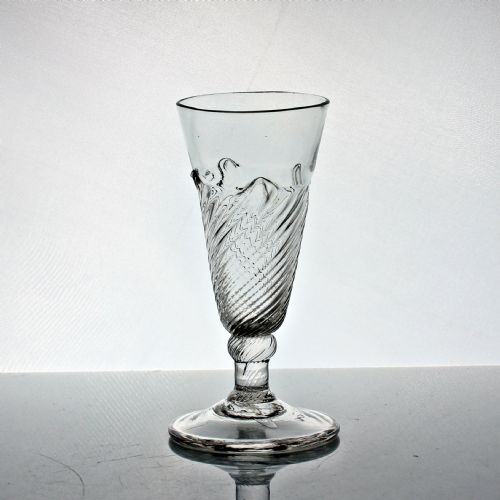
Engraved ale glasses are historic drinking vessels created to serve malt beverages, most frequently encountered here in eighteenth-century and Georgian forms. You are looking at tall flutes, rummers, and dwarf glasses adorned with traditional botanical motifs like hops and barley. The selection spans from simple plain stems to elaborate twist stems and larger decanters.
The dominant style on this page is Georgian, with pieces stretching from the mid-eighteenth century into the Edwardian era and the early twentieth century. Collectors meet everything from delicate air twists and opaque twists to robust facet-cut vessels. These items bridge formal diningware and domestic tavern history.
How they were made
These vessels are formed from lead glass, clear glass, lead crystal, or flint glass, which provided the heavy clarity required for deep wheel-engraving. Artisans manipulated the molten material to form air twists and opaque twists inside the stems of eighteenth-century pieces. Enamel decoration occasionally adds opaque white detailing to the surface.
Engraving was applied using small rotating wheels charged with abrasive grit to cut crisp motifs like barley ears and hop vines directly into the body. Stems were drawn or applied separately, whilst bowls were shaped by hand before finishing on the lapidary wheel.
Engraved Ale Glasses Retail Price Guide 2026
Typical asking prices for engraved ale glasses among the pieces listed under this phrase on Sellingantiques today, from the lower quarter to the upper quarter. They describe what is for sale here now, not the wider market.
The listings here span the eighteenth century, Georgian period, Regency era, Edwardian period, and the 1920s, utilising lead glass, clear glass, flint glass, and enamel.
What varies in quality
Quality rests upon the crispness of the wheel-cut engraving and the complexity of the glass manufacture. Fine examples display deep, deliberate cuts depicting hops and barley with botanical precision rather than shallow, blurred scratching.
Stem construction further distinguishes the pieces, separating simple plain stems from intricate red colour twists and double series opaque twists. The weight and brilliance of the lead glass or flint glass dictate the overall presence of the vessel.
The Engraved Ale Glasses Glossary
- Air twist
- A stem formation created by drawing out elongated air bubbles within the molten glass during pulling and twisting. This technique produces delicate spiral threads that catch the light.
- Opaque twist
- A stem featuring white or coloured enamel glass rods encased within clear metal, twisted into complex lace or spiral patterns. It is a hallmark of mid-eighteenth-century English glassmaking.
- Rummer
- A large, heavy drinking glass with a capacious bowl, often supported by a short stem and a sturdy foot. They were commonly utilised for serving rum, beer, or ale in the eighteenth and nineteenth centuries.
- Flute
- A tall, narrow drinking vessel designed to concentrate the aromas and maintain the carbonation of beverages like ale. They appear with straight or slightly flared bowls.
- Facet cut
- A decorative surface treatment involving the grinding of flat planes into the stem or lower bowl of a glass. This geometric cutting creates brilliant light reflections.
Engraved Ale Glasses: Frequently Asked Questions
How do I use these antique glasses?
These vessels suit careful modern use for serving specialty ales, beers, or vintage ciders at formal dinners. Hand washing in lukewarm water is essential to preserve the historic glass.
Displaying them on an open shelf or within a cabinet allows the engraved hops and barley motifs to catch the light. Avoid sudden temperature changes to protect the older metal.
What is a dwarf ale glass?
A dwarf ale glass is a shortened variant of the traditional tall flute, featuring a compact stem and a relatively deep bowl. They were produced during the eighteenth century for domestic consumption.
Despite their reduced height, they often share the same hop and barley wheel-engraving found on their larger contemporaries.
How can I tell an air twist from an opaque twist?
An air twist contains internal spirals of trapped air that appear silver and transparent within the clear glass stem. They rely entirely on hollow bubbles manipulated during blowing.
An opaque twist incorporates solid white or coloured enamel glass rods into the stem structure. These produce distinct, milk-white strands clearly visible against the surrounding metal.
When were hop and barley motifs used?
Hop and barley decoration became popular on English drinking vessels during the eighteenth century, particularly on Georgian ale glasses and rummers. These agricultural symbols directly reflected the contents of the glass.
The tradition continued into later periods, appearing on Edwardian interpretations and twentieth-century tableware.