





Hops and Barley Glasses
Hops and barley glasses are traditional drinking vessels adorned with agricultural motifs, sought after for their tactile heft and direct connection to Georgian tavern and social life.

Hops and Barley Glasses
When searching for hops and barley glasses, collectors look at drinking vessels created to celebrate English brewing and agriculture during the Georgian and Regency periods.
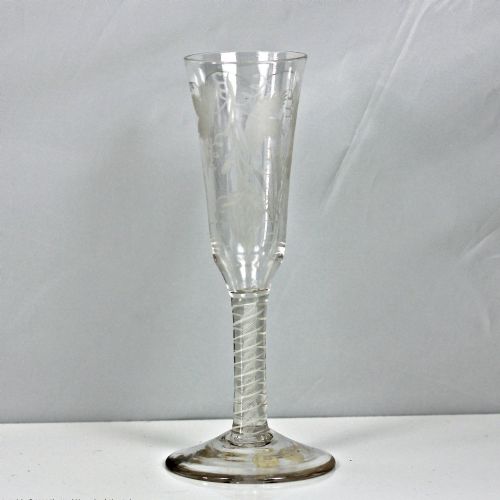
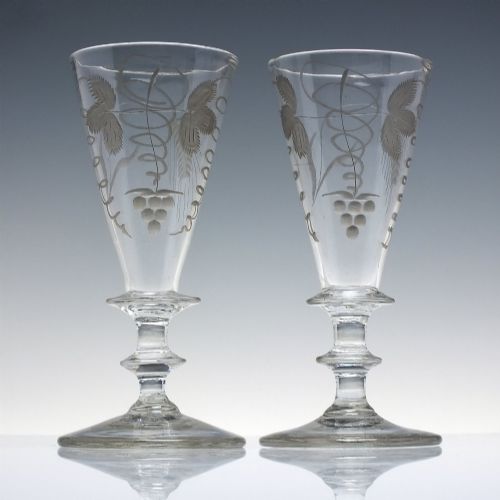
The versions most commonly met on this page include tall ale flutes, generous rummers, and traditional stemware engraved with botanical sheaves and hops.
These historical objects range from modest tavern glasses to refined lead crystal serving pieces originating in the eighteenth and early nineteenth centuries.
How they were made
Glassmakers utilised lead crystal and heavy flint glass to achieve clarity and weight, shaping the molten material into sturdy bowls and stems.
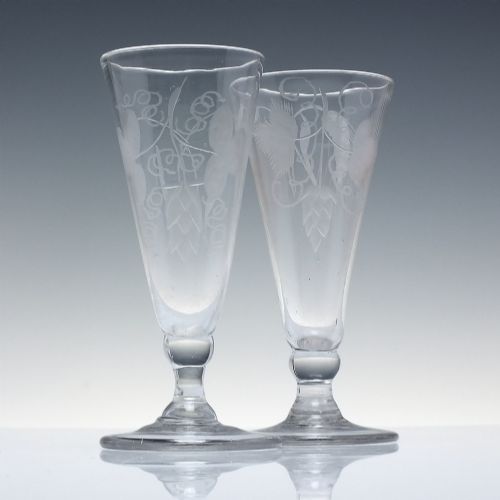
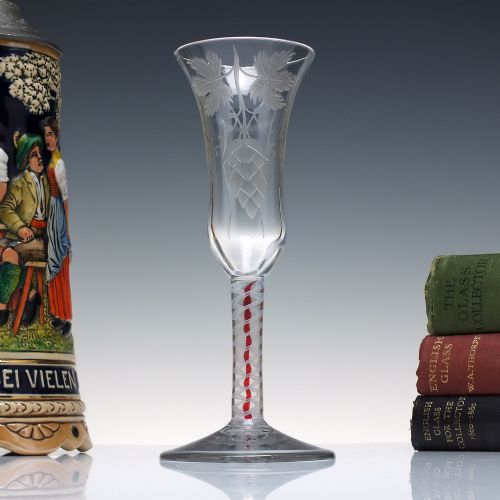
Decoration was applied through wheel engraving to etch the detailed hop bines and barley ears directly onto the clear glass surface.
Specialised techniques such as air twists, opaque twists, and facet cutting were employed to form decorative stems on eighteenth-century examples.
Hops and Barley Glasses Retail Price Guide 2026
Typical asking prices for hops and barley glasses among the pieces listed under this phrase on Sellingantiques today, from the lower quarter to the upper quarter. They describe what is for sale here now, not the wider market.
Some dwarf ale glasses were intentionally made with exceptionally short stems to prevent tipsy squires from knocking them over.
What varies in quality
The refinement of the wheel engraving determines much of the visual merit, with finer pieces showing deep, crisp detailing on the bines and grains.
Stem formation also dictates value, where complex optical phenomena like double series opaque twists or precise facet cuts separate masterwork pieces from plain stems.
The Hops and Barley Glasses Glossary
- Rummer
- A large, sturdy drinking glass typically used for ale or rum during the eighteenth and nineteenth centuries. These vessels often feature generous bowls supported by short stems and sturdy footed bases.
- Air twist
- A decorative stem enclosing spiral threads of trapped air created by drawing and twisting hot glass rods. This technique demands high skill from the glasshouse worker.
- Opaque twist
- A stem containing fine white or coloured enamel rods twisted into complex internal patterns. These threads create striking linear designs within clear lead glass.
- Facet cut
- Geometric surface cutting applied to stems or bowls to catch and refract light. This process enhances the brilliance of lead crystal glassware.
Hops and Barley Glasses: Frequently Asked Questions
What were hops and barley glasses used for?
These vessels served everyday and celebratory drinking needs in domestic homes and taverns, specifically holding ales, beers, and wines.
Their robust forms were designed to withstand regular toast-making and social gatherings across the eighteenth century.
How do you date an ale glass?
Dating relies on observing manufacturing characteristics such as pontil marks, stem construction methods, and bowl proportions.
Earlier examples often feature air or opaque twists, while later nineteenth-century pieces tend toward facet cutting and heavier rummer forms.
Are these glasses safe to use?
While historical lead glass is structurally stable, modern collectors generally display these fragile pieces rather than using them for dining.
Hand-washing in tepid water is essential if owners choose to handle or clean them occasionally.
Why are hops and barley motifs common?
The agricultural imagery celebrated Britain's substantial brewing industry and the bounty of the harvest seasons.
Engraving these plants reflected a patriotic pride in local ale production during the Georgian era.