






English Writing Secretaire
An english writing secretaire is a practical workspace concealed within fine cabinetry, offering fitted drawers and a drop front for correspondence.
English Writing Secretaire
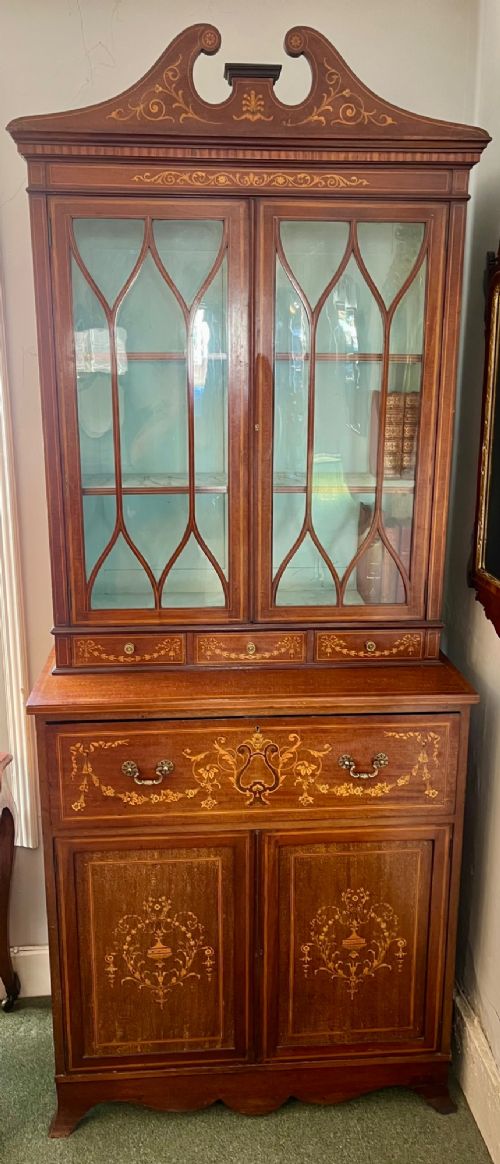
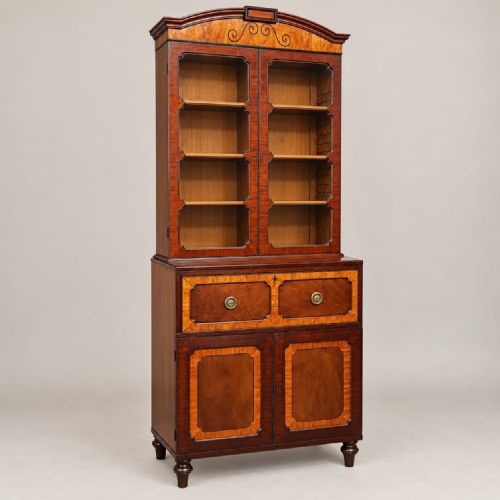
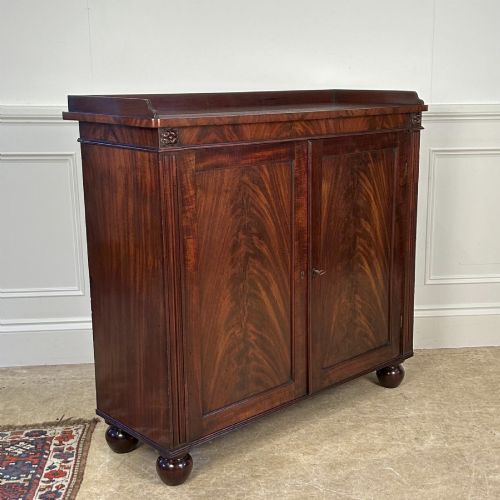
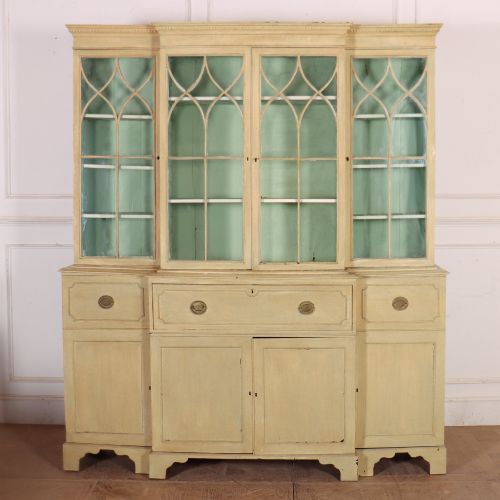
An english writing secretaire combines storage with a dedicated writing surface, appearing primarily as tall bookcases, chests on chests, and compact cabinets. These pieces span the eighteenth and nineteenth centuries, taking forms associated with the Georgian, Regency, and Victorian eras.
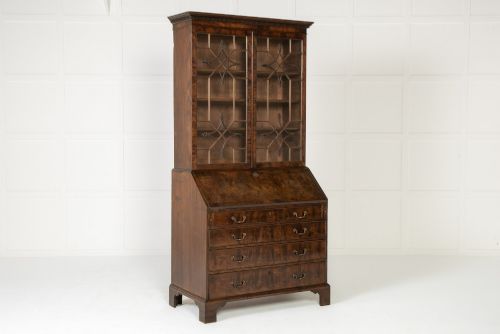
The version most commonly encountered on this page is the secretaire bookcase, which pairs glazed upper shelving with a lower writing drawer that drops forward. Bureau bookcases and compact dwarf cabinets also appear regularly across these listings.
Originating in walnut during the early eighteenth century, these pieces evolved through the Georgian period into mahogany and flame mahogany veneers. Later nineteenth-century examples incorporate rosewood and pollard oak alongside traditional oak structures.
Materials and construction
Makers built these pieces using solid timbers such as oak and walnut, frequently applying figured mahogany and flame mahogany veneers to primary surfaces. Brass fittings secure doors and drawers, while internal writing compartments often incorporate leather or baize surfaces.
Joinery techniques focus on structural stability for large bookcase components and precise fitting for the internal pigeonholes and small drawers of the drop-front desk. Glass panes within wooden framing define the upper display sections of tall bookcase forms.
English Writing Secretaire Retail Price Guide 2026
Typical asking prices for english writing secretaire among the pieces listed under this phrase on Sellingantiques today, from the lower quarter to the upper quarter. They describe what is for sale here now, not the wider market.
Listings feature walnut, mahogany, rosewood, and pollard oak across eighteenth and nineteenth-century forms.
Assessing craftsmanship
Quality rests upon the selection of timber figures, particularly the matching of flame mahogany and figured walnut across drawer fronts and cabinet doors. Superior examples display careful grain continuity and precise execution of internal stationery fittings.
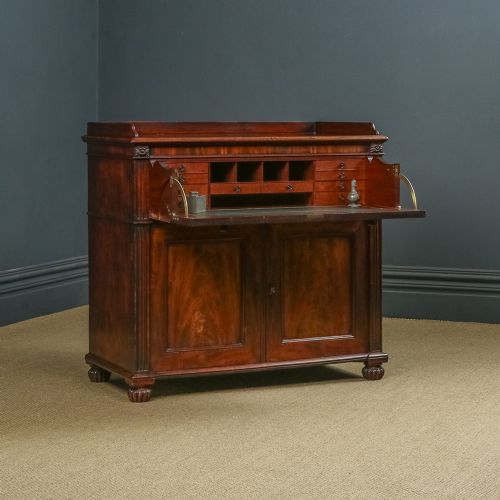
The integration of the fall-front mechanism demonstrates cabinet-making skill through smooth movement and sturdy internal supports that sustain a writing surface without strain.
Gillows of Lancaster
The English Writing Secretaire Glossary
- Secretaire
- A piece of furniture containing a concealed writing drawer or fold-down writing flap. This mechanism drops forward to reveal pigeonholes and small drawers.
- Escritoire
- An alternative term for a writing cabinet or desk. It often refers to tall cabinet forms from the seventeenth and eighteenth centuries.
- Abattant
- A vertical fall-front panel that conceals a desk interior when closed. It pulls down to a horizontal position for writing.
- Tambour
- A sliding door constructed from narrow strips of wood glued to a canvas backing. This allows the mechanism to curve around corners within a desk or cabinet.
English Writing Secretaire: Frequently Asked Questions
What is an english writing secretaire?
An english writing secretaire is a dual-purpose cabinet that conceals a pull-down writing desk within its drawers or upper structure. It allows a room to serve as a library or parlour while maintaining a dedicated space for correspondence.
These pieces range from tall bookcase combinations to compact dwarf cabinets and sideboards. They provide both display shelving and enclosed storage.
How do I identify the period?
Period identification relies on timber choices, handle designs, and overall architectural proportions. Early eighteenth-century examples favour figured walnut, while Georgian and Regency pieces showcase mahogany and flame veneer.
Secondary details such as glazed door tracery and internal drawer configurations offer further clues to the decade of manufacture. Comparing these elements against known stylistic shifts clarifies the date.
How were these desks used?
Owners used these desks for writing letters, managing household accounts, and storing personal documents behind locked doors. The drop-front mechanism provided an immediate writing surface without requiring a separate table.
When closed, the secretaire hid stationery and ink stains from view, keeping the room tidy. The upper bookcase sections housed personal libraries and displayed valued volumes.
Where should I place one?
These pieces suit studies, living rooms, and large hallways where their vertical proportions and fine wood grains add architectural presence. They require sufficient clearance in front of the cabinet for the fall-front writing surface to open fully.
Keep them away from direct sunlight and heat sources to protect wood veneers and leather writing inserts from drying out. Adequate wall space ensures tall bookcase variants stand safely.