

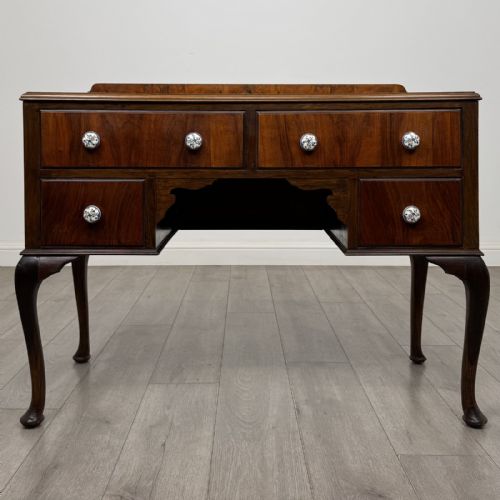


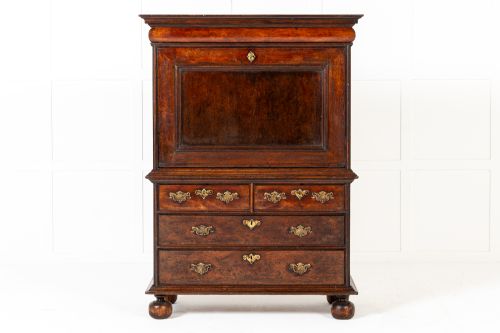

Dark Walnut Bureau Desk
A dark walnut bureau desk brings rich timber figure and practical writing space into a room.
How they were made
Walnut forms the primary structural and visual medium, frequently applied as fine veneers over secondary woods such as oak, supported by brass hardware and leather or baize writing surfaces.
Joinery techniques span from early cabinet construction with marquetry inlay to later period veneering, occasionally incorporating glass panels and carved decorative details.
What varies in quality
The distinction between tiers rests upon the sophistication of the timber figure and the execution of veneering or marquetry work across the surface. Finer examples display meticulous grain matching and original brass mounts, whereas simpler pieces rely on straightforward solid construction.
Internal complexity also dictates standing, with superior pieces offering elaborate nests of secret compartments, pigeonholes, and fitted drawers behind the primary writing flap.
Dark Walnut Bureau Desk Retail Price Guide 2026
Typical asking prices for dark walnut bureau desk among the pieces listed under this phrase on Sellingantiques today, from the lower quarter to the upper quarter. They describe what is for sale here now, not the wider market.
Materials appearing across the inventory include solid walnut, walnut veneers, oak, brass, leather, glass, and kingwood.
Étienne Kohlmann
The Dark Walnut Bureau Desk Glossary
- Bureau
- A writing desk typically featuring a sloping lid that opens to reveal compartments and small drawers. This form evolved significantly from seventeenth-century drop-front cabinets.
- Veneer
- A thin layer of superior wood applied over a base timber to create decorative patterns with the grain. Walnut veneers define the visual character of many early desks.
- Escritoire
- A writing cabinet or desk used for correspondence, often fitted with multiple internal drawers. These pieces frequently date from the seventeenth and eighteenth centuries.
- Kneehole desk
- A flat-topped desk with a recessed central space for the user's legs, flanked by pedestals of drawers. They provide a stable and symmetrical workspace.
- Marquetry
- Decorative veneer work arranged in pictorial or geometric patterns using various woods. This technique adorns several eighteenth-century examples.
Dark Walnut Bureau Desk: Frequently Asked Questions
What is a dark walnut bureau desk?
A dark walnut bureau desk is a traditional writing furniture piece constructed from walnut timber, typically featuring a fall-front or sloping lid over internal compartments.
These desks range from compact ladies' writing cabinets to large Georgian and Victorian bureau bookcases designed for storing papers and books.
How do I date an antique bureau?
Dating relies on examining construction methods, secondary timbers, hardware, and the style of the veneers used on the exterior surfaces.
Earlier pieces from the seventeenth and eighteenth centuries often display distinct dovetailing, candle slides, and walnut figuring characteristic of the period.
Where should I place a bureau desk?
A bureau desk suits a home study, library, or living room where its closed flap presents a tidy wooden cabinet surface.
Positioning the piece away from direct sunlight protects the walnut timber and delicate veneer work from fading over time.
How do I care for walnut furniture?
Maintain antique walnut by keeping it away from extreme temperature shifts and applying appropriate wax polish sparingly to nourish the wood.
Avoid using modern liquid sprays, which can damage historic finishes and dry out seventeenth or eighteenth-century veneers.