
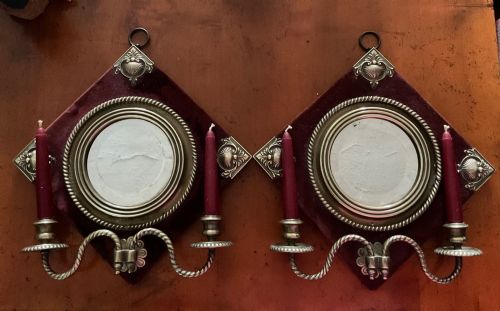


English Wall Lights
English wall lights bring direct period illumination to a room, spanning brass twin arms and bronze sconces from the Victorian era onward.
English Wall Lights
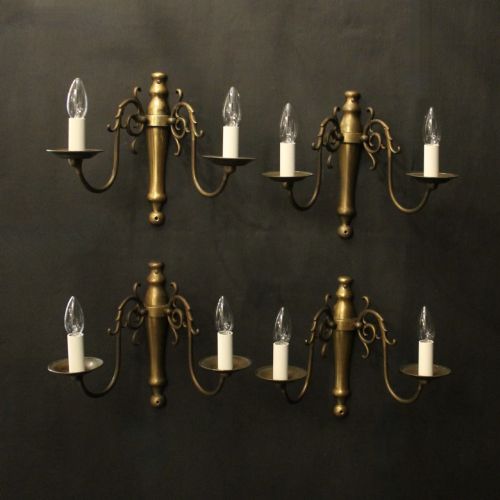
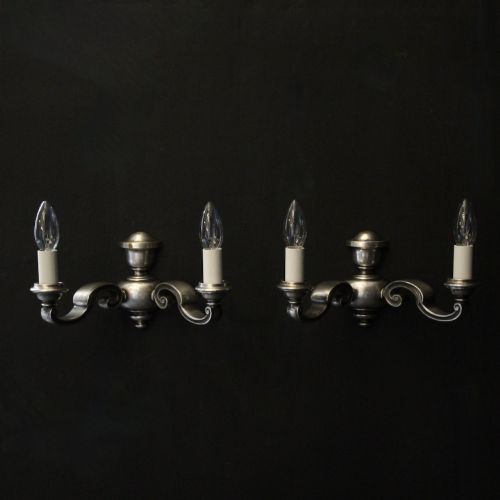
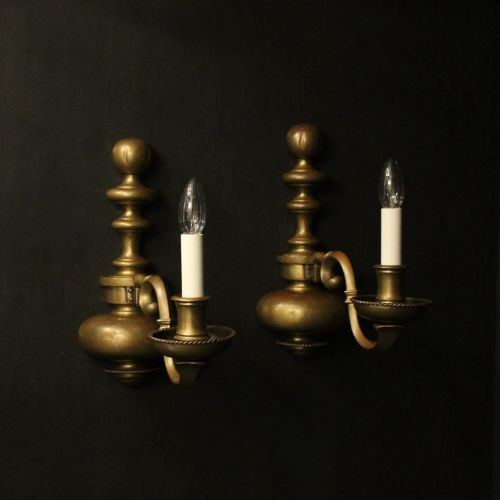
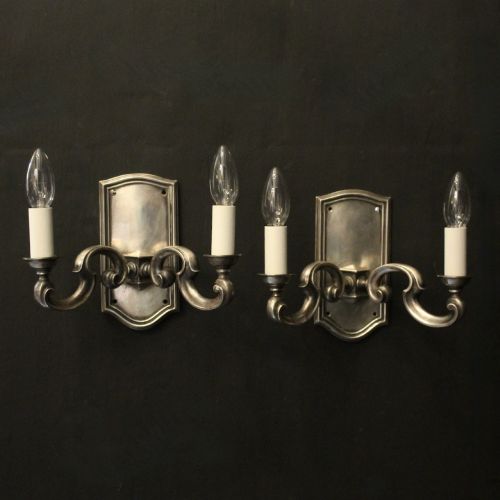
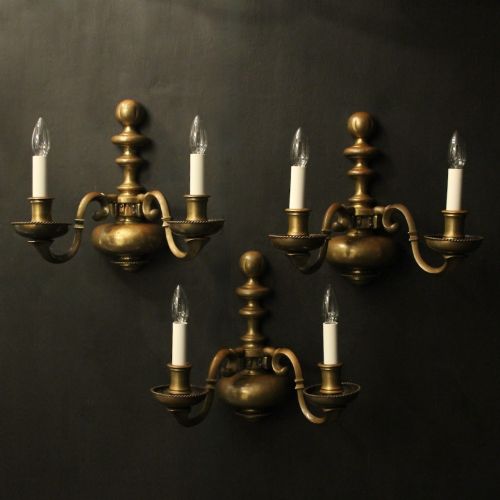
When searching for english wall lights, buyers encounter fixtures designed to mount directly to domestic and public interiors, providing functional illumination and decorative presence. These pieces emerge primarily as pairs or sets of four, ranging from twin-arm brass configurations to grander multi-branch gasolier conversions.
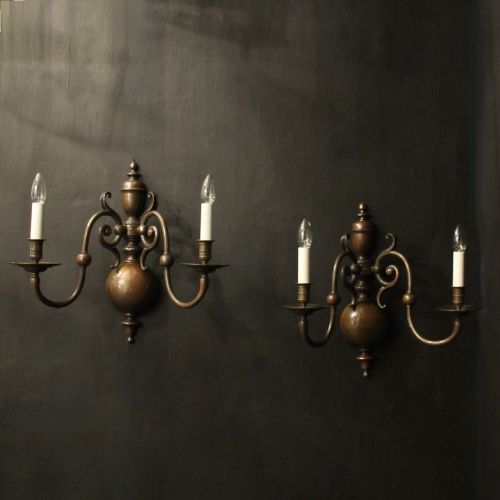
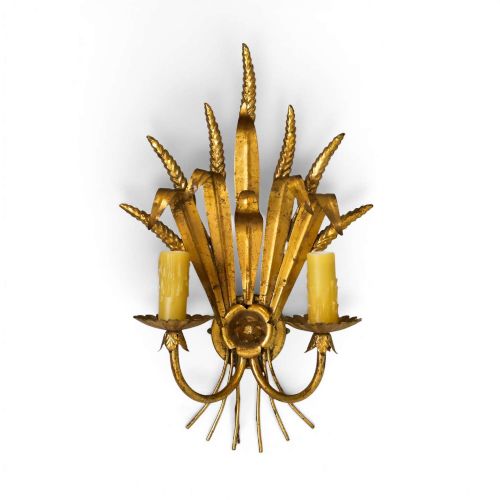
The selections available here lean heavily into nineteenth-century Victorian bronze castings and twentieth-century twentieth-decade silver-plated or gilt metal variations. Alongside standard wall sconces, the inventory occasionally incorporates related domestic wall furnishings like lanterns and girandole mirrors that share the same period aesthetic.
Originating largely from English workshops, these fixtures reflect shifts in interior lighting technology from early gas and candle use to subsequent electrical wiring. Buyers find both simple single-arm library lights and ornate silver-gilded grotto sconces suited to period and eclectic interior schemes.
Materials and Construction
Makers fashioned these fixtures predominantly using cast brass, bronze, and silver-plated metal, often employing applied gilding or silvering to enrich the surfaces. Structural components frequently involve articulated arms, heavy backplates, and detailed mounts cast in sand moulds before undergoing hand-finishing.
Period production utilised durable base metals to support multi-arm configurations safely against vertical surfaces. Surviving examples frequently show evidence of historical conversion from gas or candle power to modern electrical wiring, retaining their original metal patination.
Occasionally, a set of cinema wall lights slips into the collection, proving that even suburban picture palaces needed a touch of brass.
Assessing Quality and Execution
The distinction between standard commercial output and superior craftsmanship rests in the crispness of the metal casting and the depth of the chased or hand-finished detailing. Finer examples display cleanly articulated foliage, well-defined figural elements such as cherubs, and substantial backplates that sit flush against the wall.
Proportion and matching integrity heavily influence desirability, particularly when acquiring pairs or larger sets intended for symmetrical placement. Uniformity in metal patination, original surface plating preservation, and robust arm joints indicate superior initial manufacture.
W Watson & Sons
The English Wall Lights Glossary
- Sconce
- A wall-mounted light fixture designed to hold candles, gas burners, or electric bulbs. These pieces project outward from the vertical surface to cast ambient or task illumination.
- Gasolier
- A multi-branched lighting fixture originally engineered to burn piped gas before subsequent conversion to electricity. They typically feature heavy central stems and multiple curved arms.
- Girandole
- A decorative wall mirror featuring integrated candle arms or sconces attached to the frame. The reflective glass serves to multiply the illumination cast by the attached lights.
- Gilding
- The application of a thin layer of gold leaf or gilt paint onto a metal or wood surface. This technique provides a durable, lustrous finish that catches ambient room light.
English Wall Lights: Frequently Asked Questions
How do I wire antique wall lights?
Most period fixtures require modern internal rewiring to meet contemporary safety standards while preserving the exterior metalwork. Professional electricians can thread modern flex through the historical brass or bronze channels without altering the visible appearance.
Buyers should consult a specialist to ensure that backplates are adequately insulated and safely mounted to standard wall junction boxes during installation.
Were these lights originally for gas or candles?
Nineteenth-century lighting fixtures frequently began as candle holders or gasoliers before being adapted for electricity during subsequent decades. Examining the internal channels and nozzle fittings often reveals whether the piece burned gas or held taper candles.
Many surviving examples show evidence of multiple adaptations as households transitioned through different lighting technologies over the Victorian and Edwardian periods.
How should I clean antique brass sconces?
Preserving the historical patination is essential, so abrasive metal polishes should be avoided on older brass and bronze surfaces. Gentle dusting with a soft cloth or microfibre brush maintains the finish without stripping the aged appearance.
If deeper cleaning is necessary, mild soapy water applied sparingly and dried immediately prevents moisture damage to older metal and silver plate.
Can I mix different periods of wall lights?
Pairing fixtures from slightly different decades often works well in eclectic interiors provided the metal tones share a common visual weight. Matching bronze or polished brass finishes helps unify pieces chosen from distinct Victorian or twentieth-century traditions.
Symmetrical placement usually requires exact matches in arm count and scale, whereas individual accent points tolerate more diverse stylistic grouping.