

English Victorian Picture
An english victorian picture brings nineteenth-century pastoral charm and masterly brushwork directly to a wall.
English Victorian Picture
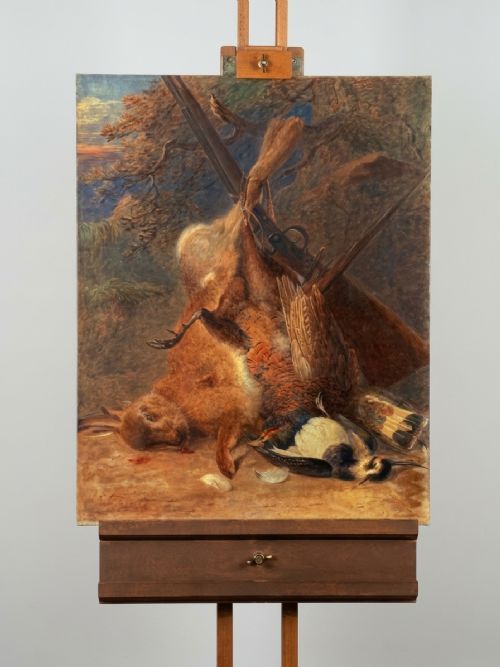
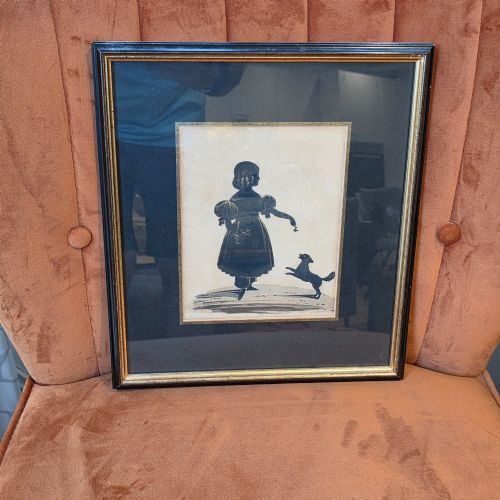
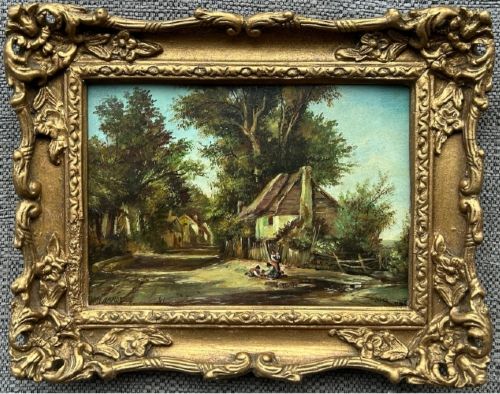
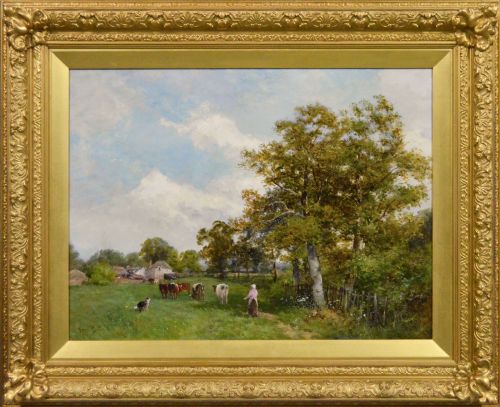
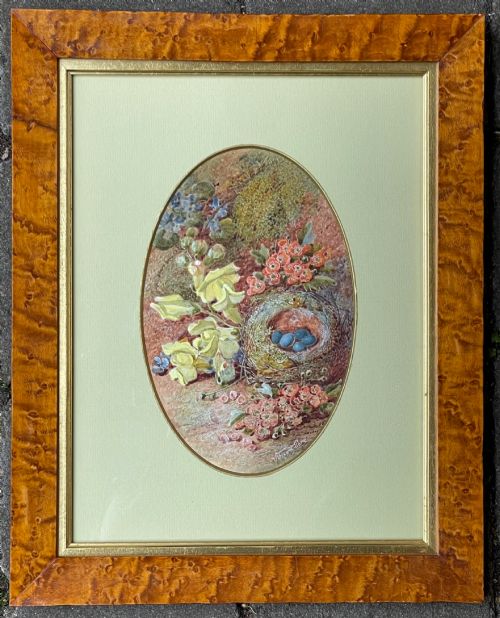
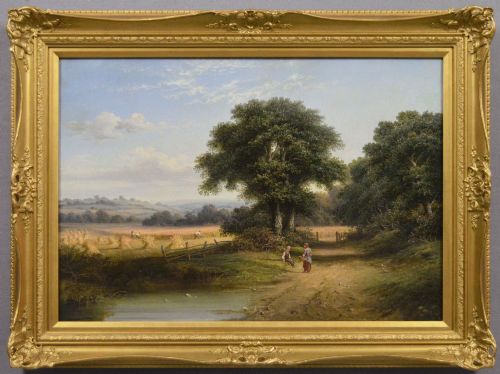
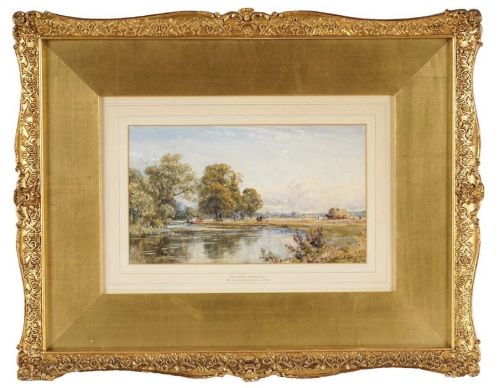
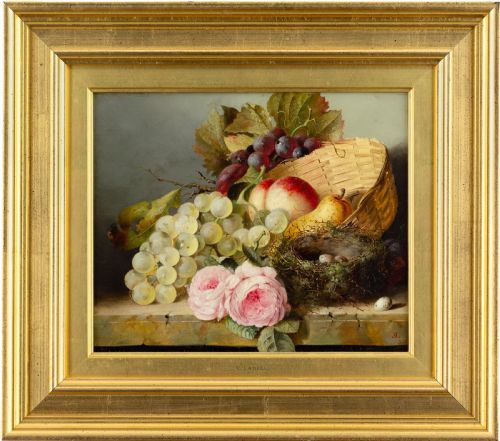
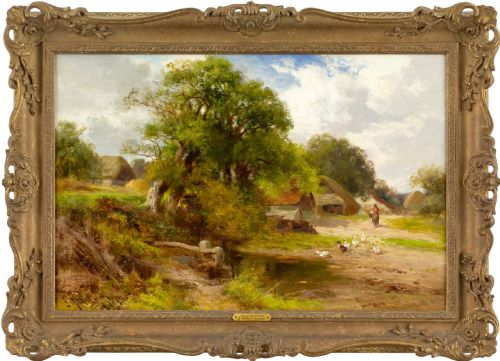
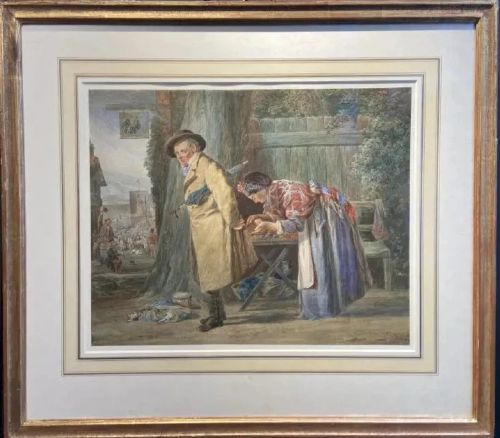
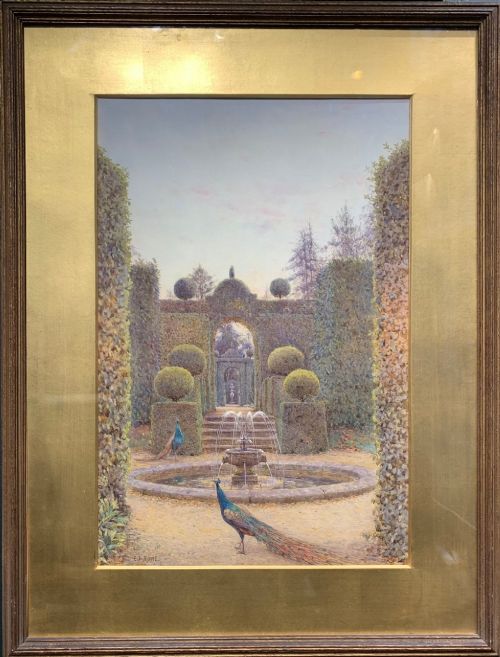
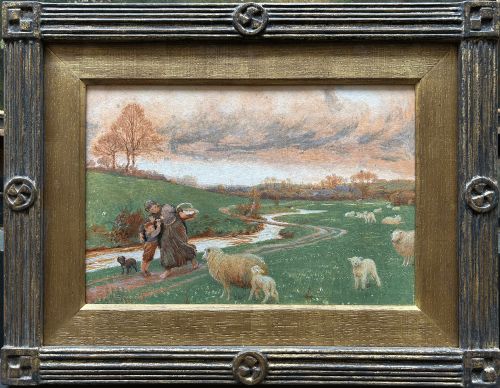
An english victorian picture covers a broad spectrum of nineteenth-century visual art, ranging from delicate watercolours and charcoal drawings to sweeping oil paintings on canvas and panel. Buyers searching this phrase typically encounter framed landscapes, rural river scenes, coastal harbours, and detailed still lifes executed throughout the decades of the Victorian era and into the early twentieth century.
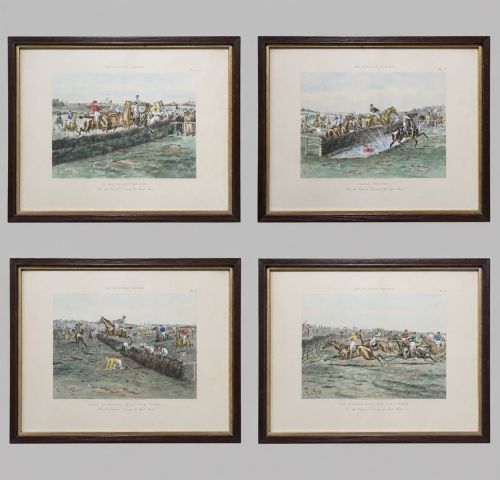
The subjects reflect the changing tastes of the period, moving between pastoral idylls, domestic animal studies, and sporting scenes involving horse racing and hunting. Many pieces capture specific British locations, from Yorkshire valleys to the Dorset coast, rendered with descriptive accuracy.
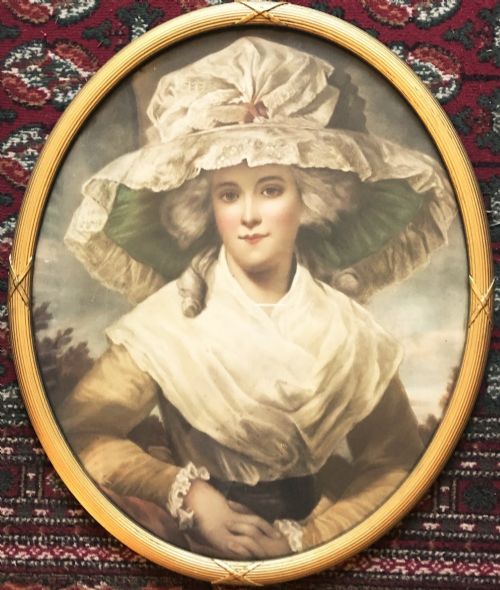
Alongside original hand-painted works, the category includes period prints, lithographs, and silk needlework panels mounted behind glass in original giltwood frames. This variety ensures collectors find both intimate cabinet watercolours and large-scale oil paintings suited to traditional room schemes.
Materials and methods of production
Artists working in this era utilised oil paints applied to stretched canvas or wooden panels, often building rich textures and deep tones through layered glazes. Watercolours and bodycolour were frequently worked on heavy paper to capture luminous skies and flowing river water.
Draftsmanship relied on charcoal and pencil for detailed portraiture and preparatory sketches, while printmakers employed lithography and aquatint to reproduce popular sporting and landscape compositions for a wider audience.
Presentation was integral to the finished piece, with works housed in ornate gilt wood, gesso, or rosewood frames that frequently retain their original gold leaf and decorative moulding.
Several artists captured faithful portraits of hunting hounds with more solemn expressions than the gentlemen riding beside them.
Distinctions in quality and execution
The distinction between standard works and finer examples lies in the confidence of the hand and the sensitivity of the composition. Superior paintings demonstrate precise tonal control, atmospheric depth, and a convincing rendering of light, whereas lesser pieces can rely on formulaic repetition and stiff figures.
Materials also dictate the standing of a piece; works by established academy exhibitors using stable oils and quality pigments retain their vibrancy, while fragile works on paper require careful preservation to prevent fading.
The integrity of the framing contributes significantly to the overall desirability, with period-matching giltwood or carved frames holding greater aesthetic weight than later replacements.
William James Hubard·George Sydney Shepherd·Alfred Young Nutt·William Howard Hardy·David Bates·Vincent Clare·Walter Heath Williams·Robert Thorne Waite·Edward Ladell·John Horace Hooper·Joseph H Barnes·Ernest Arthur Rowe·Frederick Walker·George Finch Mason·C H Weigall·Henry Yeen King·William Greaves·David Cox·Herman S Melville·Charles Edward Wilson·Sydney Yates Johnson·Benjamin Blake·Alfred George Morgan·Thomas Cooper Moore·John Bedloe Goddard
The English Victorian Picture Glossary
- Bodycolour
- Watercolour paint mixed with a white pigment to render it opaque and creamy. This technique allows artists to add highlights and solid areas of colour that stand out against transparent washes.
- Aquatint
- A printmaking etching technique that produces tonal areas resembling watercolour washes. It was widely utilised during the nineteenth century for reproducing sporting scenes and topographical views.
- Giltwood
- Timber carved and coated with gold leaf or metallic powder. It provides the characteristic reflective golden finish seen on nineteenth-century picture frames and overmantle mirrors.
- Panel
- A rigid wooden board used as a support for oil painting instead of stretched canvas. Artists favoured panels for smaller, highly detailed works due to their stable painting surface.
- Still life
- An artwork depicting inanimate subject matter, such as game birds, fruit in wicker baskets, or floral arrangements. Victorian examples often symbolise abundance and natural realism.
English Victorian Picture: Frequently Asked Questions
What subjects are most common in an english victorian picture?
Landscape and pastoral scenes dominate the category, capturing British rivers, coastal views, and harvest fields. Artists also frequently painted still lifes with fruit or game, alongside sporting subjects like horse racing and hunting dogs.
Domestic animal studies and portraits of rural workers appear regularly, reflecting the period's fascination with countryside life and natural realism.
How do I care for an antique oil painting?
Keep paintings away from direct sunlight and sources of extreme heat to prevent the canvas or wooden panel from warping and the oil paint from cracking. Dust the surface gently with a soft, dry brush without applying pressure.
Avoid using liquid cleaners or water on the paint surface or the gilt frame, as moisture damages nineteenth-century varnishes and gilding.
Are these works signed by the artist?
Many works feature the artist's signature or monogram, often located discreetly in a lower corner of the canvas or paper. Some pieces also include inscriptions on the reverse detailing the location or date.
Unsigned works remain common, particularly in landscape painting where studio attribution relies on style, technique, and period framing.
How can I tell a watercolour from a print?
Examining the surface closely under magnification reveals the telltale brushstrokes and pools of pigment characteristic of hand-applied watercolour. Prints and lithographs show a regular dot pattern or flat ink coverage under magnification.
Watercolours on paper also display subtle indentations from the brush and variations in pigment density that mechanical reproduction cannot replicate.