


English Silver Snuff Box
An English silver snuff box is a pocket-sized container for tobacco, holding the periods and techniques of past silversmiths.
Identifying an English silver snuff box
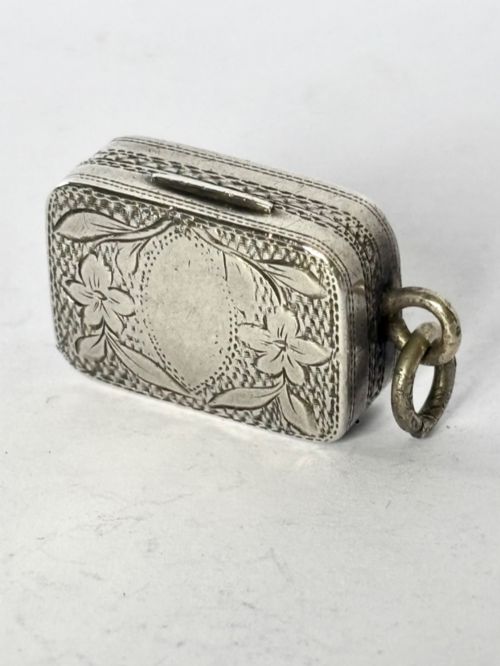
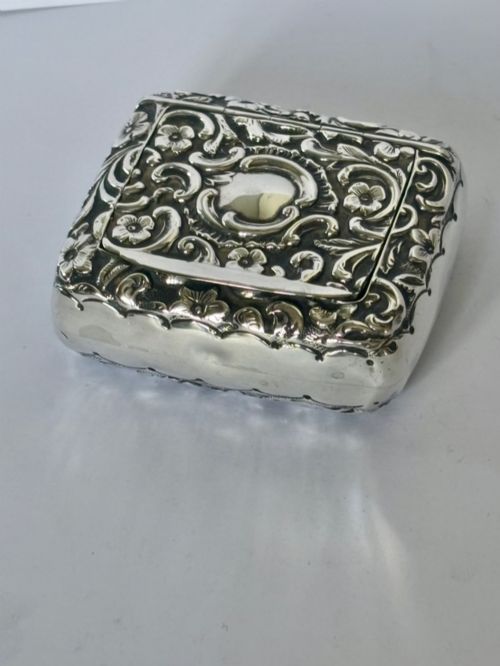
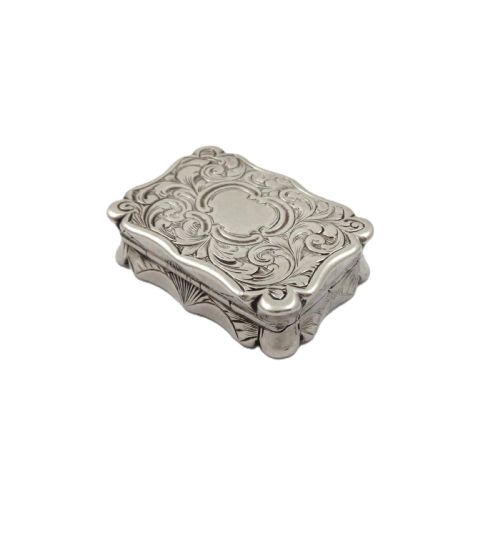
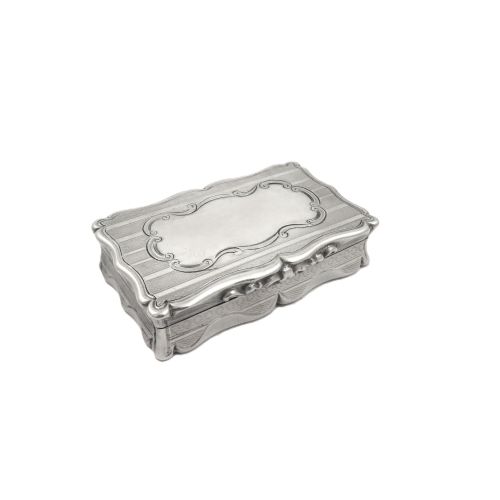
When you search for an english silver snuff box, you examine small portable containers designed for carrying powdered tobacco. The examples on this page span the Georgian, Regency, Victorian, and later periods, capturing centuries of changing tastes in metalwork. You meet pocket-sized pieces alongside heavier table snuff boxes intended to sit upon a surface.
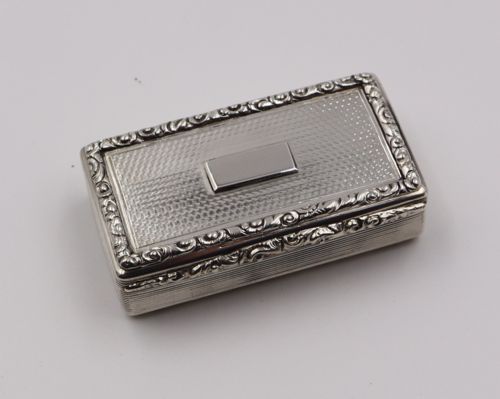
The forms vary from simple rounded pocket shapes to engine-turned designs, pill boxes, and figural book formats. Materials extend beyond plain sterling silver to include silver gilt interiors, moss agate, mother-of-pearl, and fruitwood insertions. These items demonstrate how personal accessories combined utility with detailed ornamentation.
Materials and construction
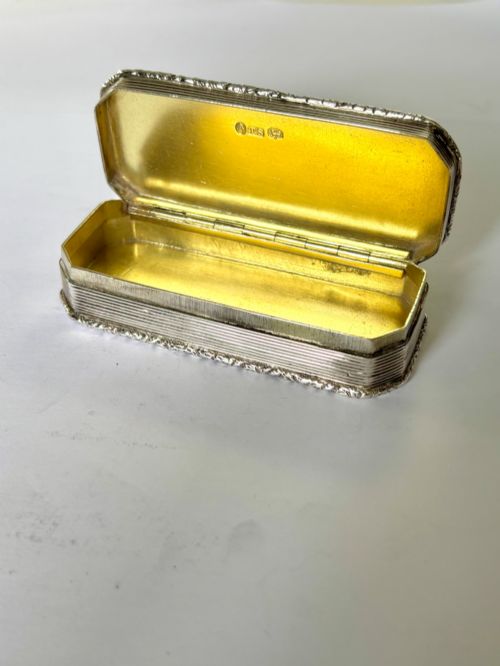
Makers constructed these pieces primarily from solid sterling silver, occasionally applying a gold wash known as silver gilt to the interior surfaces. Some examples incorporate contrasting natural materials such as mother-of-pearl, pink enamel, or moss agate panels set into the metal lid.
Surface decoration involved techniques like engine-turning to create geometric patterns, alongside crisp embossing and chased figural scenes. Goldsmiths and silversmiths utilised specialised punches and dies to impress hallmarks and maker marks directly into the silver.
Retail Price Guide 2026
Typical UK retail prices for english silver snuff box, calculated from the Sellingantiques database of over a million retail prices indexed since 2003. This retail price guide relies exclusively on Sellingantiques data; no external sources or auction records are used, so the figures do not describe the wider market.
One unusual survivor is shaped like a tiny book with silver plated covers dated eighteen forty-three.
Judging quality in silver snuff boxes
Quality rests upon the crispness of the chasing, the precision of the engine-turning, and the weight of the solid silver used in construction. Pieces displaying named makers or regional provincial assay marks command distinct interest among collectors.
The integration of alternate materials, such as a well-fitted moss agate stone or pristine enamel work, elevates a standard container into a notable example. Superior hinges and tight-closing lids indicate careful workmanship by the original silversmith.
Henry Matthews·Joseph Wilmore·Nathaniel Mills·Thomas Shaw
The English Silver Snuff Box Glossary
- Sterling silver
- A silver alloy containing 92.5 percent pure silver by mass, forming the primary material for these boxes.
- Silver gilt
- Sterling silver that has been coated with a thin layer of gold on its interior surface.
- Engine-turned
- A decorative technique involving precise geometric patterns mechanically engraved into the metal surface.
- Assay office
- An official body that tests the purity of precious metals and stamps items with traditional hallmarks.
- Chasing
- A metalsmithing technique where designs are hammered into the front of the metal rather than carved away.
Frequently Asked Questions
How were they used?
Owners carried them in pockets or displayed them on tables during social gatherings to offer pinches of snuff to guests.
The tight-fitting lids kept the tobacco dry and prevented the powder from spilling during transport.
How do I date an english silver snuff box?
You date these pieces by examining the stamped hallmarks, which include date letters, assay office symbols, and maker marks.
Stylistic shifts between the Georgian, Regency, and Victorian periods also provide clear clues to an item's age.
What materials are used?
The primary material is solid sterling silver, often paired with silver gilt interiors or decorative exterior panels.
Some examples incorporate natural elements such as moss agate, mother-of-pearl, enamel, or wood inserts.