



Regency Pocket Box
These regency pocket box pieces are compact containers and instruments made for the pocket during the early nineteenth century.
Regency Pocket Box
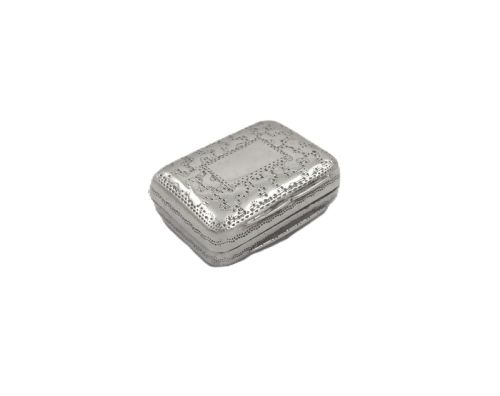
When you search for a regency pocket box, you encounter a selection of small portable containers and personal instruments dating from the Georgian, Regency, and William IV eras. The pieces on this page span several functional forms, principally silver snuff boxes, pierced vinaigrettes, nutmeg graters, and portable scientific instruments.
The objects reflect the refined personal habits of the early nineteenth century, designed to fit snugly within a waistcoat pocket or travel case. Most specimens originate from English workshops and makers active during the first three decades of the 1800s.
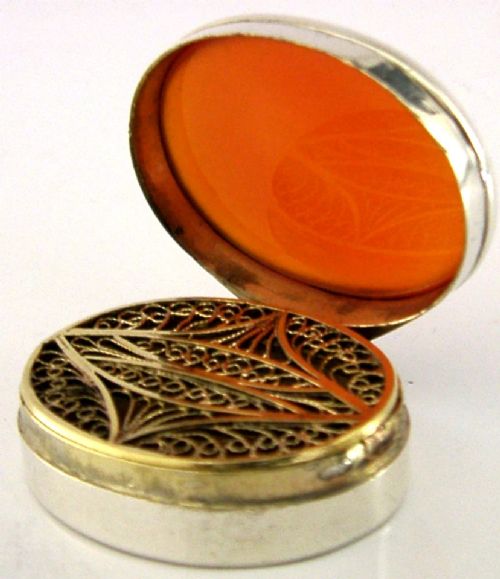
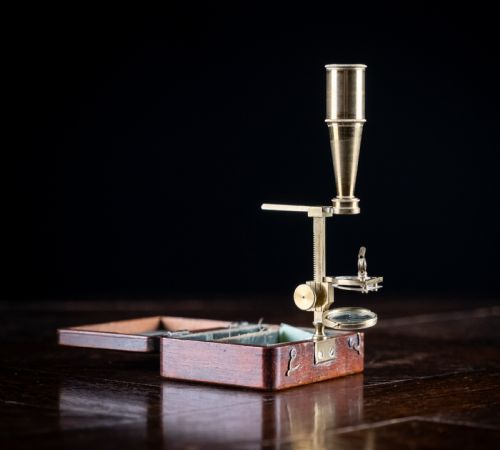
You will find that snuff boxes and vinaigrettes dominate the selection, often rendered in sterling silver with gilt interiors or embellished with inset agate stones. Alongside these small containers appear specialised pocket items like compasses, sundials, travel thermometers, and microscopes.
How they were made
Silversmiths constructed the metal containers using sterling silver, frequently applying gold plate, silver-gilt, or vermeil to the interior surfaces to protect the metal from corrosive contents like snuff or scented vinegar. Hinges and catches were hand-fitted to ensure a tight, secure closure for daily pocket use.
Decorative work on the boxes involved engine-turning, chased pictorial scenes, and the mounting of polished hardstones such as orange agate into the lids. Instrument makers combined turned brass, glass lenses, and fitted leather cases to produce durable scientific pocket tools.
Some pocket boxes held grated nutmeg to spice up a glass of punch when tavern hospitality fell short.
What varies in quality
Quality in these pieces depends heavily on the crispness of the hand-engraving, the weight of the metal used in construction, and the integrity of the hinges and clasps. Superior examples display clear hallmarks, sharp decorative chasing, and well-preserved internal gilding.
Scientific instruments differ according to the precision of the optics, the legibility of the engraved dials, and whether the original fitted leather case survives intact. Simpler utilitarian items show plainer surfaces, while premier pieces incorporate fine gemstones like agate and work by known makers.
Cary London·Samuel Porter·Joseph Wilmore·John Bettridge·Charles Rawlings·Thomas Harris And Son
The Regency Pocket Box Glossary
- Vinaigrette
- A small ornamental box featuring a hinged inner grille pierced with decorative holes. It held a sponge soaked in aromatic vinegar.
- Snuff Box
- A small pocket container designed to hold dry powdered tobacco for nasal ingestion. These often feature secure friction lids or spring-loaded catches.
- Silver-gilt
- A layer of gold applied to the surface of a silver object through fire gilding or electrochemical processes. This technique prevents the silver from tarnishing when exposed to acidic contents.
- Nutmeg Grater
- A pocket-sized kitchen implement used to grate fresh spice at the dining table or in social settings. They typically house a small steel rasp and a compartment for storing whole nuts.
Regency Pocket Box: Frequently Asked Questions
What is a regency pocket box?
A regency pocket box refers to small personal items, such as snuff boxes, vinaigrettes, and portable instruments, made during the early nineteenth century.
These pieces were designed for portability, allowing owners to carry tobacco, scents, or navigational tools in their pockets during travel or social calls.
How were vinaigrettes used?
Vinaigrettes held a small sponge soaked in scented vinegar behind an intricate pierced inner grille.
Owners opened the box to inhale the aromatic vapours when confronted with unpleasant odours or feeling faint in crowded public spaces.
How do I date these items?
Dating relies on reading the hallmarks stamped onto the silver components, which indicate the assay office, standard, and date letter for the year of manufacture.
Stylistic cues such as neoclassical motifs, engine-turned patterns, and the presence of maker marks also help place pieces within the Georgian and Regency periods.
Are scientific pocket items common?
Scientific pocket items appear alongside containers in this selection, including travel sundials, pocket thermometers, and microscopes.
These functional tools were housed in protective leather cases and constructed from brass and glass by specialist instrument makers.