


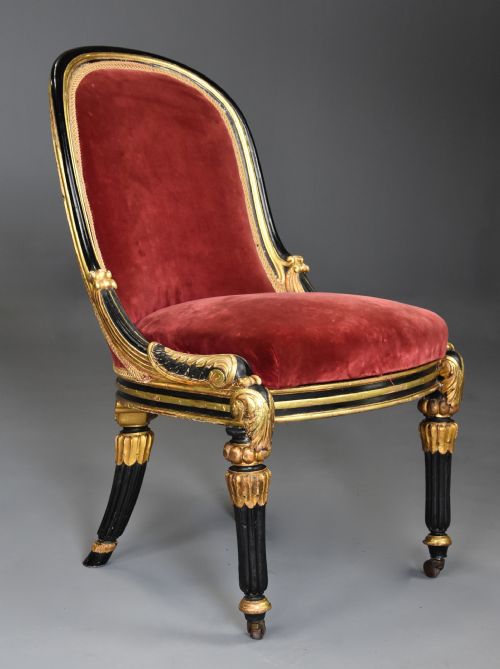


English Regency Desk Chair
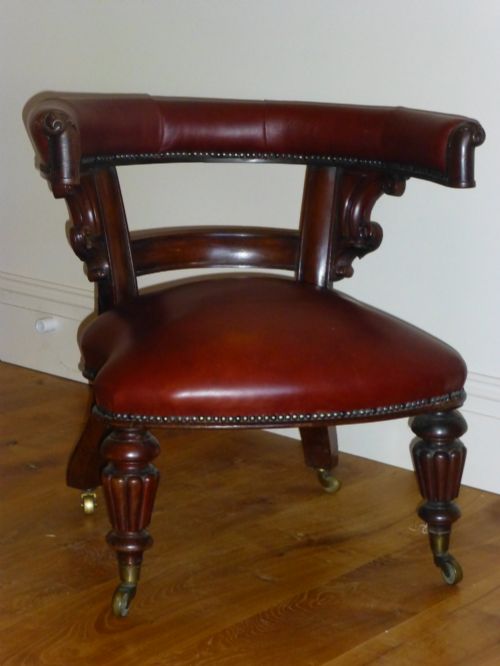
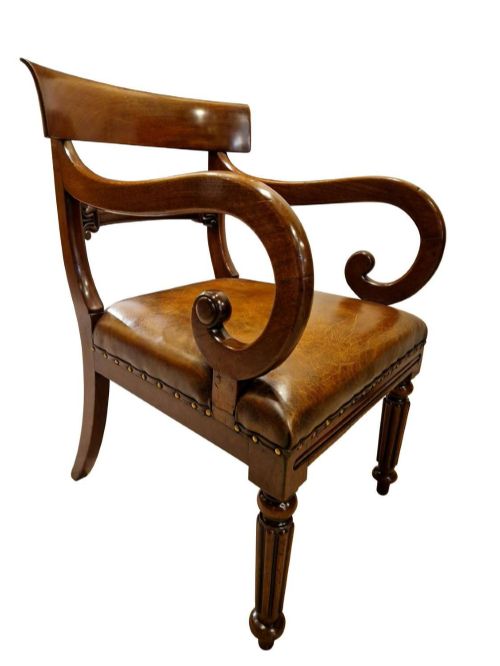
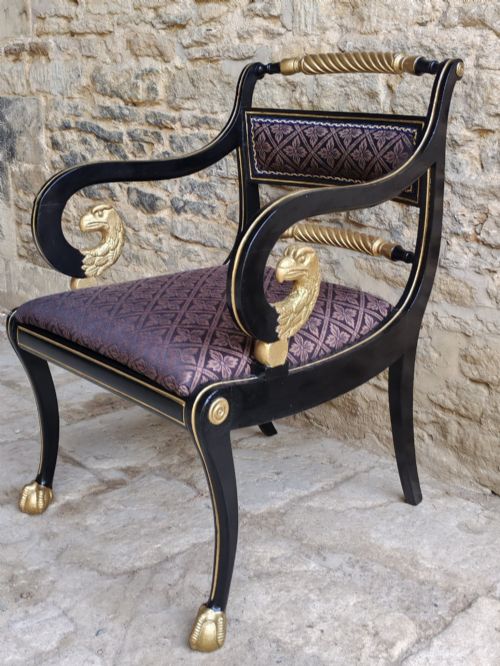
An English regency desk chair brings robust mahogany timber, supple leather upholstery, and sculptural scroll arms directly into a study.
English Regency Desk Chair
An English regency desk chair combines formal library seating with the practical requirements of writing tables, drawing rooms, and studies. These pieces emerge primarily from the Regency, George III, George IV, and William IV periods, extending into later Edwardian revivals.
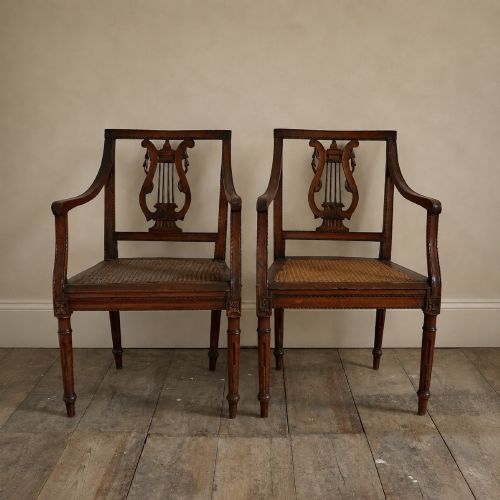
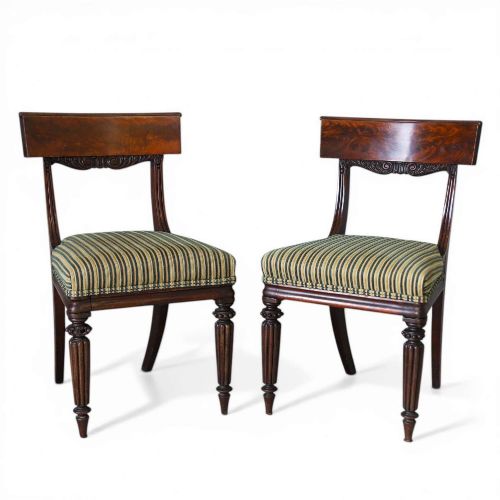
Buyers encounter numerous forms on this page, including open armchairs, library chairs, bergères, carver chairs, and occasional elbow seats. Mahogany dominates the selection, accompanied by ebonised wood, walnut, oak, and pollard oak.
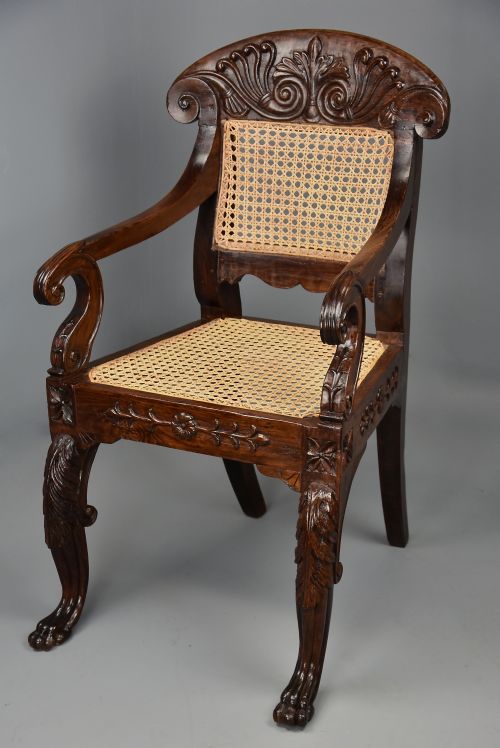
Makers shaped these seats with distinct regional variations, producing pieces from East Anglia alongside Anglo-Indian carved padouk versions displaying Regency influences. Many function equally as library chairs, study seats, or occasional reception chairs.
Materials and construction
Cabinetmakers utilised solid mahogany, rosewood, walnut, and oak to construct the frames, frequently employing ebonised finishes and gilt highlights for dramatic contrast. Timber selection dictated the structural integrity of scroll arms, lyre backs, and dish seats.
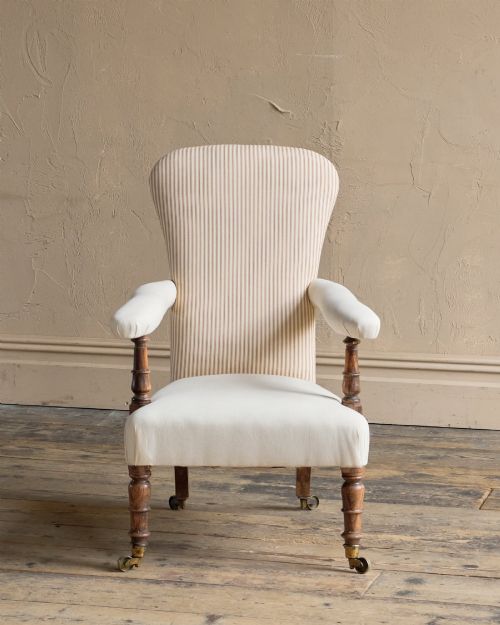
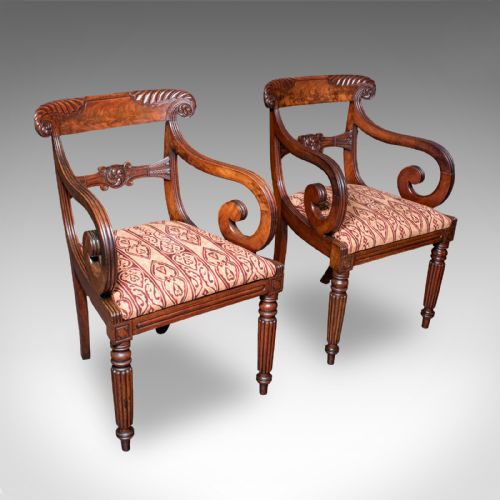
Upholstery forms a vital component, utilising maroon and brown leather, woven cane, needlepoint, velvet, and traditional fabric stripes. Craftsmen secured these materials over drop-in seats or sprung frames using brass tacks and studs.
English Regency Desk Chair Retail Price Guide 2026
Typical asking prices for english regency desk chair among the pieces listed under this phrase on Sellingantiques today, from the lower quarter to the upper quarter. They describe what is for sale here now, not the wider market.
One gentleman sits immortalised in paint upon a Chippendale chair inside a panelled interior.
Assessing quality and craftsmanship
Superior examples exhibit crisp woodcarving, particularly upon acanthus leaf motifs, scroll arms, and reeded legs, distinguishing them from plain utility seating. The integration of stamped maker signatures or attribution adds notable distinction to documented workshops.
The choice of secondary timbers and the depth of patination on the polished mahogany or ebonised surfaces reveal the level of care taken during manufacture. Original leather hides, intact cane work, and retained gilding elevate the historical integrity of each chair.
Gillows·Miles and Edwards·Henry Maxwell·Stephen Taylor
The English Regency Desk Chair Glossary
- Bergère
- An enclosed upholstered armchair with wooden or cane sides, designed for formal sitting rooms and libraries. This French-inspired form appeared frequently in English Regency interiors.
- Carver chair
- An armchair, often taller and wider than surrounding dining chairs, traditionally placed at the head of a table or utilised at a desk. These pieces share stylistic traits with library elbow chairs.
- Ebonised wood
- Timber treated with a dark stain or finish to imitate ebony wood. This technique created sharp, contrasting decorative effects popular during the Regency era.
- Pollard oak
- Timber harvested from trees that were regularly cut back at the trunk, producing a dense wood with rich, clustered grain patterns. It provides a highly decorative surface on luxury seating.
- Lyre back
- A chair backrest shaped to resemble an ancient stringed musical instrument. This neoclassical motif recurred throughout Regency furniture design.
English Regency Desk Chair: Frequently Asked Questions
What defines an English regency desk chair?
These seats feature distinct neoclassical design elements, robust timber frames, and low-slung armrests built to accommodate writing desks and library tables. They merge functional study seating with decorative cabinetmaking from the early nineteenth century.
Craftsmen utilised mahogany, rosewood, and ebonised woods, pairing them with leather, cane, or fabric upholstery. The form ranges from simple side chairs to expansive library armchairs with scroll arms.
How do I date a Regency chair?
Dating relies on examining the timber species, joinery methods, and stylistic motifs present in the frame. Early nineteenth-century examples often display reeded legs, brass inlay, and scroll arms characteristic of the Regency and George IV periods.
Later Edwardian pieces replicate these forms using twentieth-century construction techniques and secondary woods. Comparing carved details against documented makers helps clarify the production era.
Where were these chairs used historically?
These seating forms belonged in grand libraries, drawing rooms, private studies, and morning rooms of substantial English residences. They served readers, writers, and gentlemen attending to estate business at large pedestal desks.
Some designs also functioned as reception seats or bedroom armchairs. Their versatility allowed them to move easily between formal public spaces and private chambers.
How should I care for leather upholstery?
Leather surfaces require regular dusting with a soft, dry cloth and occasional treatment with appropriate conditioning balms to prevent cracking. Keeping the hide away from direct sunlight preserves its natural colour and suppleness.
Avoid using harsh chemical detergents or excess water during cleaning. Gentle maintenance protects both antique patination and the underlying padding.