



English Pottery Flatback Figure
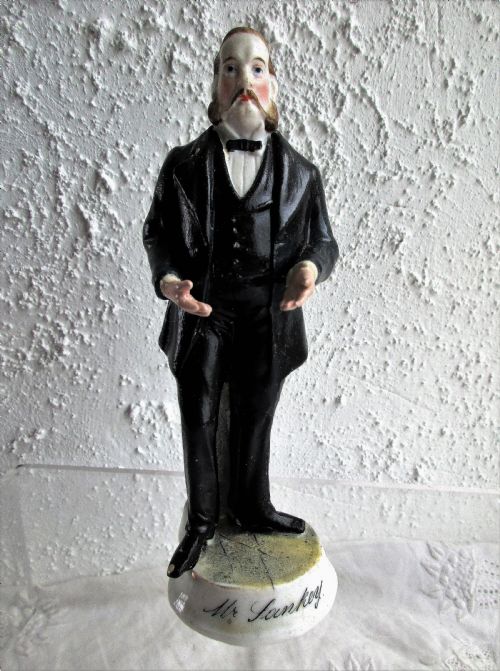
An english pottery flatback figure is a Victorian mantelpiece ornament modelled in the round at the front and flat at the back, offering a glimpse into nineteenth-century popular culture.
English Pottery Flatback Figure
An english pottery flatback figure is a moulded ceramic ornament designed to stand against a wall, meaning the reverse is left unglazed and largely unmodelled to save time and materials during production.
The pieces on this page span the nineteenth century, including specific decades such as 1860, 1870, 1880, and 1890 under the broad Victorian style.
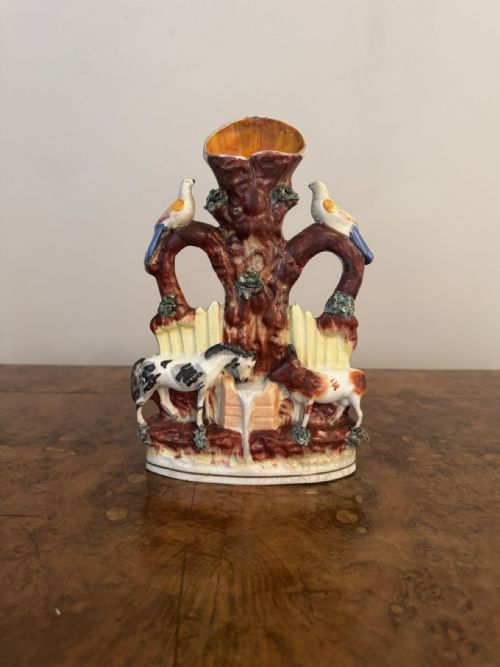
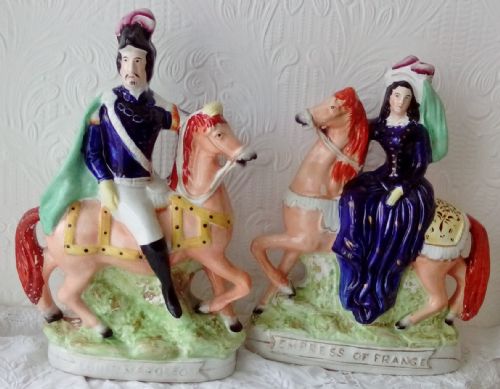
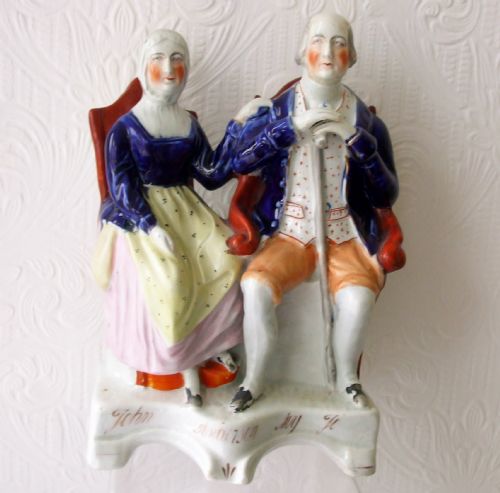
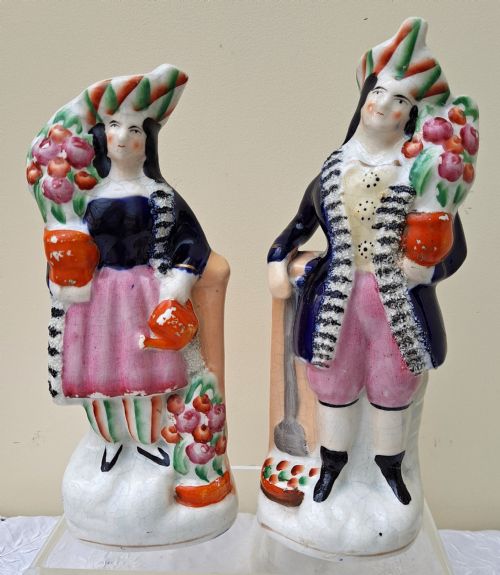
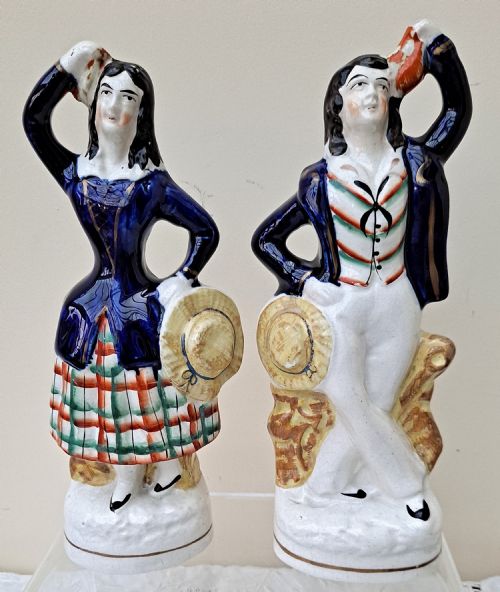
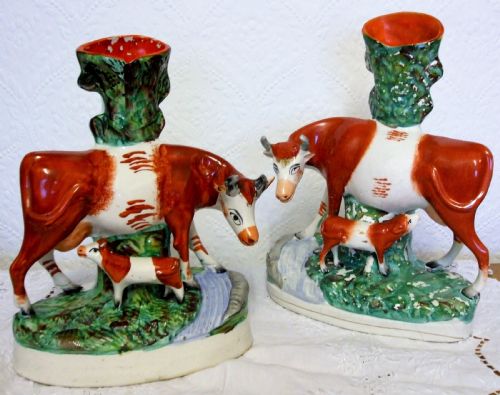
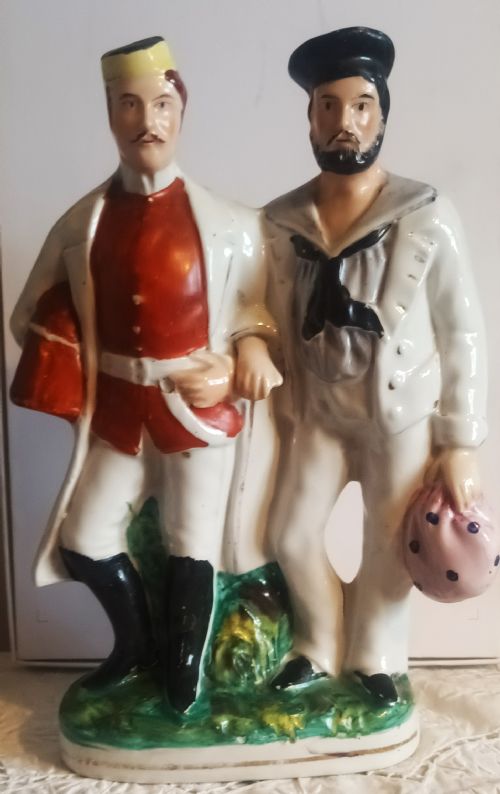
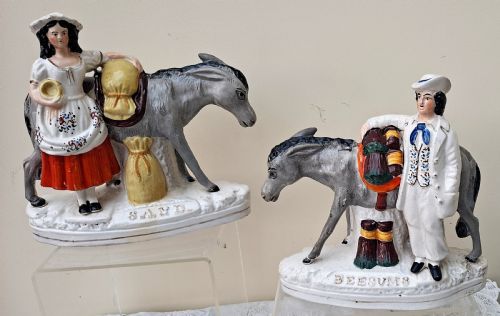
Subjects range widely from royal portrait groups and military alliances to literary characters, theatrical pairs, and animals like deer, goats, and cows configured as spill vases.
Materials and Construction
Makers shaped these earthenware bodies using press moulds, joining front and back sections together before applying lead glaze and enamel paint by hand.
Listings demonstrate a heavy reliance on earthenware, lead glaze, and enamel paint across the nineteenth century.
Standards of Execution
Quality rests primarily on the crispness of the moulding and the care taken with the enamel painting, which separates finely delineated portraits from hastily decorated workshop output.
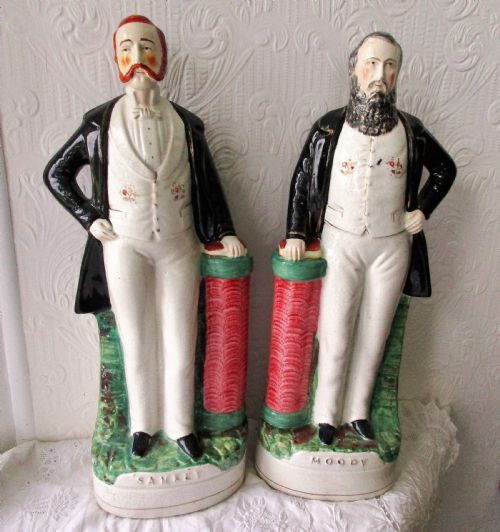
Scale and ambition also dictate standing, with large pairs, complex multi-figure groups, and architectural forms like castles or watch-holders demonstrating greater technical achievement.
The English Pottery Flatback Figure Glossary
- Flatback
- A figure moulded with a finished front and a flat, plain reverse intended to sit flush against a wall.
- Spill vase
- A hollow cylindrical vessel incorporated into the design to hold wooden spills for lighting fires or candles.
- Earthenware
- Porous pottery fired at lower temperatures, forming the standard body for these Victorian figures.
- Lead glaze
- A glossy coating containing lead oxide applied to ceramics before firing to seal the porous body.
- Enamel paint
- Coloured decoration applied over the fired glaze and fixed with a second, lower-temperature firing.
English Pottery Flatback Figure: Frequently Asked Questions
What rooms were flatback figures meant for?
These ornaments were designed principally for the Victorian parlour, where they sat upon mantelpieces to catch the eye of visitors.
Their bright enamels and topical subjects served as domestic conversation pieces for families following current events and theatrical trends.
How can I tell different historical subjects apart?
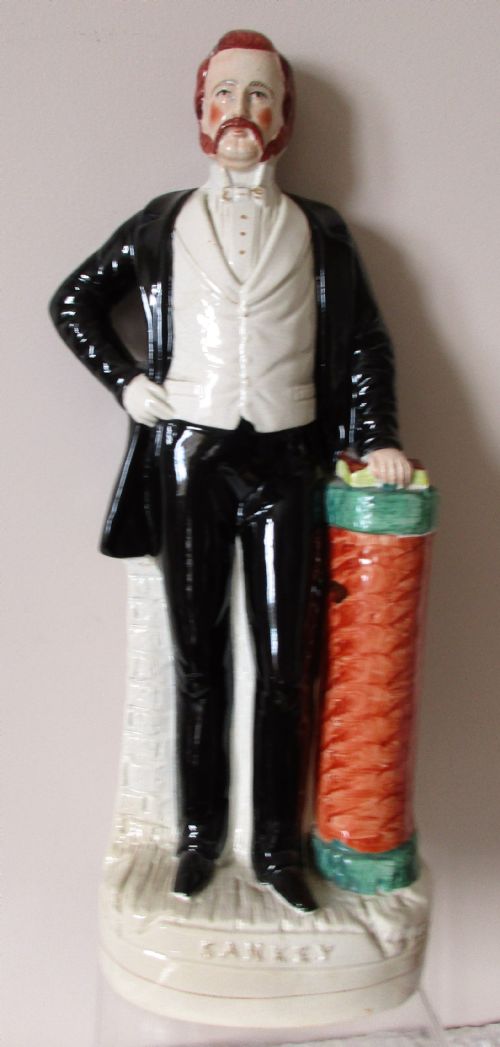
Makers frequently inscribed the names of royals, military commanders, or literary characters directly onto the plinth in raised capitals.
Costume details, uniforms, and specific pairings such as Crimean War allies provide further clues to the precise event commemorated.
Why are some figures made as pairs?
Victorian mantelpiece arrangement favoured symmetry, leading potters to issue figures of monarchs, theatrical acts, or harvesters in matched left-and-right facing sets.
Displaying them together created a balanced composition across the fireplace.
What is the difference between a figurine and a spill vase?
While standard figures are solid or simply hollow decorative models, a spill vase incorporates an integrated tube meant to hold taper matches.
Both share the same flatback construction style and earthenware body.