


English Porcelain Teacup Set
These English porcelain teacup sets bring hand-painted patterns, bone china and gilded detail from Georgian, Regency and Victorian makers straight to the table.
English Porcelain Teacup Set
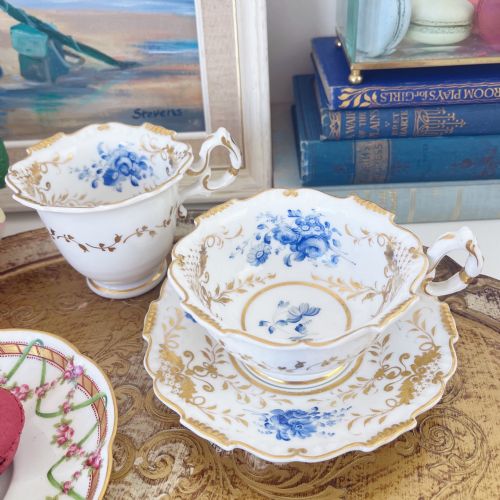
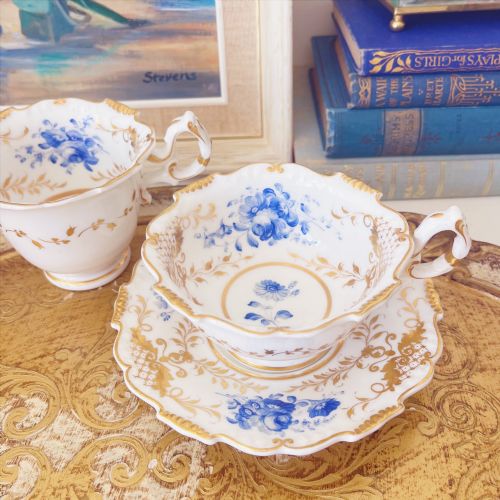
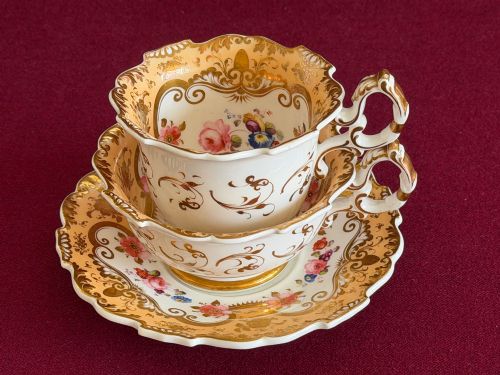
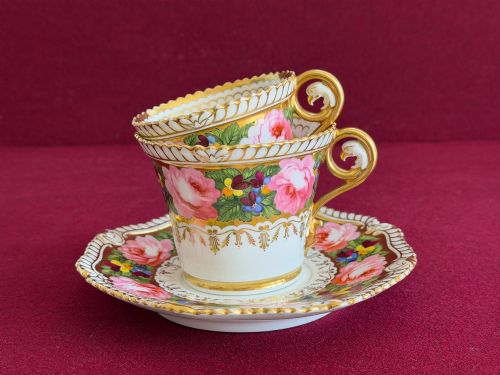
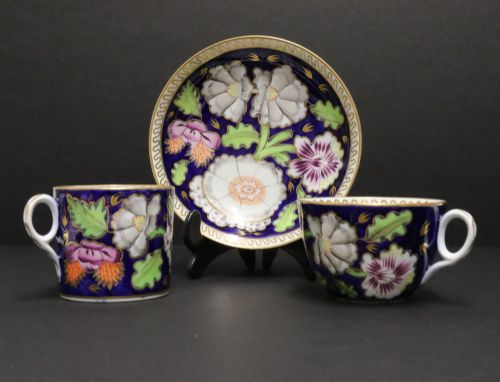
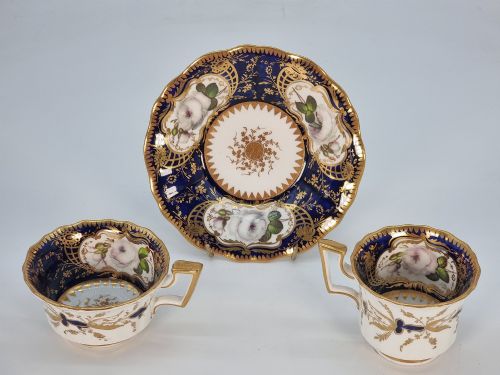
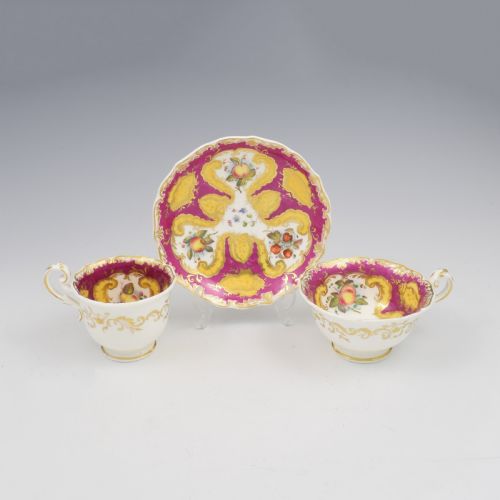
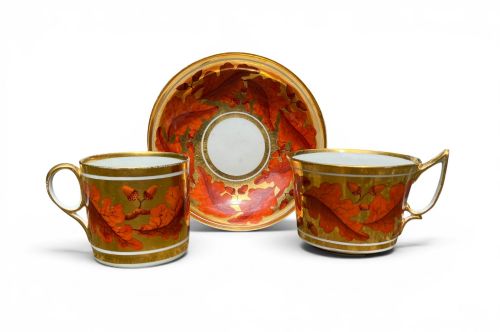
An English porcelain teacup set gathers matching cups, saucers and sometimes larger service pieces produced by domestic factories across several centuries. The pieces on this page span the 18th century through the early 20th century, covering Georgian, Regency, Victorian and later periods. Buyers encounter individual trios, cabinet cups, and multi-piece tea services designed for afternoon hospitality.
Forms range from simple teacups and saucers to extensive tea services and cased sets comprising dozens of pieces. Makers utilised various shapes including the Shrewsbury shape and Bat Wing pattern, alongside specialised items like coffee cans, demitasse cups and miniature solitaire sets. These groupings reflect changing social habits surrounding tea and coffee drinking from the Georgian era onward.
Materials and technique
Potters relied on porcelain and bone china bodies, shaping them into delicate cups, saucers and serving vessels. Decoration often involved hand-painted enamel colours depicting birds, flowers, figures and intricate orientalist motifs like the Dragon in Compartments pattern.
Workshops applied gold leaf, gilding and gold gilding to rims, handles and panels to highlight the ceramic forms. Ironstone china provided a more robust alternative for heavy-use services, while transfer printing and hand-painting techniques created varied surface textures.
Listings span multiple eras from the 18th century to the 1930s, featuring bone china, ironstone and gold leaf.
Quality variations
Quality rests on the fineness of the porcelain body and the precision of the hand-painted decoration. Early Worcester, Derby and Spode pieces demonstrate exceptional brushwork and enamel control that elevate them above standard production.
The application of gold leaf and gilding dictates much of the visual weight, with thick, burnished gold differentiating superior cabinet trios from simpler factory wares. Completeness within sets and the survival of matching service components also shift pieces from domestic utility to cabinet display status.
H & R Daniel·Chamberlain Worcester·Newhall·Coalport·Derby·Royal Worcester·Flight Barr & Barr·Hicks Meigh & Johnson·Shelley·Royal Albert Crown China·Doric China·Masons Patent Ironstone·Minton·Spode·Sutherland·Royal Crown Derby·Davenport·Gladstone potteries
The English Porcelain Teacup Set Glossary
- Trio
- A matched set consisting of a teacup, coffee cup and saucer. These groupings were common in the late Georgian and Regency periods.
- Cabinet trio
- A decorative set intended for display in a cabinet rather than daily use. They frequently feature elaborate hand-painted scenes and rich gilding.
- Bone china
- A type of soft-paste porcelain containing bone ash, developed to increase durability and whiteness. It became a staple material for English tea sets.
- Imari
- A decorative style inspired by Japanese export porcelain, utilising iron red, cobalt blue and gold. Victorian iterations adapted these vibrant palettes for local tastes.
- Solitaire set
- A small, single-person tea or coffee set comprising a cup, saucer and small pot or jug. They were made for individual use in private rooms.
English Porcelain Teacup Set: Frequently Asked Questions
What is an English porcelain trio?
An English porcelain trio comprises a matching teacup, coffee cup and saucer used together during the Georgian and Regency periods. This configuration allowed drinkers to switch between tea and coffee during formal social occasions.
Such groupings demonstrate the versatility of early 19th-century ceramic production, where factories painted matching patterns across different cup shapes to create a unified set.
How do I identify a Regency teacup set?
Regency teacup sets often display neoclassical influences, vibrant enamel colours and generous gilding on fine porcelain bodies. Look for specific factory patterns and shapes characteristic of the early 19th century.
Many pieces from this era bear hand-painted botanical or bird motifs, reflecting the scientific and natural history interests of the period.
Were these tea sets meant for daily use?
Cabinet trios and delicate porcelain sets were primarily intended for display or light entertaining rather than rough daily use. Finer pastes and extensive gold leaf required careful handling by servants or hosts.
Larger afternoon tea services from the Victorian and Edwardian eras saw more regular domestic employment as tea drinking became a widespread social ritual.
What does Blush Ivory mean on Royal Worcester?
Blush Ivory refers to a signature cream-coloured matte ceramic ground developed by Royal Worcester in the late 19th century. It served as a soft background for delicate hand-painted floral decoration and raised gold gilding.
This finish is characteristic of Victorian and Edwardian pieces produced by the factory, offering a distinct alternative to standard white porcelain.