

English Porcelain Set
An english porcelain set brings the refined artistry of Georgian and Regency tables into modern living rooms through handpainted saucers, trios, and service plates.
English Porcelain Set
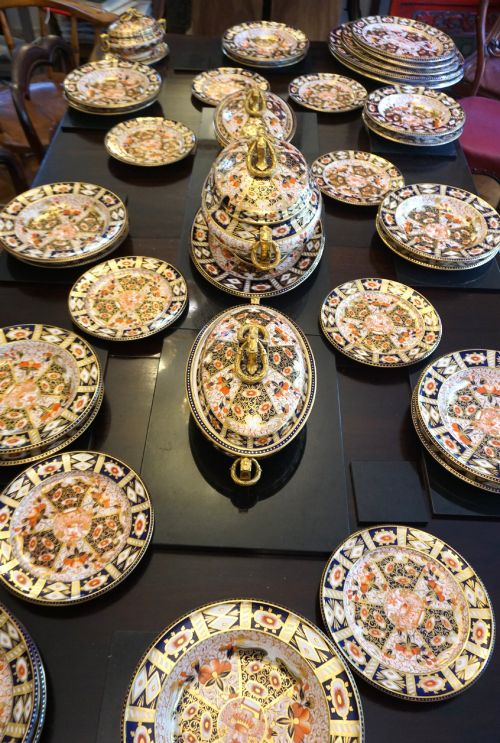
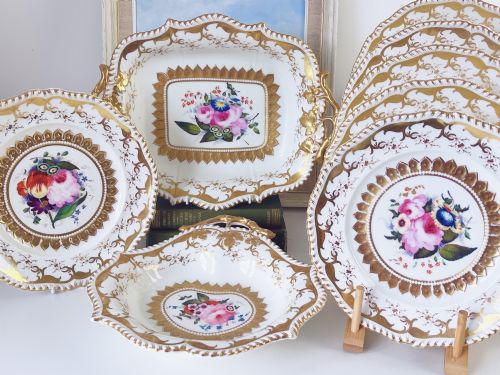
An english porcelain set encompasses matched groups of teacups, saucers, trios, dessert services, and larger dining arrangements from the eighteenth, nineteenth, and early twentieth centuries. These gatherings range from intimate chocolate cups and saucers to extensive multi-piece dinner services used for formal entertaining.
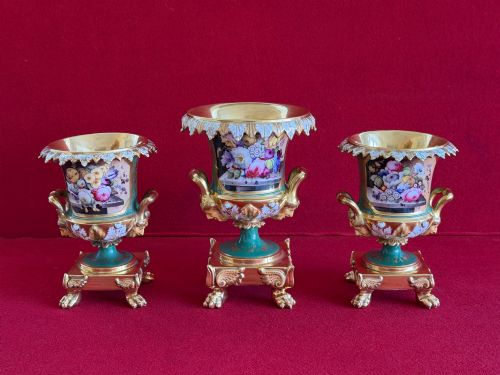
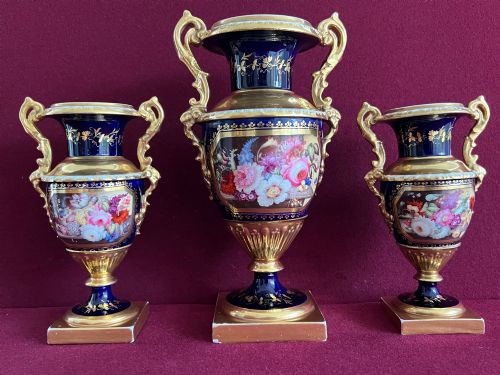
The pieces most frequently met on this page date from the Georgian and Regency periods through the Victorian era, spanning forms like the Shrewsbury shape, bat wing patterns, and elaborate garnitures. Makers such as Spode, Minton, and Daniel dominate the selections, reflecting the output of historic English potteries.
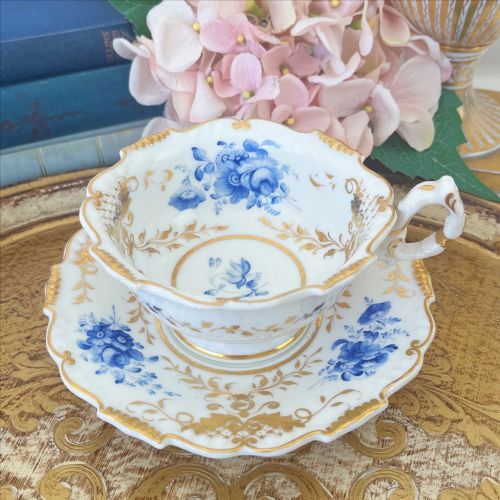
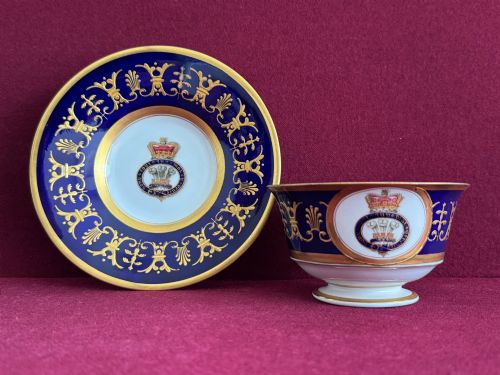
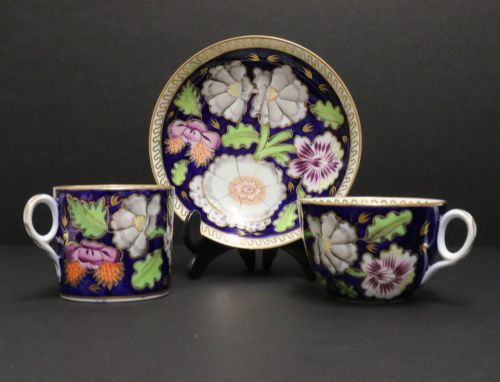
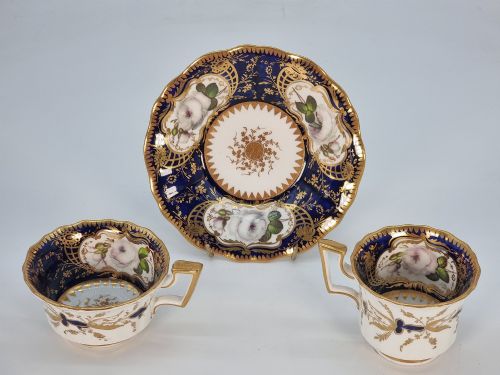
Buyers encounter everything from single cabinet trios to large fifty or sixty-piece services, often decorated with handpainted flowers, named views, or traditional Japan patterns. Each grouping provides a tangible link to historic dining and tea-drinking customs.
Materials and manufacture
Potters constructed these services using porcelain, bone china, and ironstone, shaping the clay into delicate teacups, robust soup bowls, and sweeping garniture vases. Manufacturers applied intricate glazes to seal the ceramic body before adding detailed handpainted motifs.
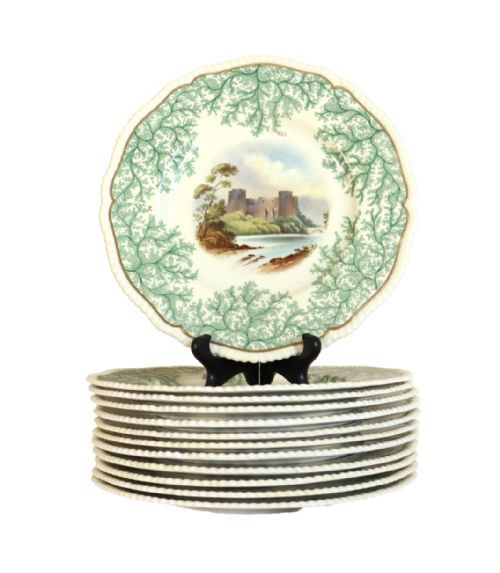
Artisans enhanced the surfaces using gold leaf, heavy gilding, and enamel work to frame floral scenes, seaweed borders, and oriental compartments. Kiln firing fixed these colours and metallic accents permanently to the ceramic surface, creating durable yet fragile tablewares.
English Porcelain Set Retail Price Guide 2026
Typical asking prices for english porcelain set among the pieces listed under this phrase on Sellingantiques today, from the lower quarter to the upper quarter. They describe what is for sale here now, not the wider market.
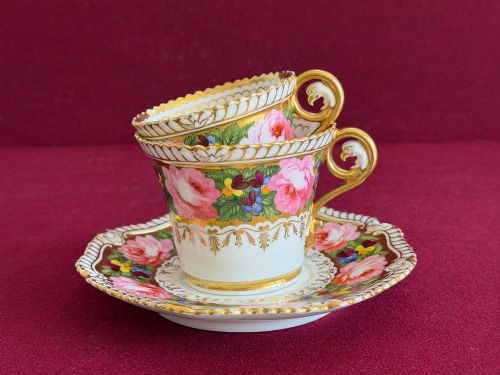
Putti figures and dragon compartments remind us that historic tea tables were practically theatrical stages.
Distinctions in quality
The refinement of the ceramic body and the precision of the handpainted decoration dictate the upper tiers of quality, where artists like Thomas Steel applied botanical and fruit studies directly onto the glaze. Superior sets display crisp transfer printing or meticulously executed brushwork without smudging or fading.
The completeness of a matched service and the presence of documented factory patterns or provenance elevate the standing of a collection. Well-preserved gilding and the absence of heavy wear on high-friction surfaces distinguish exceptional survivals from heavily used domestic wares.
Spode·Minton·Chelsea Derby·Barr and Barr·H and R Daniel·Grainger Lee and Co·Newhall·Coalport·Davenport·Masons·Chamberlains Worcester·Wedgwood·Aynsley·Bow·John Ridgway·Royal Crown Derby·Royal Worcester
The English Porcelain Set Glossary
- Trio
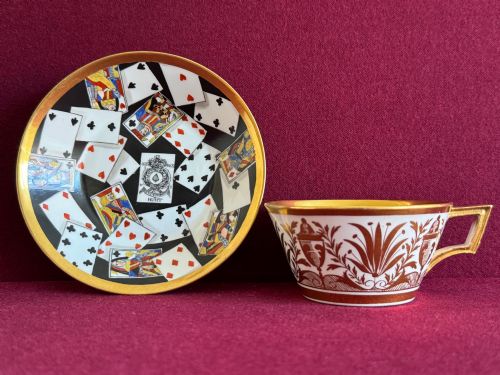
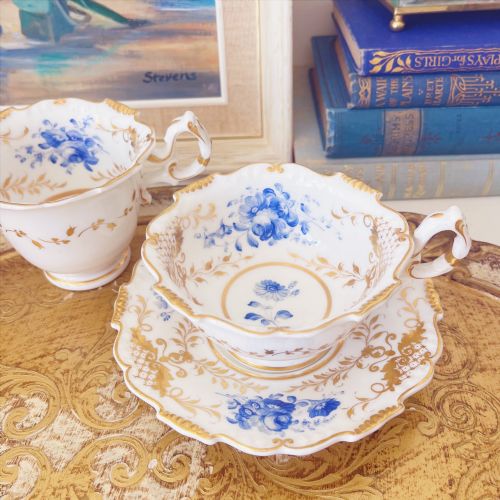
- A matched set consisting of a teacup, coffee cup, and matching saucer. These groupings were common in nineteenth-century tea services.
- Garniture
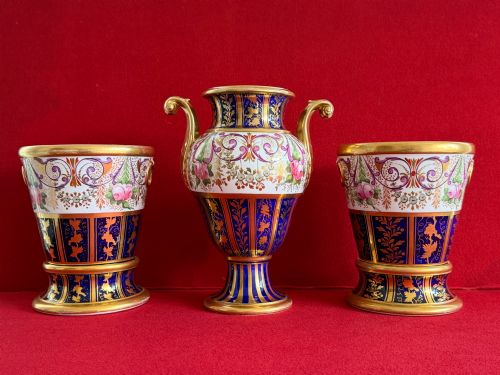
- A set of three or five vases or urns designed to be displayed together on a mantelpiece or sideboard. They often share a uniform decorative pattern.
- Bone china
- A type of soft-paste porcelain containing bone ash, known for its high strength, chip resistance, and translucent quality. It became a staple of English potteries.
- Ironstone
- A patented ceramic type valued for its durability and heavy body, frequently used for dinner plates and soup bowls. It bridges the gap between earthenware and porcelain.
- Imari
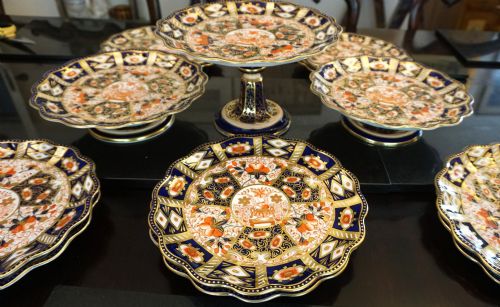
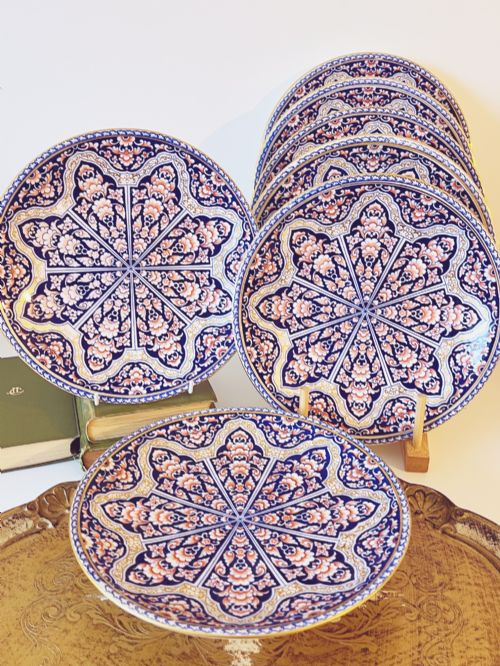
- A decorative style featuring rich underglaze blue and overglaze iron red and gold, inspired by Japanese export wares. English factories frequently adopted this palette.
English Porcelain Set: Frequently Asked Questions
How do I care for antique porcelain?
Wash each piece gently by hand using lukewarm water and mild soap, avoiding abrasive sponges or modern dishwashers that can damage delicate gilding. Store items securely with protective padding between stacked plates to prevent surface scratching.
Keep delicate items away from direct sunlight and extreme temperature fluctuations to preserve the stability of the glaze and handpainted enamels over time.
Can I use these sets for dining?
Many of these services remain fully functional for serving tea or displaying desserts during special occasions, provided they are handled with proper care. Older ironstone and bone china are structurally robust, though historic handpainted surfaces require gentle treatment.
Avoid using antique ceramics in microwaves or ovens, as thermal shock can crack the historic glaze or melt trace metallic gilding.
How do I identify different makers?
Inspect the base of each cup, plate, or tureen for painted factory marks, impressed ciphers, or pattern numbers that correspond to specific historic potteries. Reference books and factory archives help match these symbols to manufacturers like Spode or Daniel.
Stylistic cues such as paste composition, specific handle shapes like the Shrewsbury form, and typical colour palettes also point toward particular regional workshops.
What is a garniture set?
A garniture consists of a matched group of three or five vases or urns designed to create a balanced decorative display on a mantelpiece. These matching vessels share identical motifs, colour schemes, and ceramic bodies.
Originating in the seventeenth century, they remained popular interior ornaments throughout the Georgian and Regency periods.