


English Porcelain Serving Tray
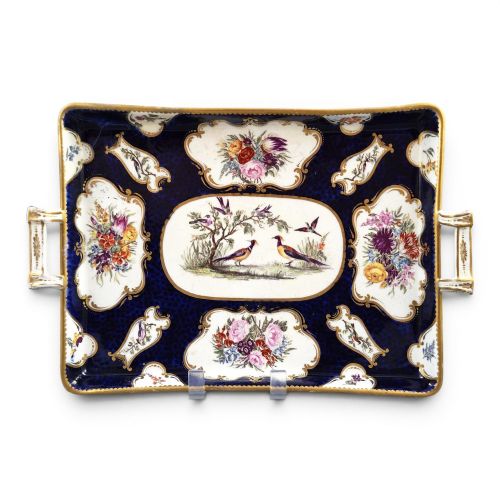
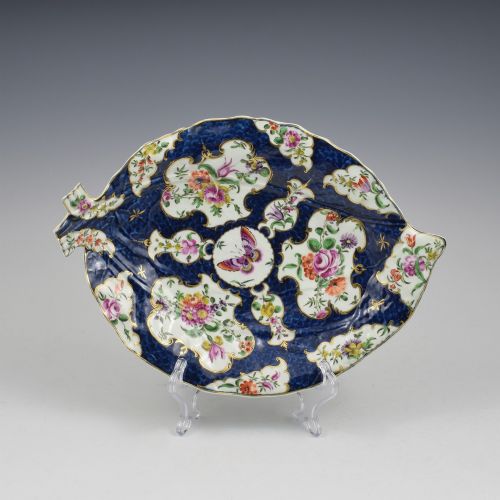
An english porcelain serving tray brings hand-painted floral panels, gilded borders, and historic ceramic forms straight to the dining table.
English Porcelain Serving Tray
When searching for an english porcelain serving tray, collectors encounter an array of serving dishes, decorative platters, cabinet pieces, and sandwich sets spanning the eighteenth, nineteenth, and early twentieth centuries. The selection encompasses forms produced across various distinct periods, from Georgian and Regency eras to Victorian revivals and the early decades of the twentieth century.
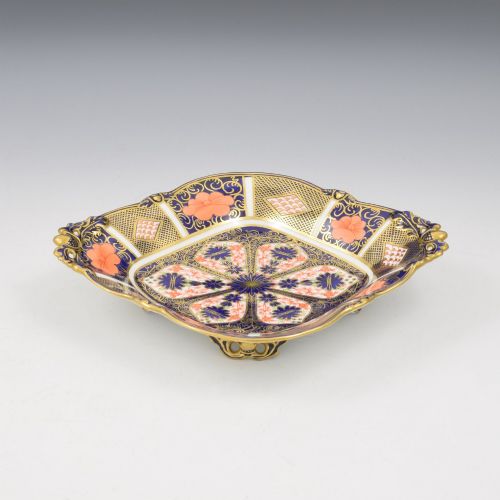
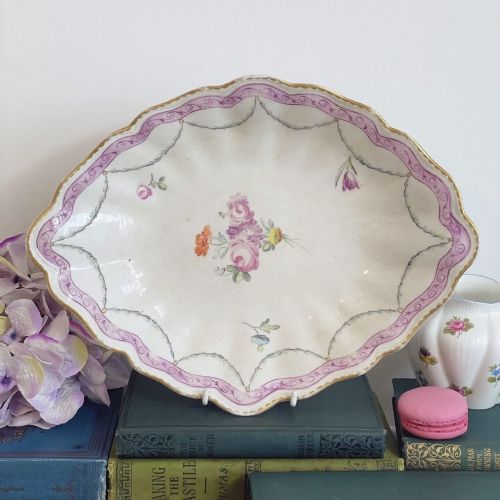
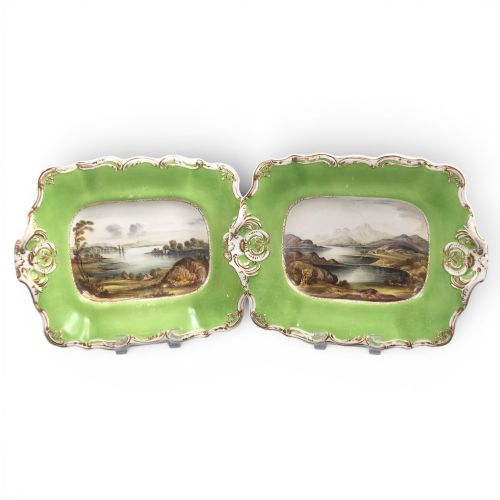
The objects take several functional and decorative shapes, including oval dishes, rectangular platters, twin-handled serving vessels, and pierced trays. Pieces appear in traditional English patterns, Imari palettes, Chinoiserie motifs, and hand-painted fruit or botanical studies.
Makers and factories represented range from early Worcester periods and Derby works to Coalport, Spode, Minton, Copeland and Garrett, Ridgway, and Royal Crown Derby. These items reflect the shifting domestic tastes and dining customs of British households across generations.
How they were made
Potters utilised soft-paste porcelain, bone china, and earthenware bodies, shaping them into platters and trays through moulding or throwing before initial firing. Artisans applied hand-painted polychrome enamels, cobalt blue underglaze decoration, and delicate transfer-printed designs.
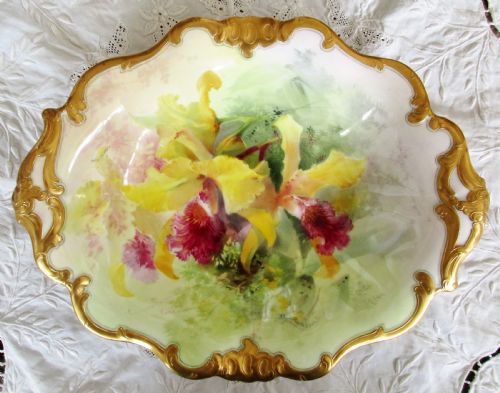
Gilding and gold leaf accents were hand-applied to rims and handles, often requiring subsequent kiln firings to bond the metallic decoration to the porcelain glaze.
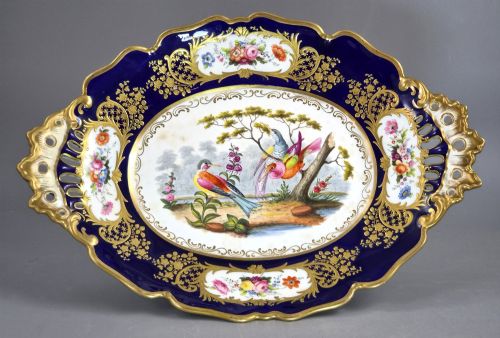
Historic painters faithfully rendered exotic birds with expressions suggesting they had very strong opinions about eighteenth-century garden design.
What varies in quality
Quality in these porcelain trays rests upon the precision and execution of the hand-painting, particularly in complex floral bouquets, exotic birds, and botanical studies by named artists. The crispness of moulded relief work, the richness of cobalt blue grounds, and the stability of the porcelain body also distinguish finer examples.
The application of gold leaf and gilding shows notable variation, with superior pieces displaying carefully burnished highlights rather than flat, dull metallic surfaces. Early factory provenance, such as eighteenth-century Worcester periods, adds considerable distinction to the physical craftsmanship.
Royal Crown Derby·Coalport·Royal Doulton·David Dewsberry·James Giles·Copeland and Garrett·Dr Wall Worcester·Chamberlain’s Worcester·Royal Worcester·Ridgway·Minton·Spode·R Sebright·Barr, Flight and Barr
The English Porcelain Serving Tray Glossary
- Soft-paste porcelain
- An artificial porcelain composition made from white clay, glass frit, and other materials, fired at lower temperatures than hard-paste porcelain. This early body type yielded a creamy tone and soft glaze texture.
- Imari
- A decorative style inspired by Japanese export wares, featuring a distinct palette of underglaze cobalt blue, iron red, and gilt highlights. English factories adapted this vibrant aesthetic extensively.
- Bone china
- A type of porcelain incorporating bone ash into the ceramic paste, producing a strong, translucent white body suitable for refined tableware.
- Enamel
- A vitrescible glass paste applied over the glazed porcelain surface and fired at a low temperature to achieve rich polychrome pictorial details.
- Pierced
- Perforated or openwork detailing cut into the rim or body of a dish during manufacturing for decorative effect.
English Porcelain Serving Tray: Frequently Asked Questions
How were these trays used?
These pieces served practical functions in historic dining rooms, holding desserts, side dishes, fruit, or sandwich assortments during formal meals. Cabinet versions were designed specifically for display rather than serving.
Over time, changing household routines shifted many of these serving dishes into decorative display pieces or collector cabinets.
How do I identify a period piece?
Dating relies on factory marks, painter signatures, stylistic markers, and the composition of the ceramic body itself. Eighteenth-century pieces often feature characteristic cobalt underglaze marks and soft-paste translucency.
Later nineteenth and twentieth-century examples display printed factory ciphers, impressed numbers, and distinct aesthetic movements like Rococo Revival or Chinoiserie.
Can I use them for serving food?
While structurally sound, antique porcelain serving trays require careful handling due to age, delicate enamels, and fragile gilded rims. Hand washing is essential to preserve the historic glazes and metallic details.
Many collectors prefer to use them for dry foodstuffs, presentation, or display to protect the hand-painted surfaces from wear.
What is English Imari?
English Imari refers to porcelain decorated in imitation of Japanese export wares, characteristically combining deep cobalt blue, rusty iron red, and lavish gold leaf. Eighteenth and nineteenth-century English potteries adopted this striking palette for serving dishes and cabinet plates.
The style remained popular across various Victorian and Edwardian manufacturing periods.