



English Porcelain Serving Platters
English porcelain serving platters bring together centuries of painted flora, birds and gilt borders on ceramic bodies for the table.
English Porcelain Serving Platters
English porcelain serving platters span centuries of production, appearing in forms from large oval plates to deep leaf dishes and rectangular platters. A buyer searching this phrase encounters pieces originating from the eighteenth century through to the twentieth century, with strong representation from Georgian and Regency eras.
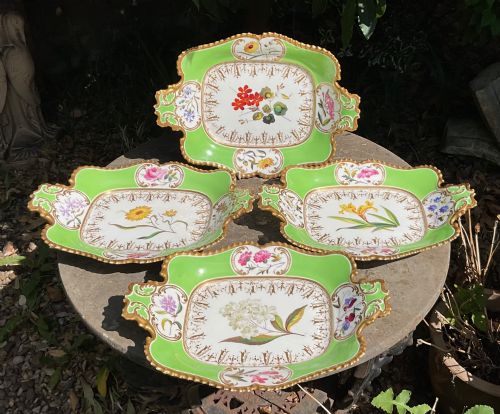
The objects take shapes designed for presentation and dining, including botanical dishes, fish and dessert dishes, and specialised drainers. Makers ranged from factory works in Worcester and Derby to Staffordshire potteries producing ironstone and bone china.
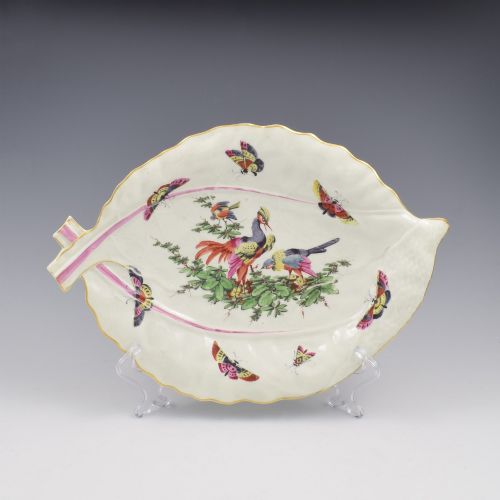
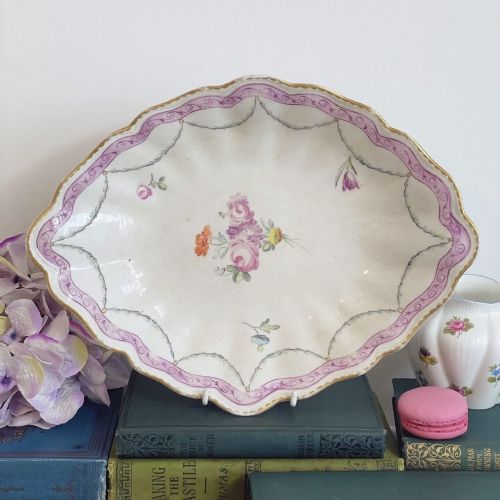
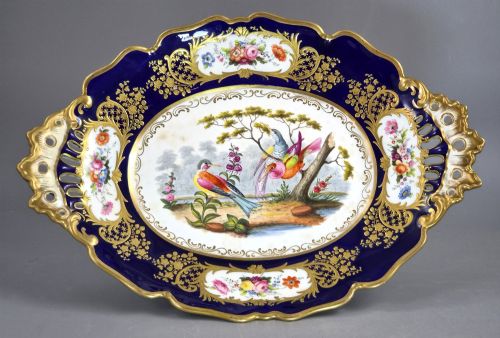
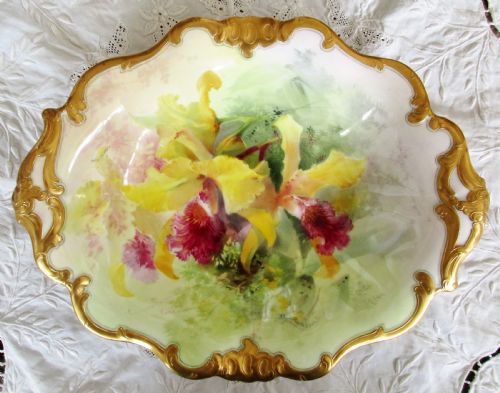
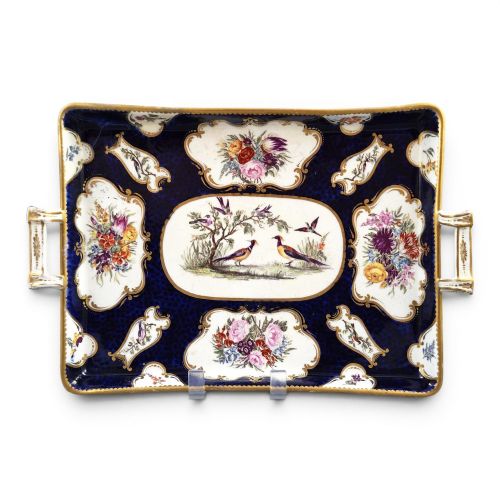
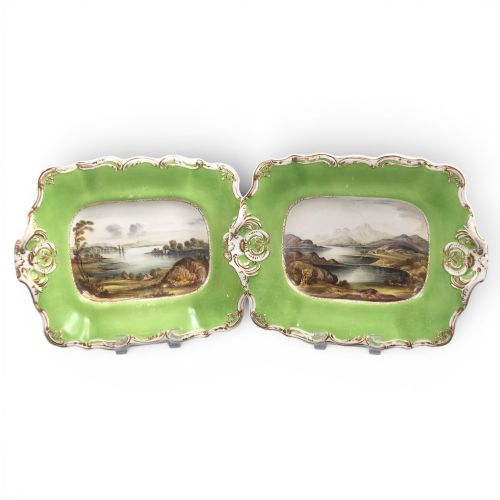
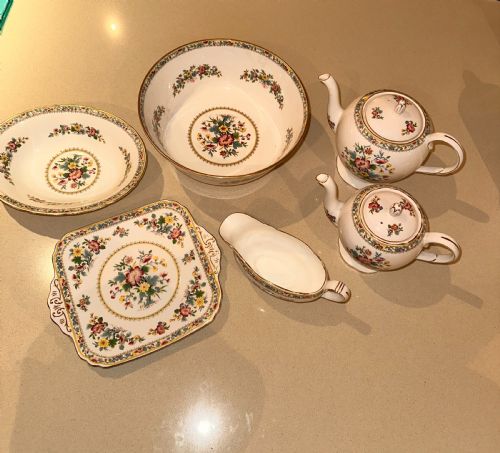
Many examples arrive with hand-painted motifs, from exotic birds and polychrome flowers to botanical studies and armorial crests. The tradition encompasses domestic table use alongside ornamental cabinet display.
Materials and Techniques
Makers utilised porcelain, bone china and ironstone ceramic bodies, shaped into platters and trays through moulding or throwing. Felspar porcelain and refined clay mixtures provided the stable white surfaces necessary for detailed painting.
Decoration relied on hand-painted enamels, underglaze blue, and cobalt blue pigments applied before a glossy protective glaze. Gilding and gold leaf highlights were added by hand and fired to finish the borders and handles.
Judging Quality
The standard of a platter rests upon the crispness of the moulded form and the precision of the hand-painted details, such as individual bird plumage or botanical accuracy. Early Worcester and Derby pieces show meticulous brushwork, whilst later industrial output relies on varied transfer-printing and hand-colouring combinations.
Material composition also dictates quality, where fine translucency in bone china and early soft-paste porcelain contrasts with heavier ironstone bodies. The preservation of original gilding and enamels without excessive rubbing determines the visual appeal of an antique service dish.
Royal Crown Derby·H & R Daniel·Coalport·Chamberlains Worcester·Hicks & Meigh·Royal Doulton·James Giles·Copeland & Garrett·Spode·Mason·Royal Worcester·Ridgway·Minton·Barr Flight & Barr
The English Porcelain Serving Platters Glossary
- Porcelain
- A white, vitrified ceramic material fired at high temperatures to achieve a dense, translucent body. It forms the primary substrate for fine English serving dishes.
- Imari
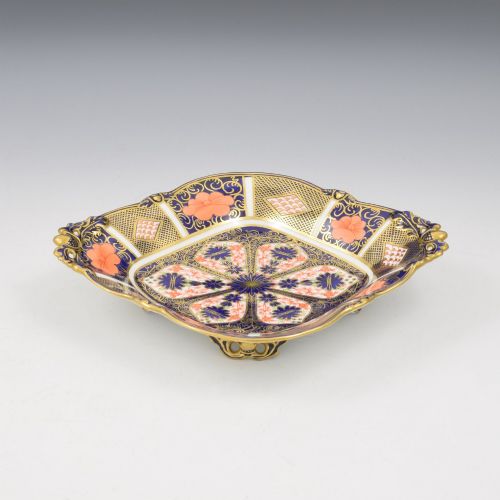
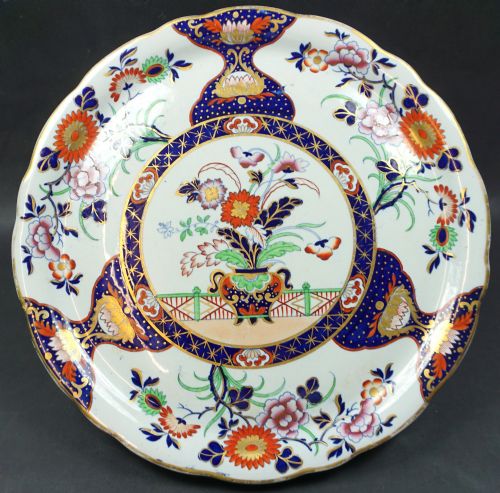
- A decorative style inspired by Japanese export wares, typically combining underglaze blue with iron red and gilt details. English factories frequently adapted this palette on porcelain plates.
- Ironstone
- A durable type of earthenware patented in the nineteenth century to imitate porcelain for heavy domestic service. It provides a robust alternative for platters and drainers.
- Enamel
- Opaque coloured glass fused to the ceramic surface through firing. Enamels allow vibrant polychrome painting on top of the glaze.
- Gilding
- The application of gold leaf or gold powder to ceramic surfaces, usually highlighting rims, handles and borders. It requires careful firing to bond with the glaze.
English Porcelain Serving Platters: Frequently Asked Questions
How do I date an English porcelain platter?
Dating relies on factory marks, pattern numbers, and stylistic markers such as Rococo moulding or Regency border designs.
Potters changed their backstamps frequently, allowing collectors to narrow down the decade of production alongside the ceramic body type used.
Can I use these antique platters for food?
Most antique serving dishes can hold food, though fragile glazes and delicate overglaze enamels require gentle hand washing.
Ironstone and bone china platters from the nineteenth century are generally sturdier for occasional use than eighteenth-century soft-paste pieces.
What is the difference between porcelain and ironstone?
Porcelain is a fired ceramic that is white and translucent, whereas ironstone is a heavy, opaque earthenware developed for durability.
Platters made from ironstone have a thicker, heavier feel in the hand compared to fine porcelain body types.
Why are some dishes called dessert or fish dishes?
Shape and size dictated the original dining purpose, with long oval platters suited for fish and smaller shaped plates intended for dessert courses.
Matching sets often included specialised pieces like drainers and compartmented trays to serve specific foods at the table.