



Chamberlain Worcester Dishes
Chamberlain Worcester dishes are fine English porcelain tablewares prized by collectors for their intricate hand-painted motifs and rich armorial designs.
Chamberlain Worcester Dishes
Chamberlain Worcester dishes encompass a sophisticated range of utilitarian and decorative tablewares produced during the Georgian, Regency and early Victorian eras. When you search for chamberlain worcester dishes, you encounter plates, serving dishes, sugar bowls, tureens and decorative baskets created by the renowned factory.
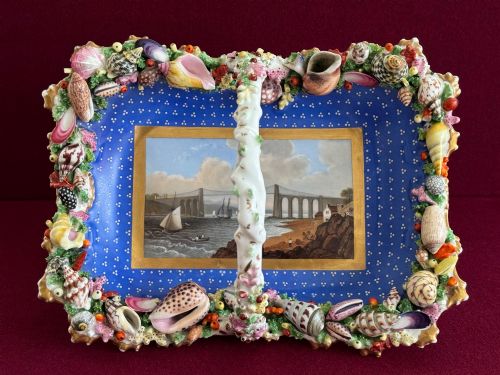
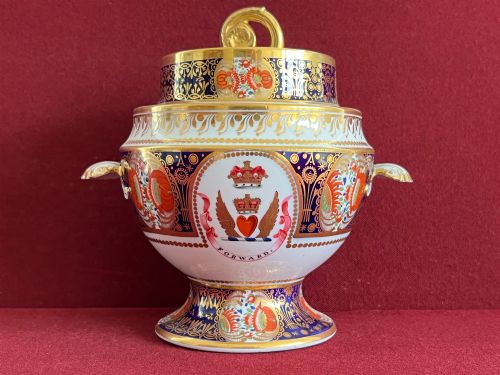
The pieces on this page span the late eighteenth and early nineteenth centuries, featuring specific patterns such as the Jabberwocky and Dragon in Compartments designs. Collectors often find armorial services and pieces depicting specific topographical views like the Menai Bridge.
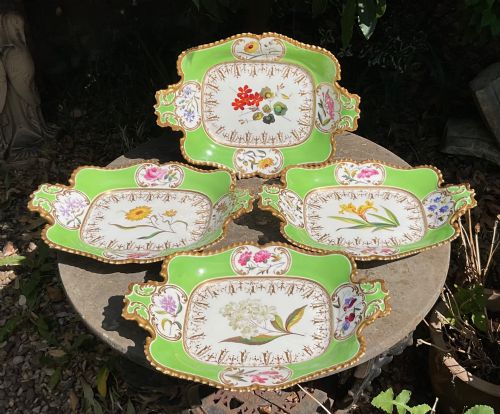
Forms range from simple dessert plates to twin-handled serving dishes and lidded tureens. These items reflect the shifting aesthetic preferences from the Georgian period through Grand Regency and into early Victorian styles.
How they were made
These items are fashioned from hard-wearing porcelain and finished with detailed enamel painting. Artisans applied lavish gold leaf and rich gilt accents to highlight the rims, handles and central motifs.
Production relied on skilled hand-painting rather than mass transfer printing, allowing for complex heraldic crests, exotic bird patterns and hand-painted topographical scenes to be rendered directly onto the glazed ceramic body.
Chamberlain Worcester Dishes Retail Price Guide 2026
Typical asking prices for chamberlain worcester dishes among the pieces listed under this phrase on Sellingantiques today, from the lower quarter to the upper quarter. They describe what is for sale here now, not the wider market.
Some plates feature dragons so fiercely painted they appear ready to leap off the dessert service and steal your afternoon biscuit.
What varies in quality
Quality in these ceramics rests on the complexity and preservation of the hand-painted decoration. Pieces featuring intricate armorial crests or named patterns like Jabberwocky demand a higher level of artistic skill than standard floral motifs.
The crispness of the gilding and the intactness of the gold leaf significantly influence the visual appeal and desirability of a piece. Well-preserved enamel colours without rubbing indicate superior care and original craftsmanship.
Chamberlain Worcester
The Chamberlain Worcester Dishes Glossary
- Armorial
- Bearing a coat of arms or heraldic crest. These bespoke commissions were created for noble families and prominent historical figures.
- Sucrier
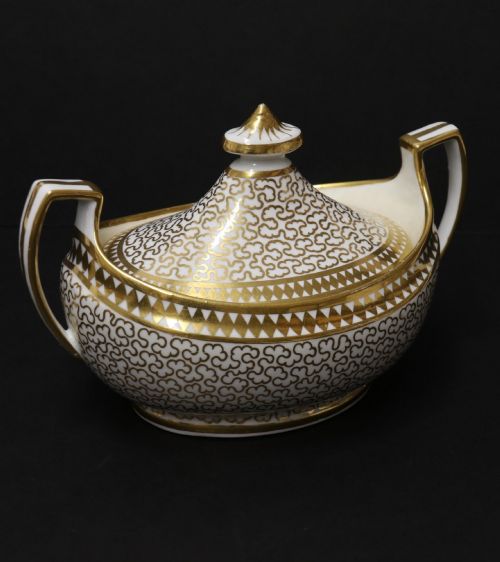
- A small lidded vessel designed for holding sugar. They frequently match the design of tea and dessert services.
- Tureen
- A deep, covered vessel used for serving soups or sauces. They often feature twin handles and matching stands.
- Gilt
- A thin layer of gold applied to the porcelain surface. It adds a decorative metallic finish to rims and handles.
- Enamel
- Opaque glass-like pigments fused to the ceramic body by firing. This technique provides vibrant and permanent colours.
Chamberlain Worcester Dishes: Frequently Asked Questions
What periods do these pieces date from?
The listings span from the late eighteenth century through the Regency era and into the early Victorian period. Most examples originate from the Georgian and Regency years.
Production methods and decorative styles evolved across these decades, shifting from classical armorial services to more colourful pictorial scenes.
How were these ceramic dishes originally used?
These items served functional roles in wealthy households for dining and tea service. Dessert plates, tureens and sugar bowls formed part of large table settings for guests.
Armorial services displayed the family crest and social standing of the owner during formal meals and gatherings.
How do I identify a specific pattern?
Patterns often draw inspiration from Japanese Imari styles, such as the Dragon in Compartments design, or feature named patterns like Jabberwocky. Armorial pieces frequently include specific family names or titles.
Topographical views, such as the depiction of the Menai Bridge, provide clear visual clues to the subject matter of the decoration.
How should I care for antique porcelain?
Display these items securely away from direct sunlight to protect the enamel colours and delicate gold leaf details. Hand washing in lukewarm water with mild soap is essential if cleaning is necessary.
Avoid abrasive sponges or chemical cleaners that might damage the historical glaze and gilt surfaces.