
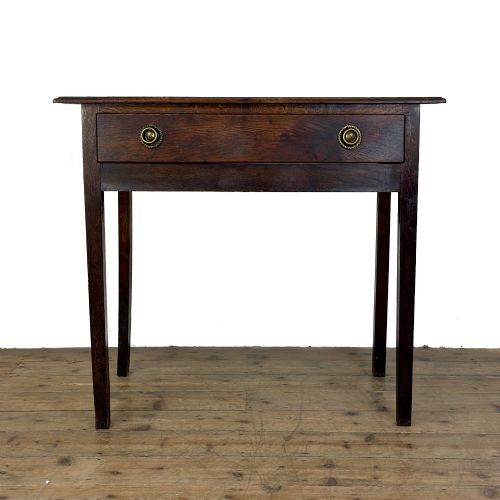
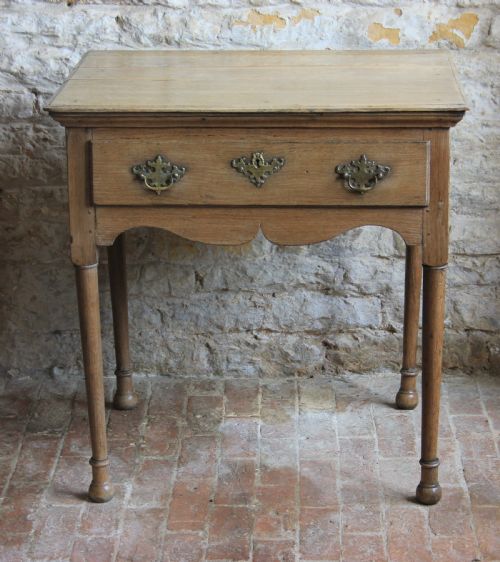


English Oak Writing Table
An english oak writing table offers a sturdy surface for correspondence, connecting seventeenth-century craftsmanship to early twentieth-century utility.
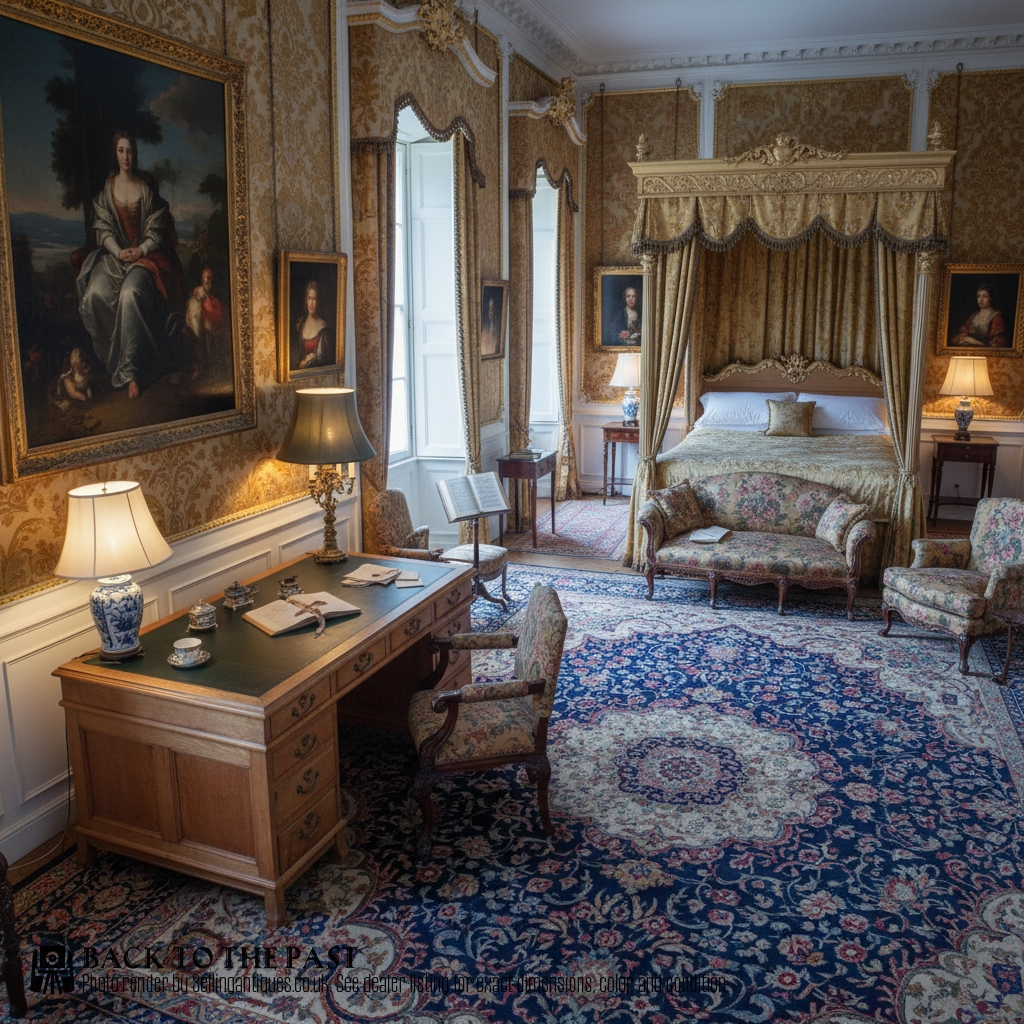
English Oak Writing Table
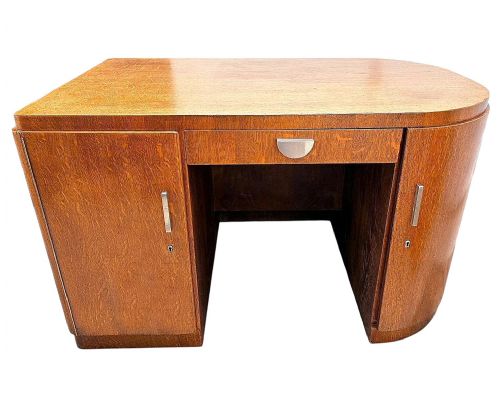
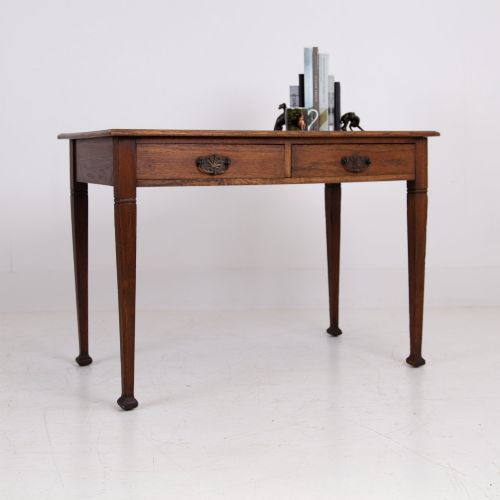
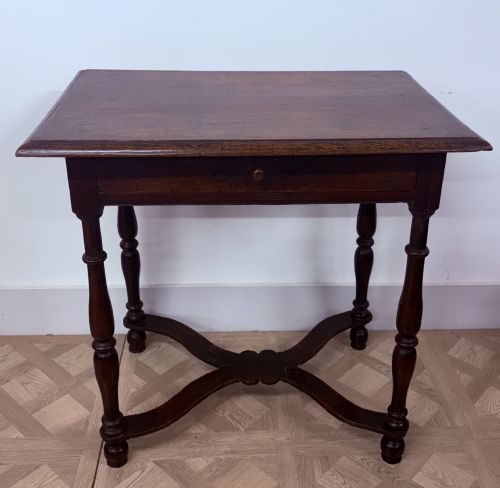
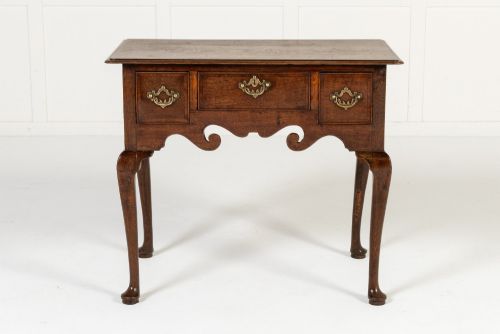
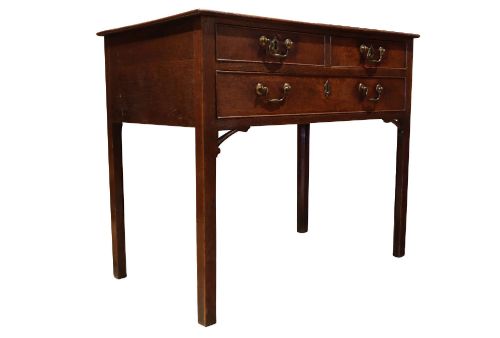
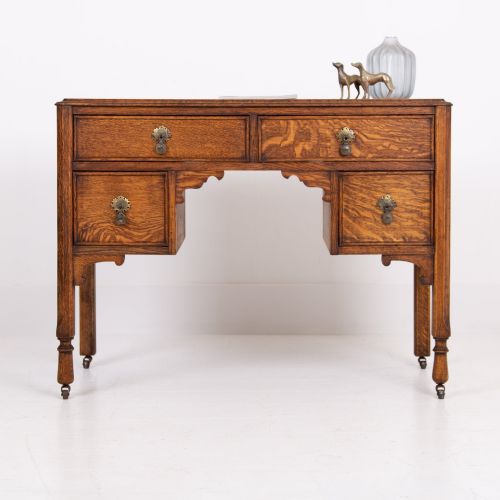
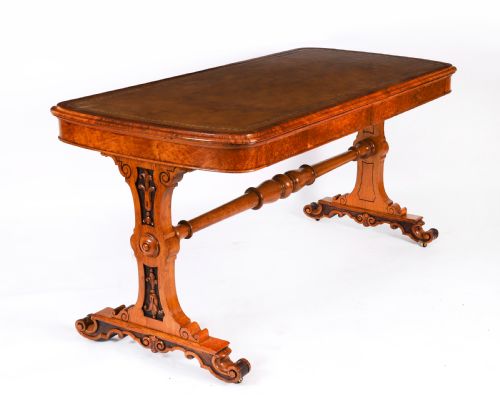
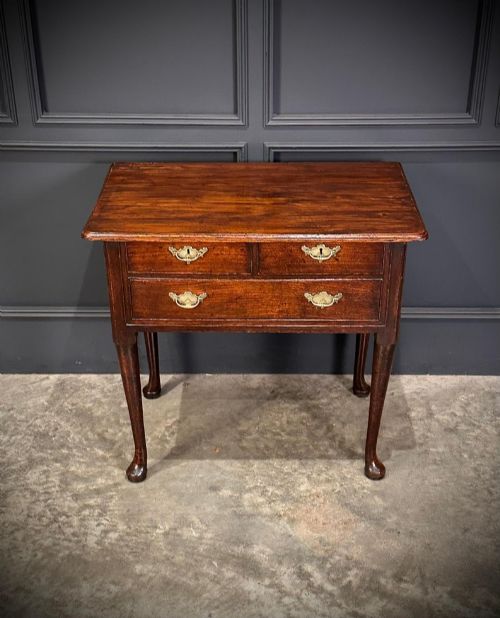
An english oak writing table appears across several centuries, ranging from seventeenth-century provincial lowboys to nineteenth-century library pieces and twentieth-century modernist desks. These examples span simple joined side tables with single drawers to elaborate pedestal desks and pedestal variants outfitted for study or library use.
The selections on this page bridge domestic country houses and formal municipal settings. Buyers frequently encounter lowboys, side tables adapted for writing, and larger partner or pedestal formats spanning the Georgian, Victorian, and Edwardian eras.
Materials and Construction
Makers utilised solid timber frames alongside figured veneers like pollard oak, burr oak, and occasionally ash or mahogany accents. Drawer linings frequently display secondary woods such as pine, whilst structural joints rely upon traditional pegged mortise and tenon construction.
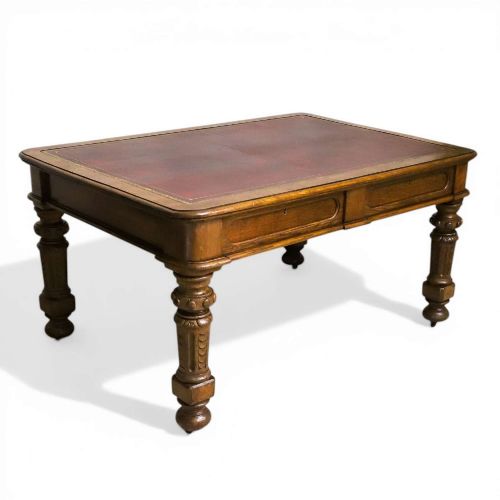
Working surfaces often incorporate inset leather panels, sometimes gilt-tooled, surrounded by moulded timber edges. Brass hardware, including drop handles and escutcheons, provides functional and decorative contrast to the warm grain of the oak.
English Oak Writing Table Retail Price Guide 2026
Typical asking prices for english oak writing table among the pieces listed under this phrase on Sellingantiques today, from the lower quarter to the upper quarter. They describe what is for sale here now, not the wider market.
The archive records pieces spanning the seventeenth-century William and Mary period through to Art Deco modernist designs.
Assessing Standard
The caliber of an english oak writing table depends on the selection of timber figure, the crispness of any hand-carved ornamentation, and the integrity of the underlying joinery. Examples featuring carefully matched pollard oak veneers or substantial golden boards command attention through their natural visual depth.
Hardware originality and secondary wood selection further distinguish finer workshop output from simpler provincial carpentry. Interior drawer construction, featuring precise dovetailing and clean timber dividers, marks the division between standard utility pieces and superior commissions.
Gillows·James Winter and Sons·Holland and Sons·Johnstone Jeanes and Company·Howard and Sons·Waring and Gillow·Shoolbred·Hubert Simpson·Merryweather and Son
The English Oak Writing Table Glossary
- Lowboy
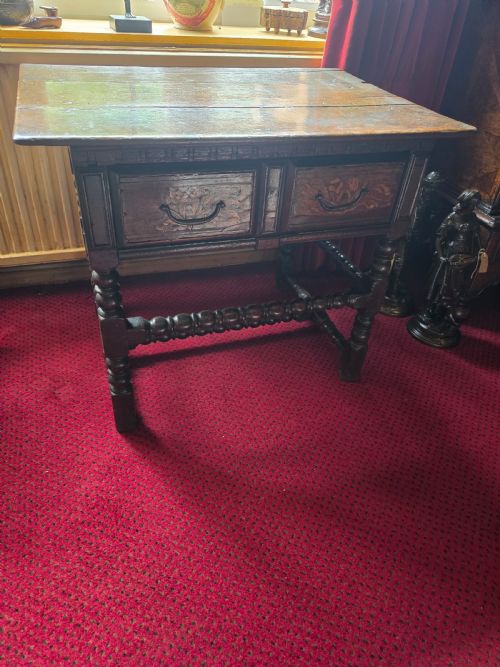
- A small oak side table fitted with one or more drawers, originating in the late seventeenth or eighteenth century and frequently utilised for dressing or writing.
- Pollard Oak
- Timber harvested from trees that have been pollarded, producing a dense, highly figured grain pattern prized in nineteenth-century cabinet work.
- Escutcheon
- A protective plate surrounding a keyhole, usually cast from brass and fixed to drawer fronts or cabinet doors.
- Dovetail
- A joint formed by interlocking wedge-shaped fingers, commonly utilised in drawer construction to ensure durable side and back connections.
- Gilt-Tooled
- Leather writing surfaces decorated with gold leaf pressed into the hide using heated metal tools.
English Oak Writing Table: Frequently Asked Questions
How do I date an oak writing table?
Dating relies on observing construction methods, handle hardware, and stylistic details such as leg turnings. Earlier seventeenth-century pieces feature joined frames and pegged joints, whilst nineteenth-century versions often use machine-sawn timbers and factory-cast brasses.
Secondary woods inside drawers also offer clues. Oak linings point to earlier provincial work, whereas pine secondary woods become common during the Victorian period.
Were all these tables used for writing?
Many oak tables served multi-purpose domestic roles, functioning interchangeably as side tables, dressing tables, and hall desks. Lowboys and side tables were frequently adapted for correspondence when paired with a portable writing box.
Purpose-built writing tables with dedicated drawer fitments or inset leather surfaces appeared more frequently in nineteenth-century libraries and morning rooms.
How should I care for a leather writing surface?
Inset leather requires minimal moisture and gentle cleaning to preserve the material and any gilt tooling. Dusting with a dry cloth prevents particle buildup in the grain.
Conditioning balms specifically formulated for antique leather help maintain suppleness without darkening the hide or disturbing the surrounding oak moulding.
What is the difference between a lowboy and a writing table?
A lowboy is a compact table with drawers, typically standing lower to the ground and originating in the seventeenth or eighteenth century. Writing tables span a broader range of forms, often incorporating wider kneeholes and specialised desk tops.
Many lowboys served as writing surfaces in smaller rooms before dedicated pedestal desks became standard in later centuries.