


English Oak Wall Clock
An english oak wall clock brings honest timber and dependable timekeeping into a room, spanning sturdy Victorian dials and clean twentieth-century designs.
English Oak Wall Clock
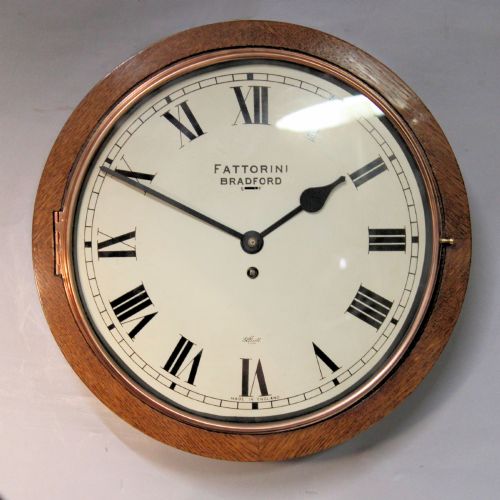
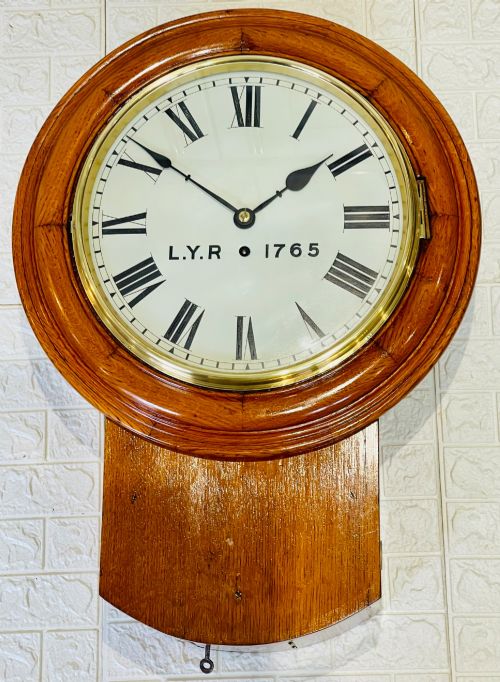
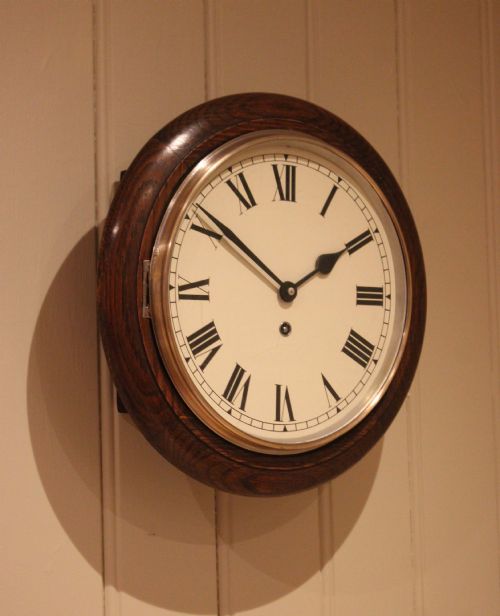
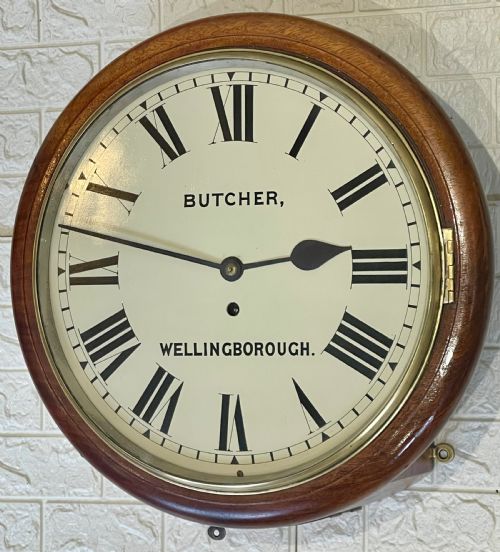
An english oak wall clock serves as both a practical timekeeper and a sturdy fixture, drawing on centuries of domestic and institutional use. These pieces range from simple drop-dial office clocks to hooded wall clocks housed in rich, grained timber.
Buyers on this page most frequently encounter Victorian and twentieth-century examples, including railway and commercial pieces alongside domestic wall timepieces. The grain of the oak varies from pale golden tones to darker, polished patinas developed over generations of handling.
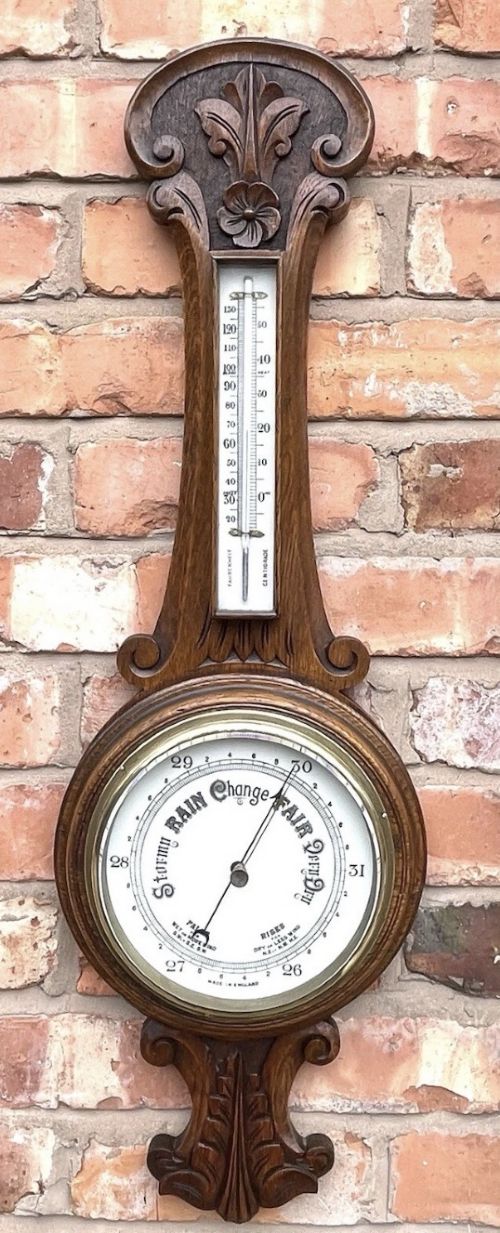
Formats shift from traditional circular dials to octagonal cases and banjo barometers that incorporate timekeeping within a single wooden body. Each variation reflects the specific room it was originally built to serve, whether a busy station office or a quiet parlour.
Distinctions in Quality
Quality rests in the crispness of the timber carving, the originality of the oak case, and the fidelity of the internal brass fusee movement. Superior pieces retain their original dial paint, unpolished bezels, and matching wooden components without heavy modern replacements.
The precision of the maker's hand separates utilitarian factory output from finer workshop productions, visible in the smoothness of the chain-driven movement and the careful joinery of the oak housing.
Materials paired with oak across these records include brass, glass, iron, chrome, and mahogany accents.
Elliott·Dent of London·Henry Deykin·Gledhill Brook·J. Hummel
The English Oak Wall Clock Glossary
- Fusee
- A conical pulley used in mechanical clocks to maintain even tension on the gear train as the mainspring unwinds. This mechanism ensures consistent timekeeping across the duration of the wind.
- Dial clock
- A wall-mounted timepiece featuring a prominent circular face, historically hung in offices, railway stations, and schools for clear visibility. The case typically includes a short bottom drop box for the pendulum.
- Hooded wall clock
- An early form of domestic timepiece where the entire movement and dial are protected by a wooden hood that lifts off the wall bracket. These originate from the seventeenth and eighteenth centuries.
- Lever escapement
- A mechanism that controls the release of power in a clock movement, allowing the gears to move forward in precise increments. It provides reliable timekeeping even in environments subject to minor vibrations.
English Oak Wall Clock: Frequently Asked Questions
How do I wind an english oak wall clock?
Most fusee and mechanical wall clocks require a specialised winding key inserted directly into the dial face to tension the movement every eight days.
Care must be taken not to overwind the mechanism, stopping gently as soon as resistance is felt to protect the internal brass gears.
Where should I hang an english oak wall clock?
These heavy wooden timepieces require a secure wall fixing directly into masonry or solid studs to support the weight of the oak case and swinging pendulum.
Avoid placing them on damp exterior walls or near direct heat sources that could dry out and split the timber over time.
How do I tell a Victorian dial clock from a later piece?
Victorian examples generally feature heavier brass bezels, hand-painted iron dials, and deeper oak cases designed to house chain-driven fusee movements.
Twentieth-century versions often show lighter golden oak timbers, cleaner lettering on the dial, and alternative escapements such as lever mechanisms.
Why does my clock need a level wall?
A wall clock relies on a precise vertical balance to ensure the pendulum swings evenly to the left and right.
If the case hangs crookedly, the tick will become uneven and the movement will eventually stop running altogether.