



English Oak Box Seat
An English oak box seat brings sturdy vernacular practicality into a room, offering both a sturdy seat and hidden storage beneath.
English Oak Box Seat
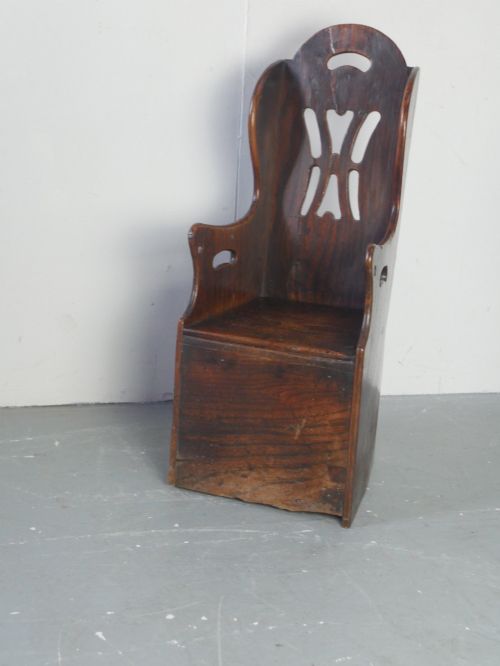
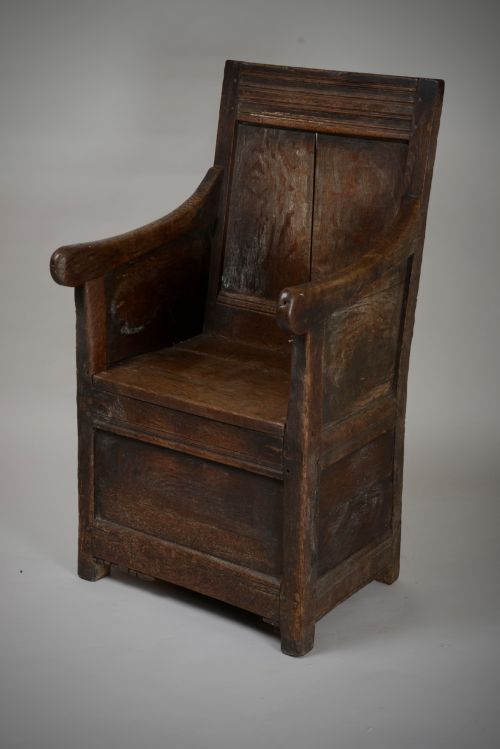
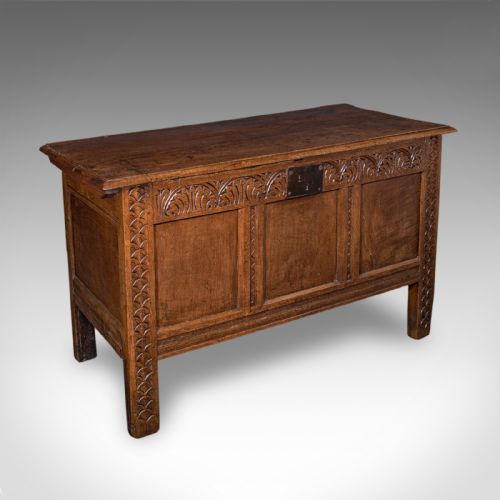
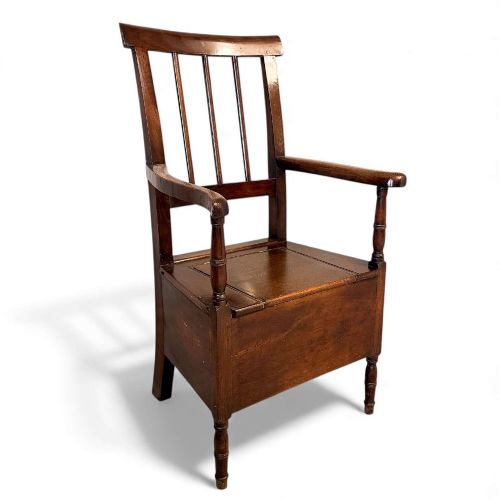
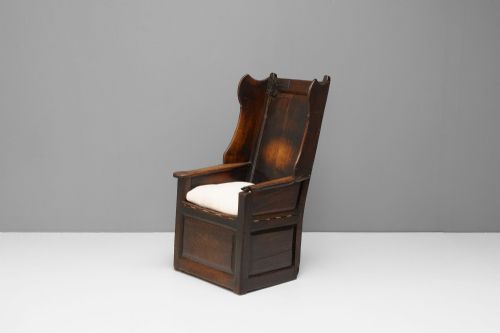
When you search for an English oak box seat, you are looking at substantial furniture designed for storage and seating, spanning from the sixteenth century through to the nineteenth century. These pieces appear as armchairs, children's chairs, tall-backed settles, and long coffers adapted for use as window seats.
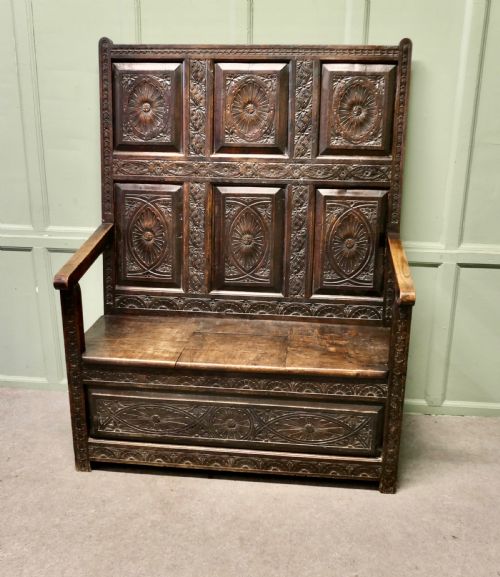
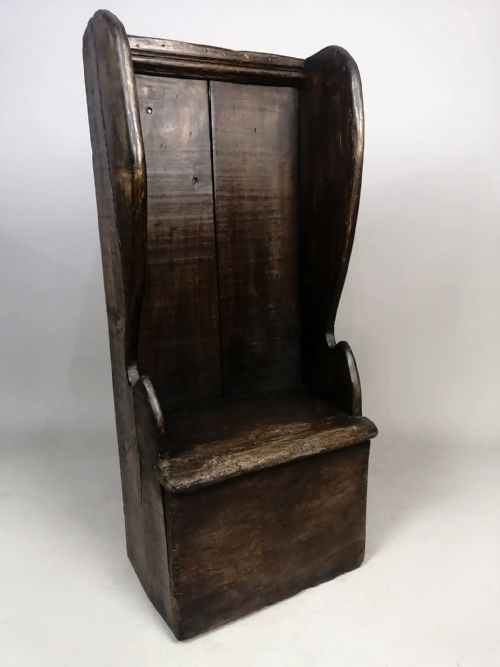
The most common forms on this page include high-back box settles, solid elm or fruitwood child's chairs, and carved oak coffers functioning as window seats. They bridge the gap between domestic chest storage and heavy timber seating, reflecting centuries of rural and vernacular carpentry.
Materials and construction methods
The primary material is oak, supplemented by elm, fruitwood, and walnut for specific elements, often joined with pegged mortise and tenon joints. Iron hardware appears on hinges and straps, while fabric provides occasional upholstery on later or adapted forms.
Makers shaped these heavy timbers using hand saws, adzes, and chisels, relying on board construction for lids and sides. Surfaces display hand-planed textures and carved details such as linenfold or geometric panels, particularly on pieces from the seventeenth and eighteenth centuries.
Materials recorded across the inventory include oak, elm, fruitwood, walnut, iron, and fabric.
Assessing quality in early seating
Quality rests in the integrity of the timber and the honesty of the construction, where boards retain their original thickness and structural pegged joints remain tight. Pieces retaining their original lids, hinges, and baseboards command greater appreciation among collectors.
The sophistication of the carving and the proportional balance of arms, backs, and storage compartments separate standard utility pieces from finer vernacular examples. Later alterations to lids or feet detract from the historical coherence of the piece.
The English Oak Box Seat Glossary
- Box settle
- A high-backed wooden bench featuring a solid storage compartment beneath the seat. This form protected sitters from draughts in early homes.
- Coffer
- A heavy wooden chest with a flat lid, frequently utilised for storing linen and valuables. Many surviving examples double as window seats.
- Lambing chair
- An enclosed armchair with high winged sides designed to block cold air. They often incorporate a box base beneath the seat.
- Mortise and tenon
- A fundamental joint where a protruding tongue fits snugly into a matching cavity, secured by wooden pegs. This method held heavy oak furniture together without metal nails.
- Vernacular furniture
- Everyday objects made by local carpenters using regional woods rather than mengikuti metropolitan court fashions. It prioritises function and local tradition.
English Oak Box Seat: Frequently Asked Questions
How do I date an oak box seat?
Dating relies on construction methods, tool marks, and stylistic motifs such as carved panels or mouldings. Earlier pieces from the seventeenth century often show simpler, pegged frame-and-panel construction.
Changes in hinges, nails, and secondary woods like elm or walnut also help place a piece within the Elizabethan, Georgian, or later periods.
Were these seats used outdoors?
These pieces were built for indoor domestic use in halls, kitchens, and parlours. Their enclosed box bases protected contents from damp stone floors and draughty rooms.
Their heavy construction kept them stable on uneven floors rather than serving as garden furniture.
How do I care for antique oak furniture?
Keep oak furniture away from direct heat sources and sudden humidity changes to prevent the timber from splitting. Regular dusting with a dry cloth maintains the surface.
Applying a traditional wax polish occasionally helps nourish the dry grain without building up heavy residues.
What is the difference between a coffer and a settle?
A coffer is essentially a trunk with a lid, primarily designed for storage rather than sitting, though low ones functioned as benches. A settle is built primarily as a bench with a back and armrests, enclosing a box cavity underneath.
Both utilise solid oak construction but serve different primary domestic functions.