




English Mahogany Tripod Table
When you search for an english mahogany tripod table, you are looking at centuries of nimble craftsmanship built around a single, sturdy central column.
English Mahogany Tripod Table
An english mahogany tripod table is a versatile small furniture piece designed to serve beside seating, hold lamps, or display items on three supporting legs.
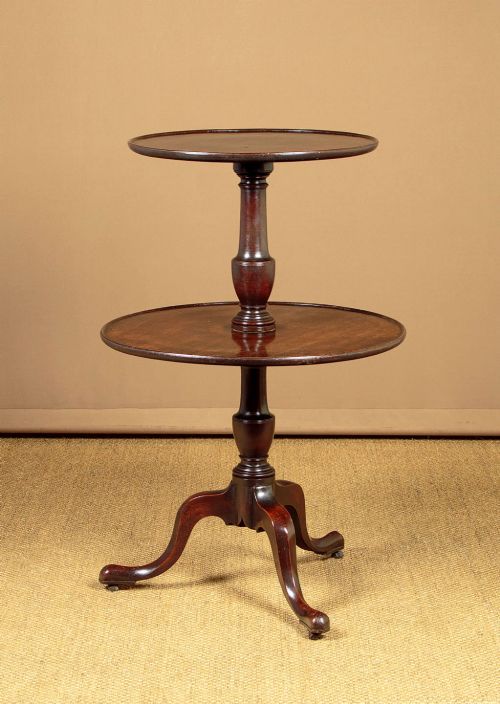
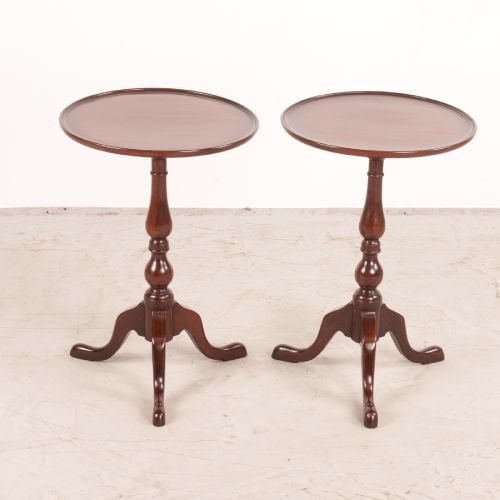
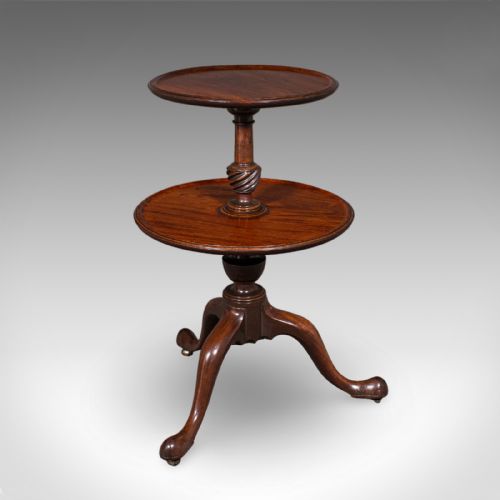
You will encounter numerous variations in this search, ranging from simple circular wine tables and kettle stands to multi-tiered dumb waiters and tilt-top supper tables.
The pieces span the Georgian, Regency, and Victorian periods, reflecting shifting domestic habits from formal tea service to quiet parlour leisure.
Materials and Construction
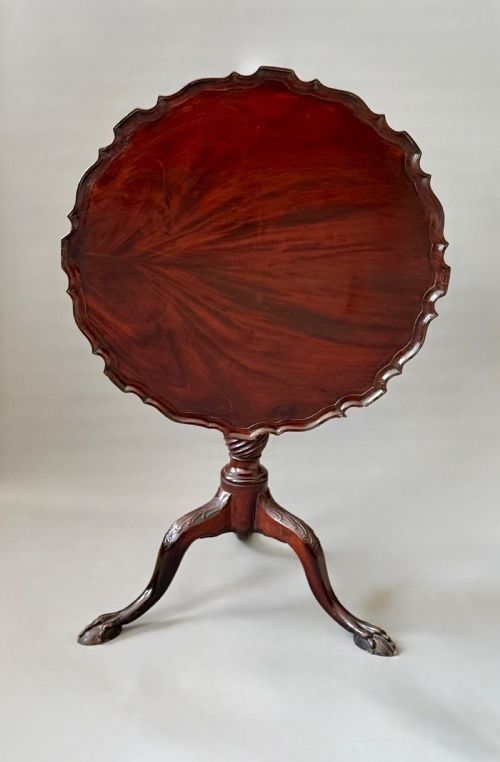
Makers utilised dense mahogany timbers, frequently selecting figured or flame grains for circular tops to create natural optical patterns.
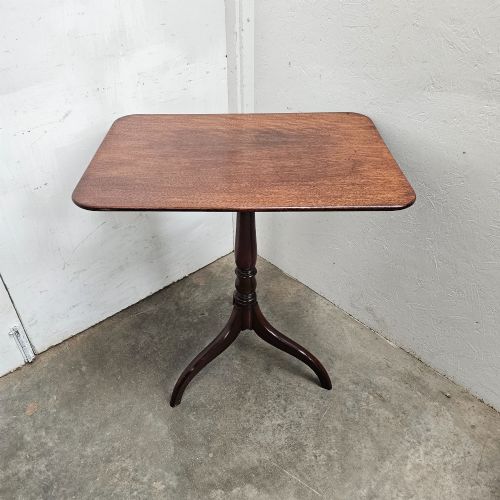
The central pillar typically meets three sweeping legs via turned joints or dovetailing, while tilting mechanisms often employ clever birdcage mounts for easy storage.
Listings include examples spanning the Georgian, Regency, and Victorian eras, utilising mahogany alongside brass, satinwood, and leather.
Evaluating Quality
Quality rests upon the proportion between the top, the turned column, and the splay of the tripod base, ensuring the piece stands firmly without wobble.
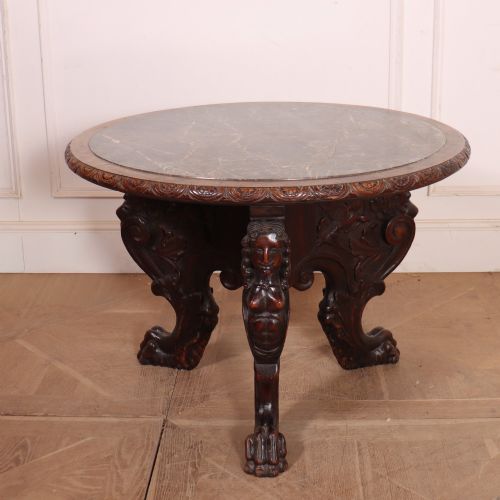
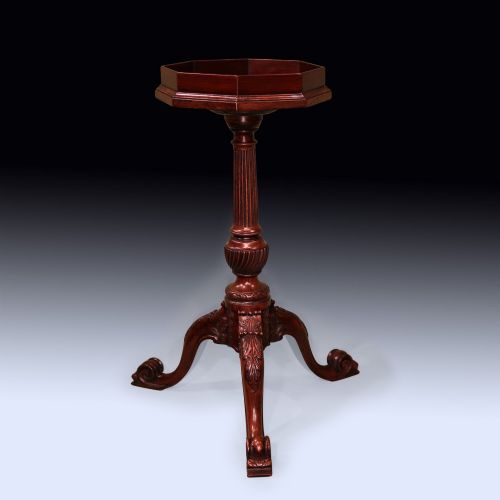
Carved details such as pie crust edges, acanthus knees, or claw-and-ball feet show the hand of a skilled artisan rather than mechanical repetition.
The English Mahogany Tripod Table Glossary
- Tilt-top
- A hinged tabletop mechanism allowing the surface to fold vertically when not in use. This clever design saved valuable floor space in smaller period parlours.
- Birdcage
- A timber framework beneath the tabletop that permits the surface to both rotate and tilt. It is typically found on higher-status Georgian examples.
- Pie crust
- A raised, scalloped edge carved directly from the solid mahogany top of a table. It is associated with fine Chippendale-taste dining and tea wares.
- Dumb waiter
- A multi-tiered stand with rotating circular trays used for serving food or drinks without domestic staff present. These pieces often feature two or three graduated levels.
- Torchere
- A tall, slender stand designed to hold a candle or lamp. They frequently exhibit elaborate carving along the shaft and tripod legs.
English Mahogany Tripod Table: Frequently Asked Questions
What were english mahogany tripod tables used for?
These tables served flexible roles in period homes, functioning as portable surfaces for wine decanters, afternoon tea, or evening reading lamps.
Because they were lightweight and easy to move, servants or family members could position them beside chairs or tuck them against walls when not needed.
How do I tell a tilt-top from a fixed top?
Look underneath the circular surface for a wooden catch or a birdcage mechanism that allows the table top to pivot ninety degrees.
Fixed tops are secured directly to the central pillar with corner blocks, meaning the entire assembly must be moved as a single rigid unit.
How do I date an 18th-century table?
Examine the underside construction, leg profiles, and timber patination for signs of hand-cut joints and period tool marks.
Earlier George III examples often feature more robust carving on the knees, whereas later Victorian versions display tighter, more mechanised turning on the central columns.
Can I use a wine table as a lamp table?
Their compact circular surfaces and stable three-legged bases make them well-suited for holding modern lighting beside a sofa or armchair.
Ensure the weight distribution remains balanced over the footprint of the tripod legs to prevent tipping.