
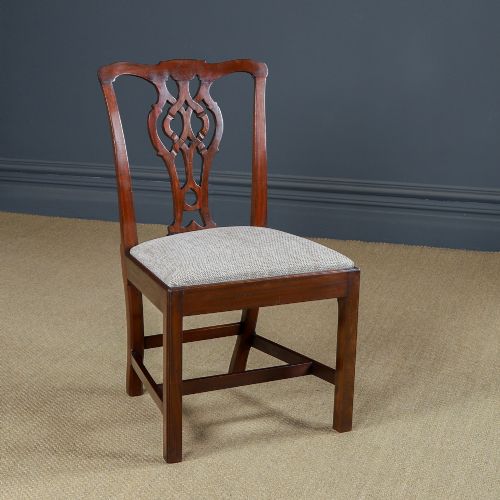
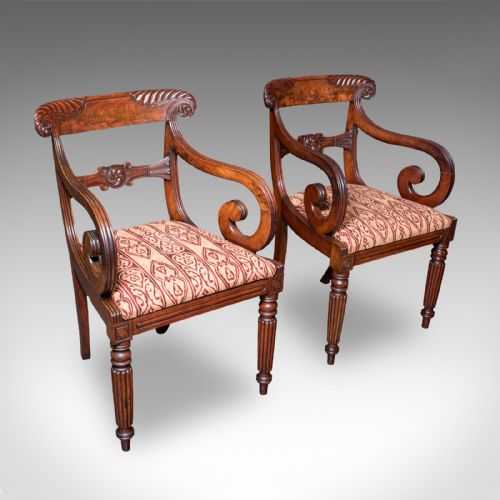
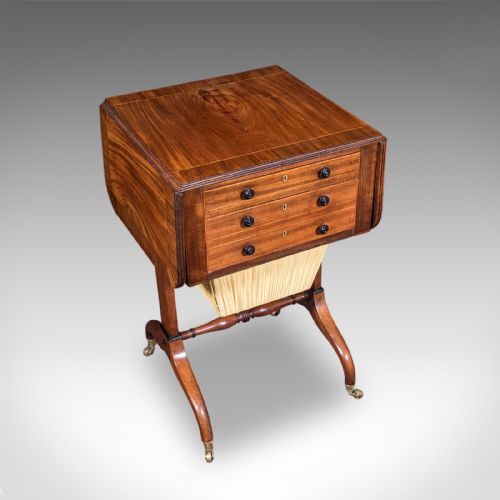
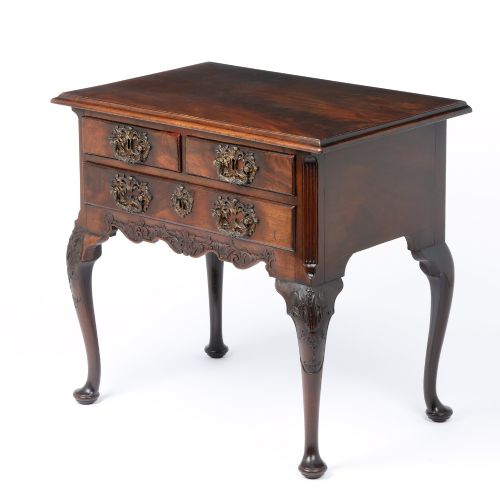

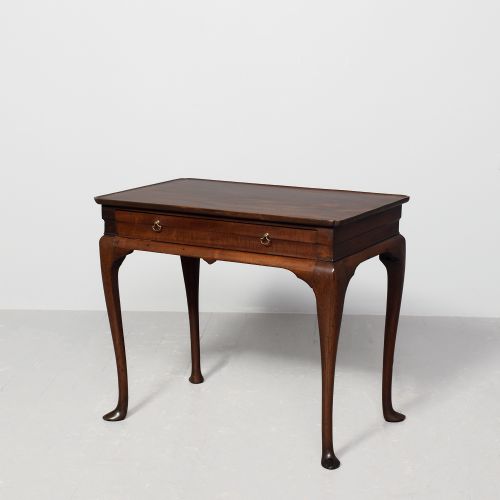
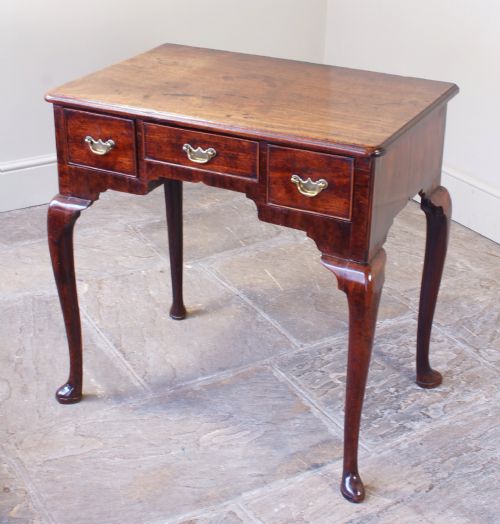
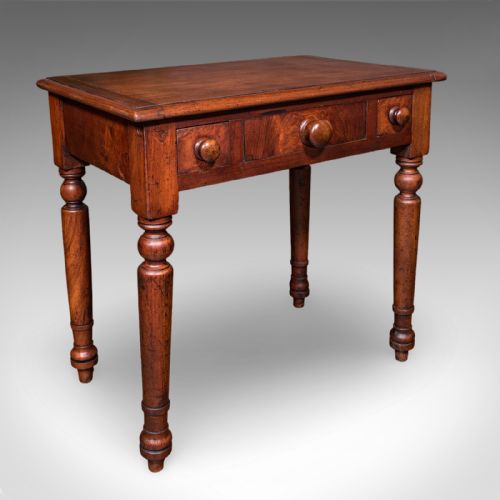


English Mahogany Side Desk
An english mahogany side desk combines surface and storage for study or correspondence, bringing timber depth and period character to a hallway or study.
English Mahogany Side Desk
When searching for an english mahogany side desk, buyers encounter forms spanning the Georgian, Regency, and Victorian periods, alongside later revival pieces. These items often double as writing tables, lowboys, correspondence tables, or library tables designed for domestic utility.
The material palette is predominantly solid mahogany and mahogany veneers, occasionally paired with walnut or secondary timbers, alongside inset writing surfaces of leather or textile.
Proportions tend toward the domestic scale, offering narrow footprints suitable for hallways, morning rooms, and studies where a full-sized partner desk would overwhelm the space.
How they were made
Cabinet makers utilised dense tropical hardwoods, primarily mahogany, chosen for its stability and rich grain pattern, often shaped with hand-carved mouldings or turned legs.
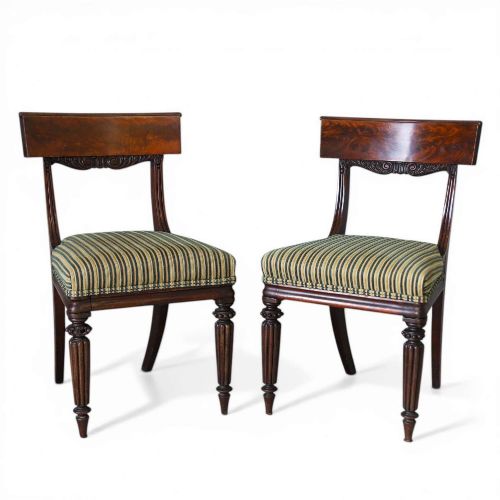
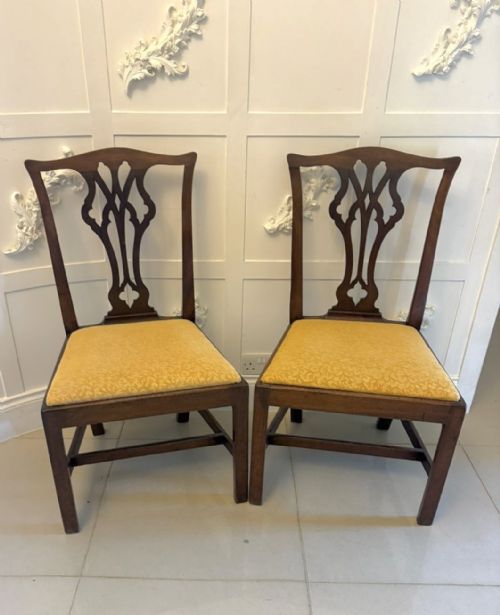
Secondary materials such as brass handles, leather inserts, and textile or velvet upholstery details complete the construction of writing surfaces and associated seating.
Joining techniques rely on traditional cabinet-making methods, including dovetail construction for drawer boxes and mortise and tenon joints for frames.
Several tables were designed specifically for candlemakers, calligraphers, and stamp-affixing correspondence.
What varies in quality
The calibre of timber selection and figure in the mahogany veneer dictates much of the visual weight, with well-figured grain commanding greater appreciation.
Execution of hand-carved details, such as scroll arms, edge mouldings, or apron flourishes, distinguishes workshop production from standard commercial output.
Integrity of secondary elements, including original brass hardware and untouched leather writing inserts, elevates the historical cohesion of a piece.
Thomas Chippendale·Gillows of Lancaster·Shoolbred·Gill & Reigate
The English Mahogany Side Desk Glossary
- Lowboy
- A small table with drawers, typically originating in the eighteenth century, functioning as a dressing table or side desk.
- Pembroke table
- A small drop-leaf occasional table with hinged flaps on either side, often utilised for writing or breakfast.
- Sofa table
- A larger rectangular table traditionally placed in front of a sofa, equipped with drop leaves and often twin pedestal supports.
- Wing chair
- An upholstered armchair with side panels designed to shield the occupant from drafts.
- Library table
- A substantial freestanding table intended for books and paperwork, frequently associated with Gillows.
English Mahogany Side Desk: Frequently Asked Questions
What is an english mahogany side desk?
It is a compact table or writing desk made from mahogany, designed to sit against a wall in a hallway, morning room, or study.
These pieces provide a flat working surface and frequently include one or more drawers for correspondence materials.
How do I date an english mahogany side desk?
Dating relies on architectural styling, leg shapes, and construction methods, observing shifts from Georgian cabriole legs to Regency restraint and Victorian proportions.
Secondary woods inside drawers and the presence of hand-cut dovetails offer further clues to the decade of manufacture.
Where should I place a side desk?
They fit naturally in entrance halls as a surface for post, or against a library or study wall beneath a mirror or painting.
Because of their shallow depth, they occupy minimal floor space while introducing warm timber tones to a room.
Did these desks come with leather tops?
Many writing tables and library tables feature inset panels of leather, tooled with gold leaf borders to provide a smooth writing surface.
Other examples display plain polished mahogany tops without secondary inserts.