



English Harbour Painting
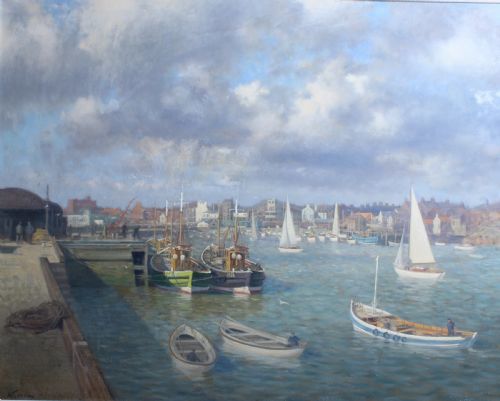
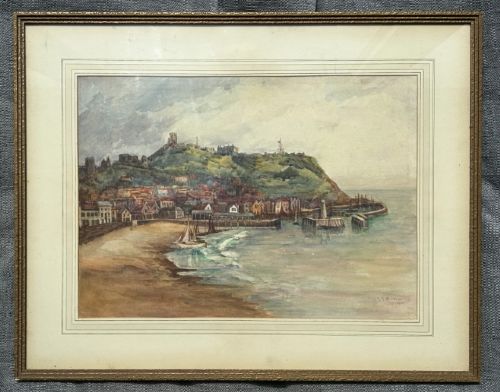
When you search for an english harbour painting, you encounter coastal scenes executed in watercolours and oils that document maritime life across British ports.
English Harbour Painting
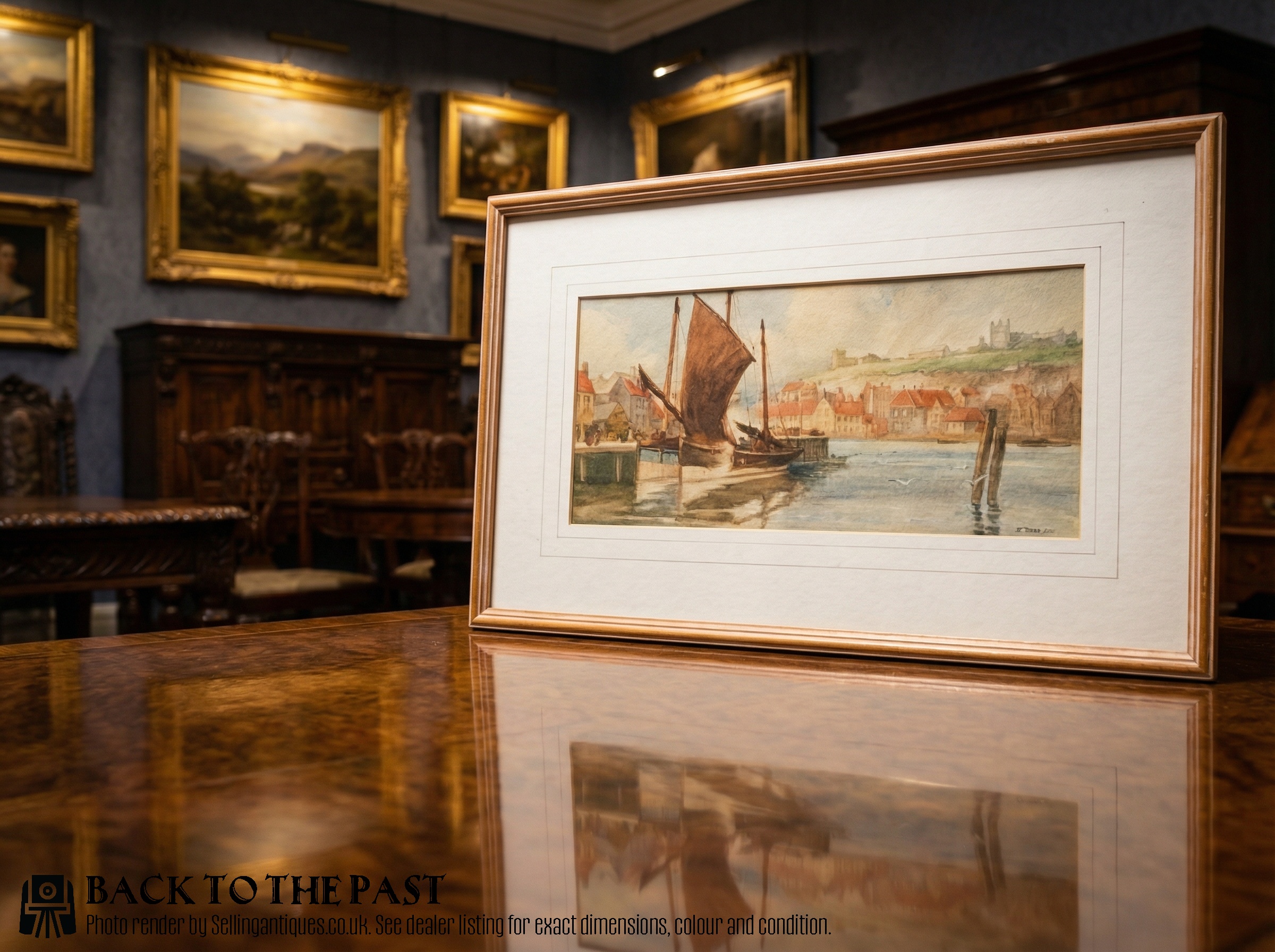
An english harbour painting depicts coastal waters, fishing boats, and maritime architecture located around British ports and estuaries.
The works appearing here range from late nineteenth-century watercolours to mid-twentieth-century oil paintings showing locations such as Whitby, Scarborough, and Cornish coastal villages.
Most examples concentrate on local working fleets, moorings, and historic waterfronts recorded by regional artists.
Materials and execution
Artists utilised either watercolour on paper or oil pigment applied to canvas, panel, or board.
Framed works often incorporate gilt wood mouldings to house the paper or canvas support behind glass or in open air.
Techniques vary from delicate washes of colour on paper to heavier impasto oil applications on canvas.
Periods represented stretch from the nineteenth century through the 1920s, 1930s, 1950s, and into the 1960s.
Determinants of distinction
Quality rests upon the handling of light and maritime atmosphere, where adept brushwork captures movement in water and sky.
Works by listed professional marine artists demonstrate a surer command of perspective and vessel construction than anonymous local sketches.
Condition of the pigment and the integrity of the original paper or canvas support influence the overall preservation of the piece.
William Banks Fortescue·Walter Goodin·William Edward Webb·Richard Harry Carter·James Fry·Fred Lawson·Arthur Tucker·William Wyld·Alfred Henry Vickers·Thomas Bush Hardy·Edward William Cooke
The English Harbour Painting Glossary
- Watercolour
- A paint consisting of pigment suspended in a water-soluble binder, traditionally applied to paper.
- Impasto
- Paint applied in thick layers that stand out visibly from the surface of the canvas or board.
- Seascape
- A type of fine art that depicts the sea, coastal views, and maritime vessels.
- Gilt wood
- Wood decorated with a thin layer of gold leaf or gold-coloured finish, commonly found on period frames.
- Provenance
- The documented history of ownership associated with a work of art.
English Harbour Painting: Frequently Asked Questions
How do I date an english harbour painting?
Dating relies on the artist's recorded working dates, stylistic markers of the period, and framing methods typical of the late nineteenth or mid-twentieth century.
Inscriptions on the reverse or contemporary exhibition labels frequently provide additional chronological evidence.
What is the difference between watercolour and oil harbour paintings?
Watercolour works are executed on paper under glass, offering a transparent quality suited to coastal light and atmospheric skies.
Oil paintings utilise thicker pigments on canvas or board, creating greater texture and durability for marine scenes.
Which harbours appear most often in these paintings?
North Yorkshire locations such as Whitby and Scarborough feature prominently, alongside West Country ports in Cornwall and Devon.
These working fishing communities provided artists with active waterfronts and historic architecture.
How should I frame and display a vintage maritime painting?
Period works benefit from matching wooden or gilt frames that complement the era in which the piece was produced.
Display the artwork away from direct sunlight and fluctuating humidity to protect paper and canvas supports.