

English Glass Lighting
English glass lighting brings together cut crystal, brass and moulded shades to illuminate interiors with period character.
English Glass Lighting
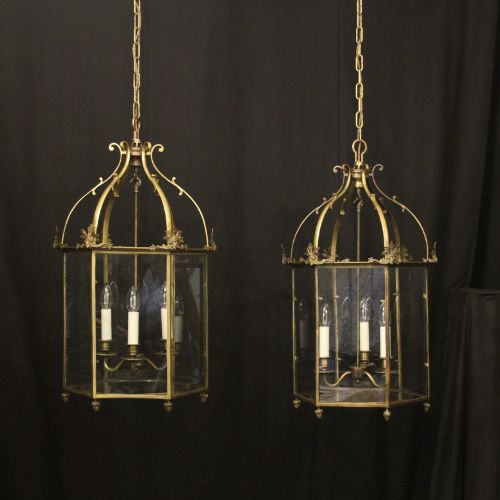
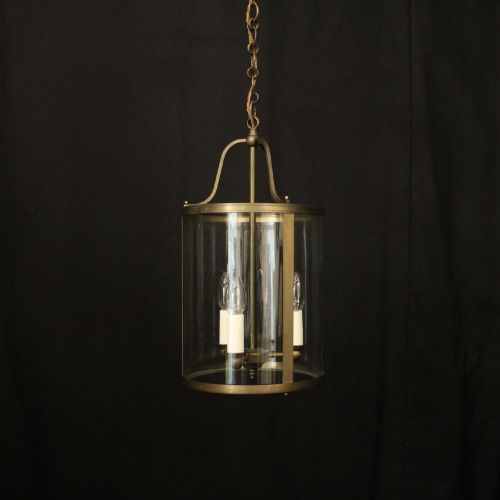
English glass lighting spans nineteenth-century oil lamps, heavy brass hall lanterns, and early twentieth-century pendant lights. Buyers searching for english glass lighting encounter cut glass chandeliers, ruby and moonstone glass shades, and structural brass fittings.
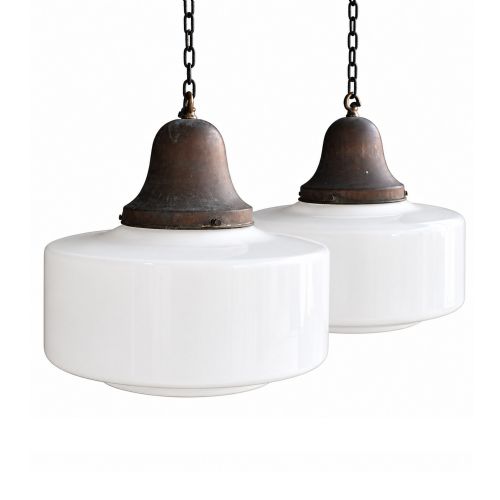
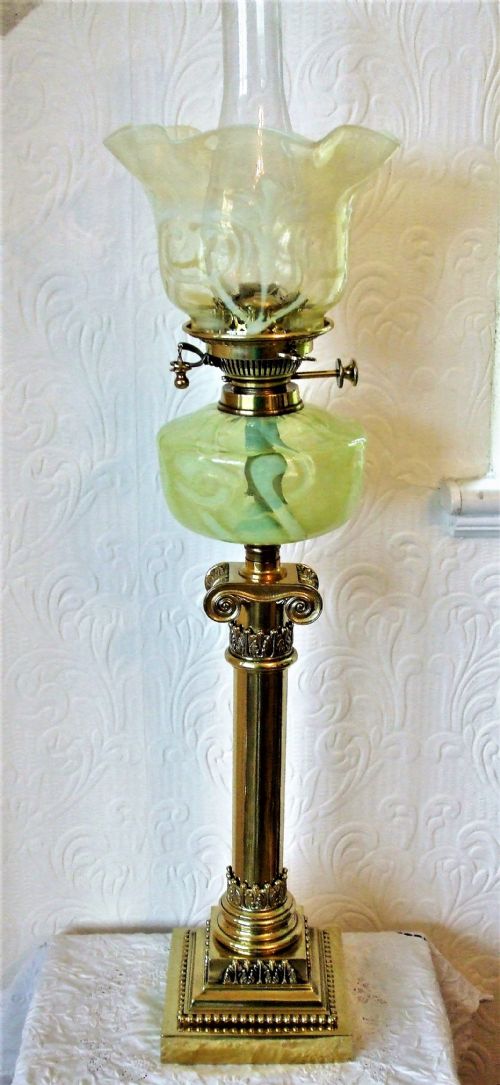
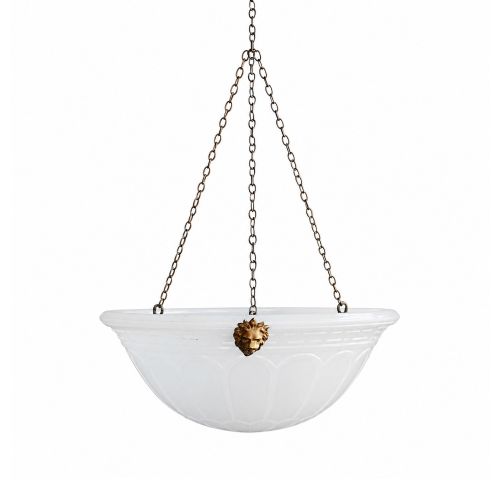
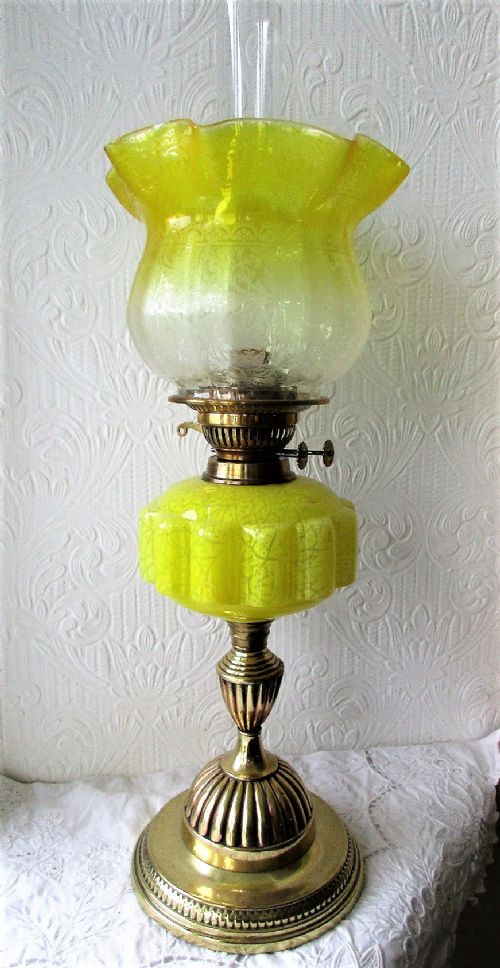
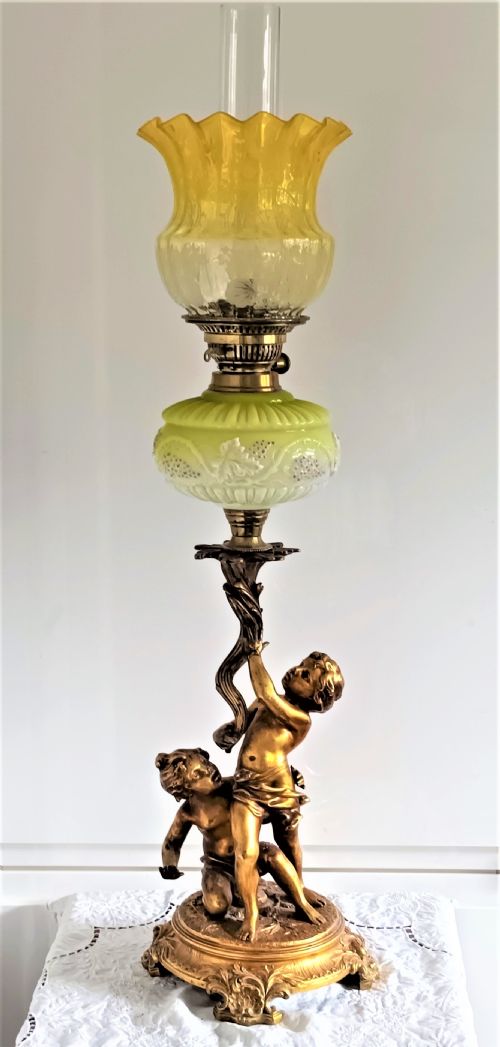
The nineteenth-century examples lean heavily towards oil lamps with ceramic or brass columns and coloured glass fonts. Later twentieth-century forms shift towards industrial moonstone pendants, factory lights, and intricate cut glass plafonniers.
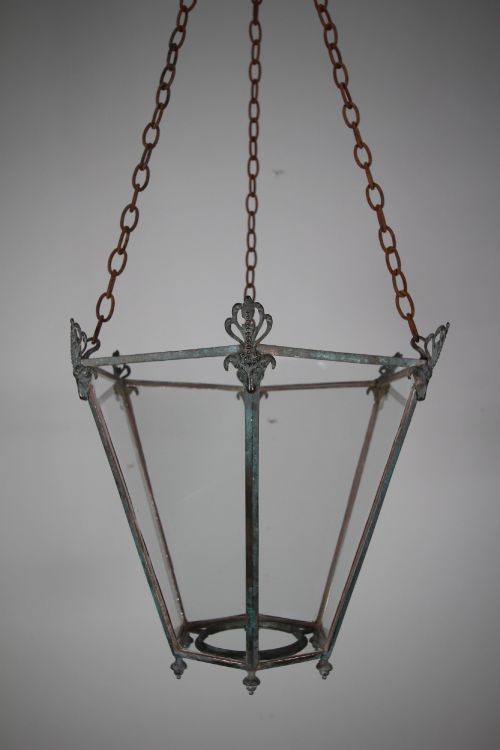
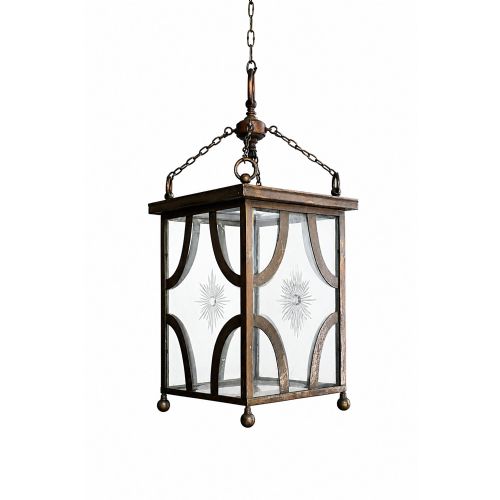
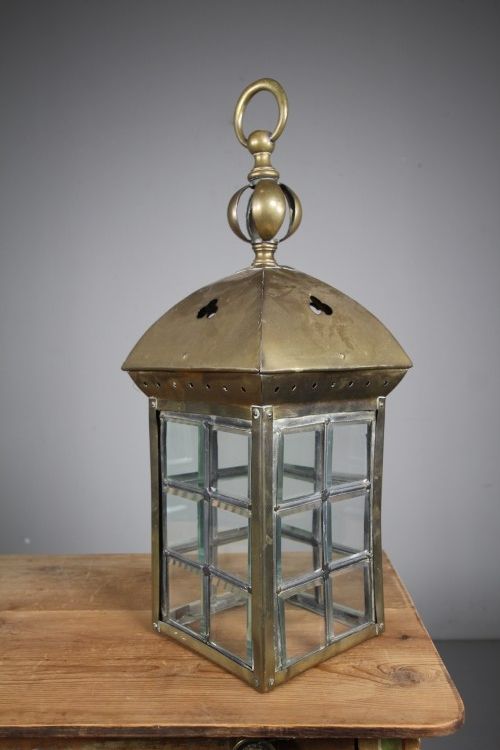
Period styles range from Georgian and Regency through Victorian, Edwardian, and Gothic Revival. Hall lanterns in gilded bronze or copper provide formal hanging options for entranceways and corridors.
Materials and construction methods
Makers combined cast brass, gilded bronze, and copper with lead crystal, cut glass, and coloured enamel. Brass and bronze formed the structural framework for heavy hall lanterns, chandeliers, and oil lamp bases.
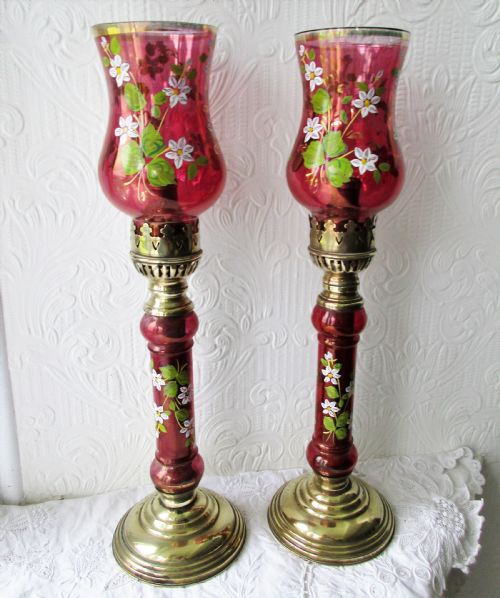
Glass elements utilised cutting, moulding, and casing techniques to produce deep facets, smooth moonstone surfaces, and layered ruby or pink tones. Metal components frequently received gilt or silver plating to enhance the decorative presence of the fixtures.
English Glass Lighting Retail Price Guide 2026
Typical asking prices for english glass lighting among the pieces listed under this phrase on Sellingantiques today, from the lower quarter to the upper quarter. They describe what is for sale here now, not the wider market.
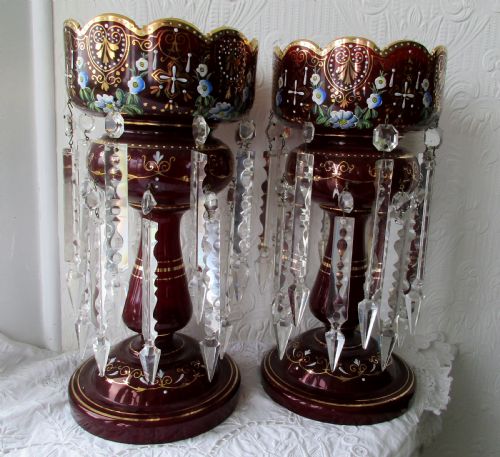
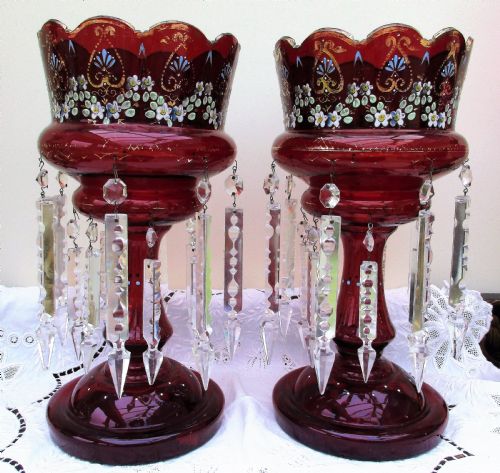
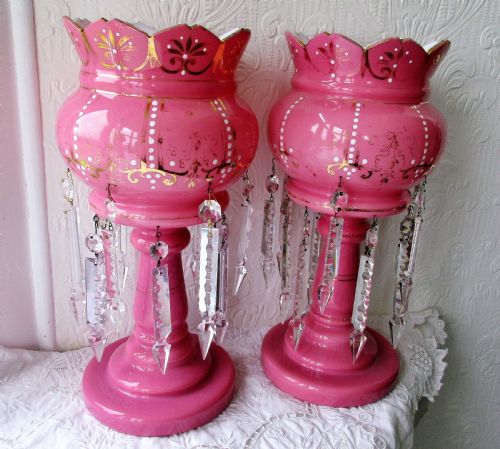
Some nineteenth-century dining rooms relied on pink glass lustres to cast a flattering, rosy glow over evening guests.
What determines the quality
Quality rests in the weight of the cast metal frame and the depth of the hand-cut facets in the crystal. Superior examples maintain crisp casting details on bronze or brass mounts without softening around the edges.
The clarity and colour saturation of the glass dictate distinction, particularly in cased ruby glass or heavy lead crystal drops. Original matching components, such as burners on oil lamps and matching shades on pairs of lustres, preserve historical integrity.
Hinks·Taylor Tunnicliff·W Watson And Sons
The English Glass Lighting Glossary
- Plafonnier
- A ceiling-mounted light fixture that sits close to the surface, often featuring moulded or cut glass. These shade designs direct illumination downwards into the room.
- Lustre
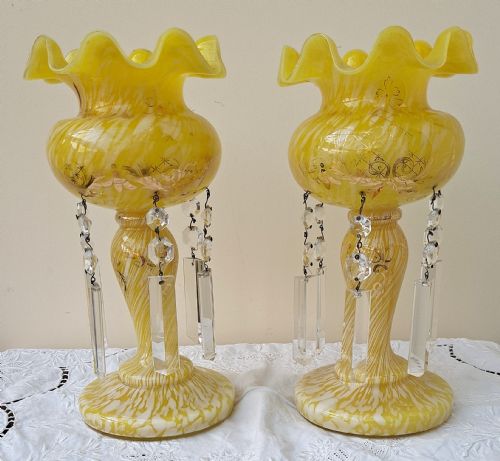
- A decorative tabletop vessel hung with glass prisms that catch and refract ambient light. Victorian examples frequently appear in pairs with ruby, pink, or yellow glass bodies.
- Moonstone glass
- An opalescent, semi-translucent white glass that diffuses light evenly across pendant shades and pharmacy fixtures. This material softens glare while maintaining high luminosity.
- Hinks burner
- A specific mechanical wick-adjusting system found on nineteenth-century oil lamps. Signed brass components from makers like Hinks indicate standard period burner engineering.
English Glass Lighting: Frequently Asked Questions
How do I clean period glass shades?
Wash glass components gently in warm soapy water using a soft cloth, avoiding abrasive pads on gilded surfaces.
Dry thoroughly before rehanging or reassembling brass and bronze fittings to prevent tarnishing.
Were these oil lamps converted to electricity?
Many nineteenth-century oil and candle lamps undergo conversion to electricity to suit modern homes while retaining their original brass columns and glass fonts.
Rewiring allows these functional antiques to serve as table or desk lamps.
How do I date a brass hall lantern?
Examine the weight of the cast bronze or brass frame and the method used to join the glass panels.
Earlier nineteenth-century lanterns display heavier hand-finished metalwork, whereas later twentieth-century examples show more standardised industrial fabrication.
What is the difference between crystal and glass?
Lead crystal contains added metallic oxides that increase weight, refractive index, and clarity compared to standard soda-lime glass.
Cut crystal chandelier drops produce sharper light prisms and a resonant ring when struck gently.