



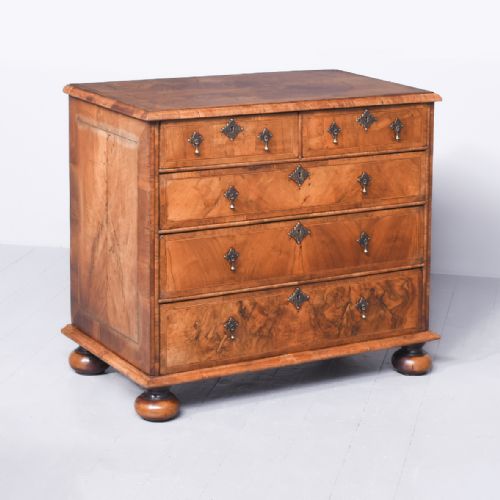


English Georgian Walnut Furniture
English Georgian walnut furniture brings warmth and rich grain to interiors through enduring eighteenth-century forms.
English Georgian Walnut Furniture
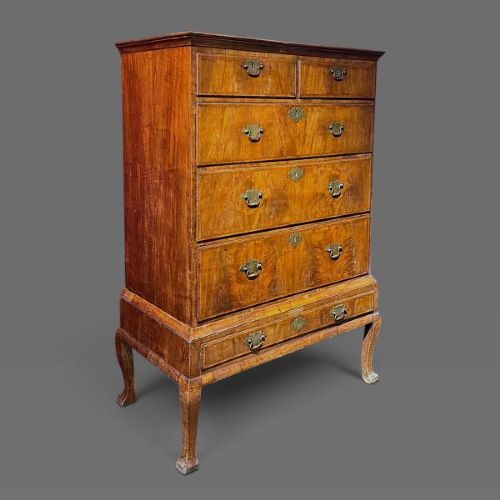
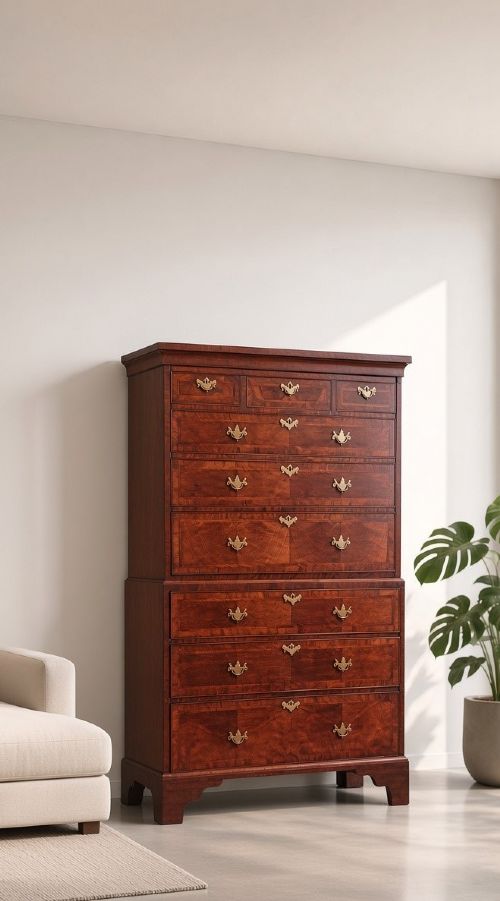
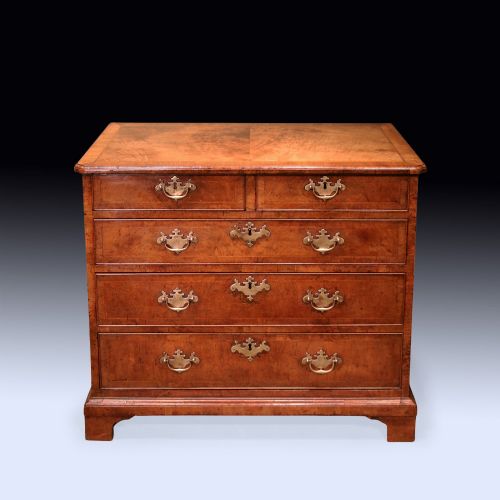
English Georgian walnut furniture encompasses sophisticated domestic pieces produced during the eighteenth century and subsequent revival periods. Collectors searching this phrase encounter case furniture and seating designed for writing, storage, and display within traditional English homes.
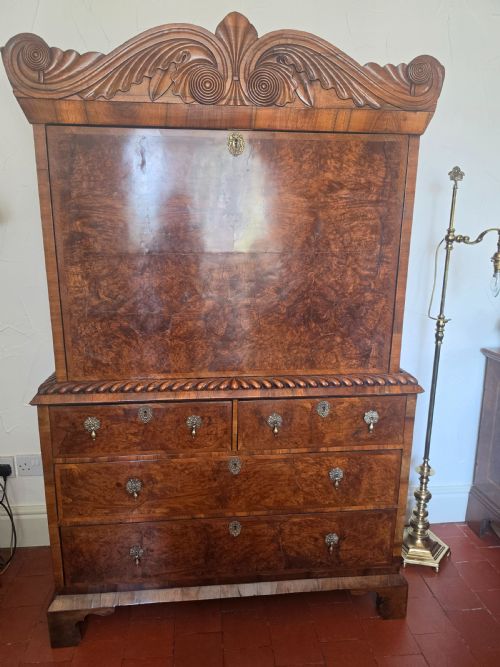
The selection centres heavily upon chests of drawers, escritoires, and bureau bookcases alongside desks, lowboys, and dining chairs. Pieces span from the late seventeenth century through the reigns of Queen Anne and the Georges into Edwardian revivals.
Markers of distinction
Quality depends upon the depth of figure in the walnut veneer and the crispness of inlaid borders. Superior examples retain original brass hardware and well-figured timber surfaces with balanced proportions.
Internal construction reveals the standard of craftsmanship through dovetail joints and secondary framing timbers. Later revivals and pieces incorporating replacement stands differ from untouched eighteenth-century originals.
English Georgian Walnut Furniture Retail Price Guide 2026
Typical asking prices for english georgian walnut furniture among the pieces listed under this phrase on Sellingantiques today, from the lower quarter to the upper quarter. They describe what is for sale here now, not the wider market.
Listings feature eighteenth-century walnut chests of drawers alongside bureau bookcases, kneehole desks, and dining chairs.
The English Georgian Walnut Furniture Glossary
- Burr walnut
- Timber taken from the growth excrescences of walnut trees, yielding highly ornamental swirling grain patterns. This prized veneer frequently covers the primary facades of high-status cabinets and desks.
- Feather banding
- Decorative inlay formed by slicing thin strips of veneer and arranging them in a herringbone pattern around drawer edges. It frames the central grain and denotes careful cabinet work.
- Lowboy
- A small side table featuring one or more rows of drawers beneath a flat top. These functional pieces served as dressing tables or writing desks in domestic settings.
- Escritoire
- A writing cabinet featuring a fall-front flap that conceals an arrangement of small drawers and pigeonholes. It provided a secure space for correspondence and personal documents.
- Tallboy
- A tall chest of drawers constructed in two sections, typically a smaller chest stacked upon a larger base. This vertical format maximised storage capacity within chamber rooms.
English Georgian Walnut Furniture: Frequently Asked Questions
How do I clean walnut furniture?
Dust surfaces regularly with a soft, dry cloth to prevent grit accumulation. Avoid modern silicone sprays or harsh chemical polishes.
Apply traditional beeswax sparingly to nourish the timber and maintain a natural sheen. Buff gently after application to protect the antique finish.
Where should I place these pieces?
Position walnut items away from direct sunlight and heat sources to prevent timber shrinkage and veneer lifting. Stable indoor humidity preserves the structural integrity of old joinery.
Allow sufficient clearance around drawers and drop-front desks for everyday access. Pair them with traditional upholstery and complementary woods like oak.
What defines a bureau bookcase?
A bureau bookcase combines a sloping writing flap above drawers with an upper enclosed shelving section for books. Glazed or solid doors protect the interior contents from dust.
Fitted interior compartments organise stationery while the lower chest provides substantial storage. This dual-purpose form became popular in elite domestic interiors.