




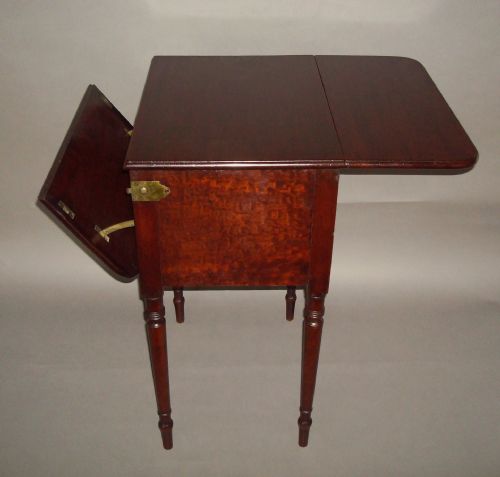
English Georgian Drop Leaf
English georgian drop leaf tables are folding tables designed to save space, offering clever hinged leaves that lift to expand surface area when required.
English Georgian Drop Leaf
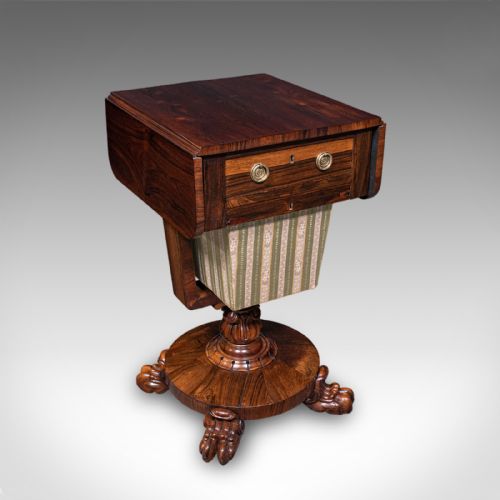
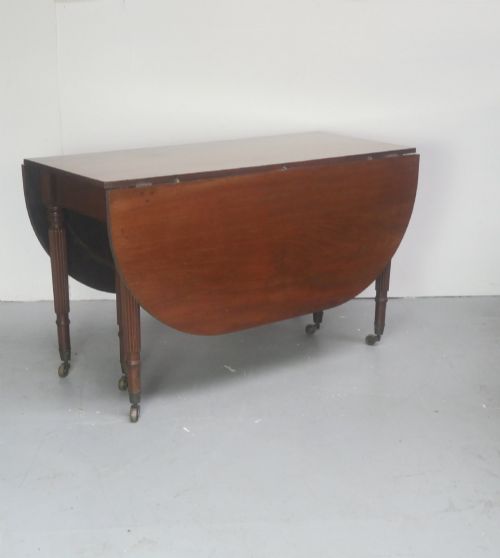
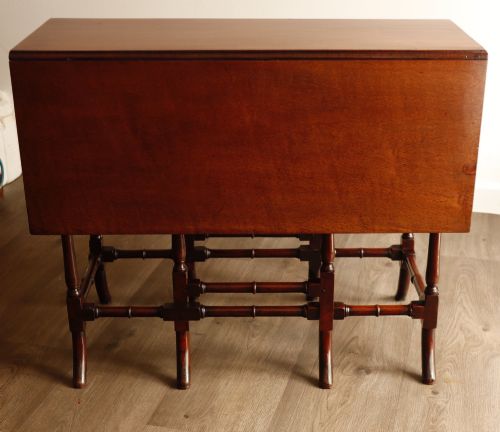
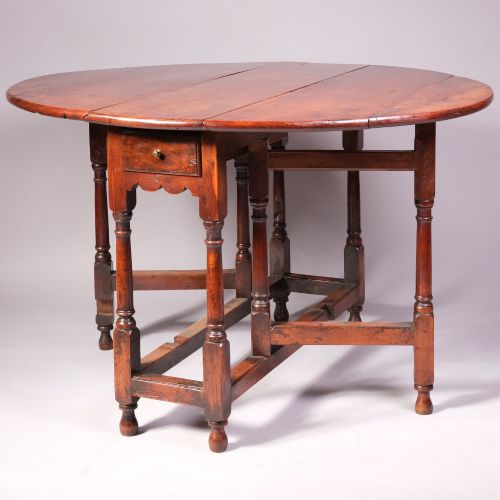
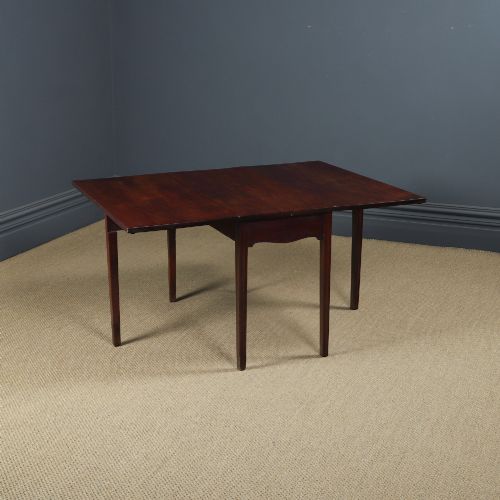
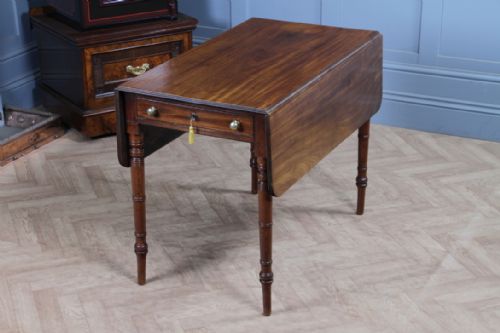
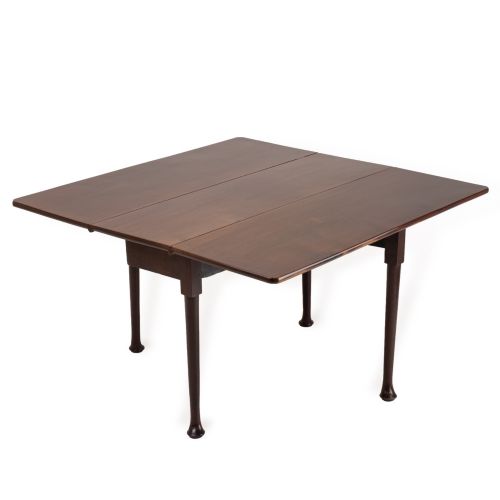
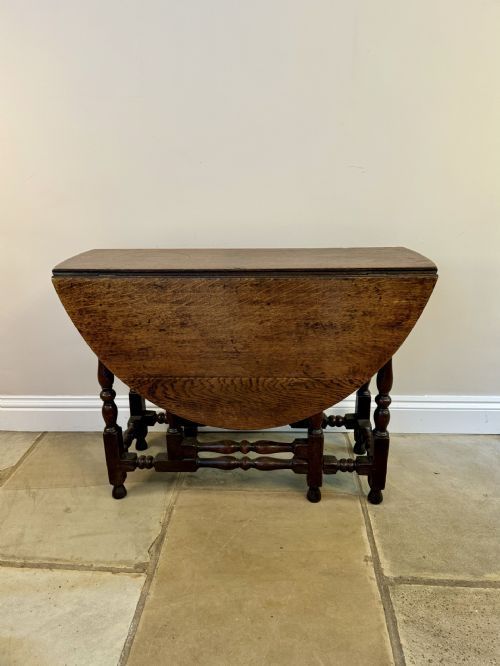
When you search for english georgian drop leaf furniture, you encounter versatile timber tables produced across the eighteenth and early nineteenth centuries. These pieces appear most frequently as pembroke tables, gateleg tables, and spider leg tea tables designed for dining or occasional use.
The inventory demonstrates domestic forms ranging from compact side tables to four-seat dining tables and specialised sewing or hobby furniture. Oak and mahogany predominate, with specific examples utilising satinwood, walnut, and rosewood alongside brass and iron hardware.
Materials and Construction
Cabinet makers constructed these folding surfaces primarily using solid oak, mahogany, and occasional exotic timbers like satinwood and rosewood. Timber selection dictated the structural strength needed for hinged flaps and pivoting support legs.
Joinery techniques relied on sturdy gateleg mechanisms, spider leg framing, and drop-leaf brackets to support extended leaves safely. Drawer compartments integrated secret locks, silver storage, and writing slopes using brass handles and fitted keys.
English Georgian Drop Leaf Retail Price Guide 2026
Typical asking prices for english georgian drop leaf among the pieces listed under this phrase on Sellingantiques today, from the lower quarter to the upper quarter. They describe what is for sale here now, not the wider market.
Some tables hid your silver and letters while you dined, proving the Georgians expected their furniture to multitask.
Craftsmanship and Material Depth
Superior examples exhibit rich natural timber patina, particularly on eighteenth-century oak and mahogany surfaces that show deep grain character. Better construction involves precise hinge alignment and robust swing legs that support the drop leaves securely without sagging.
Refined pieces incorporate secondary timbers of high grade, sophisticated edge moulding, and intact original hardware such as brass drawer fittings and working locks. The integration of specialised functions, including fitted silver drawers or reading stands, elevates the standard of execution.
The English Georgian Drop Leaf Glossary
- Pembroke table
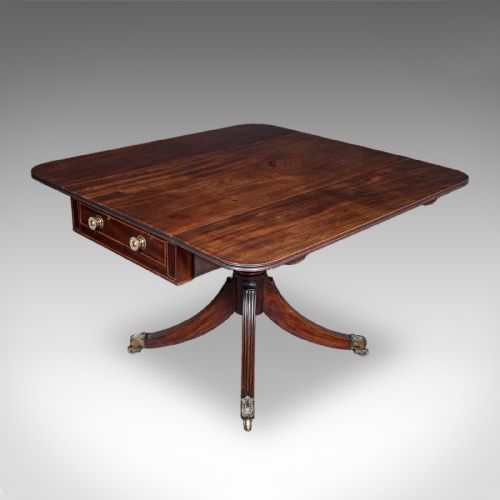
- A small rectangular table with two hinged drop leaves on opposing sides, frequently fitted with a single drawer. This form emerged during the eighteenth century for occasional parlour use.
- Gateleg table
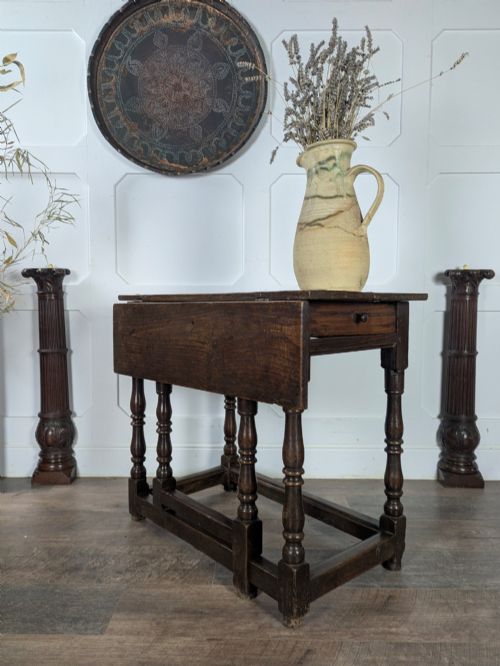
- A table with hinged leaves supported by legs that swing outward like a gate to hold the flaps. Early versions often utilise solid oak or walnut.
- Spider leg table
- A slender occasional table supported by very thin turned wooden legs joined by stretchers. These delicate tables typically date to the Georgian and Regency periods.
- Sofa table
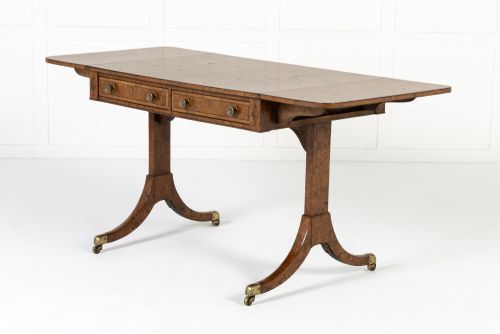
- A low, rectangular drop-leaf table traditionally placed in front of a sofa. They frequently feature pedestal ends or trestle supports with brass paw castors.
English Georgian Drop Leaf: Frequently Asked Questions
How are drop leaf tables used?
These tables function primarily as space-saving furniture that expands when entertaining dinner guests or working in a parlour. Lowering the side flaps allows the furniture to sit compactly against a wall when floor space is limited.
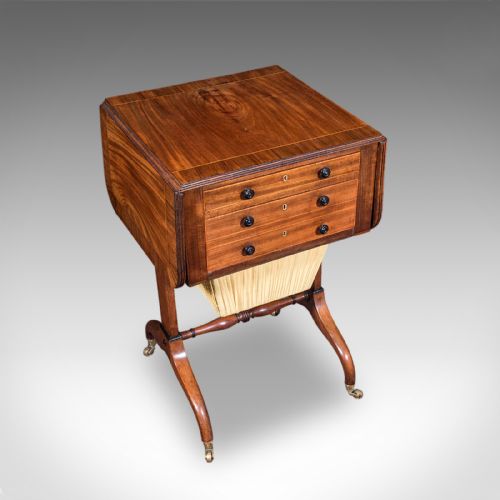
Opening the leaves provides an immediate surface for dining, reading, or writing. Specialised variants included fitted drawers for sewing equipment or silver storage.
What woods were used for georgian tables?
Cabinet makers predominantly utilised mahogany for formal dining and Pembroke tables throughout the Georgian and Regency eras. Oak appeared more frequently in earlier gateleg tables and farmhouse furniture.
Craftsmen also incorporated decorative veneers and secondary timbers such as satinwood, rosewood, walnut, and yew wood. Brass and iron hardware provided structural reinforcement and operational mechanisms.
What is a gateleg mechanism?
The gateleg mechanism consists of a hinged leg that pivots outward from the frame to support an extended drop leaf. This wooden leg swings on pivot joints attached to the table rails.
When closed, the leg folds back flush against the underframe to let the leaf hang down vertically. This design provides sturdy weight-bearing support for large dining surfaces.