



English Extending Table
An English extending table brings centuries of dining craft into a room, offering adaptable scale for gatherings large and small.
English Extending Table
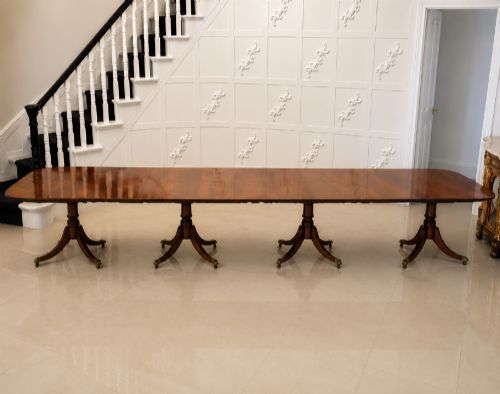
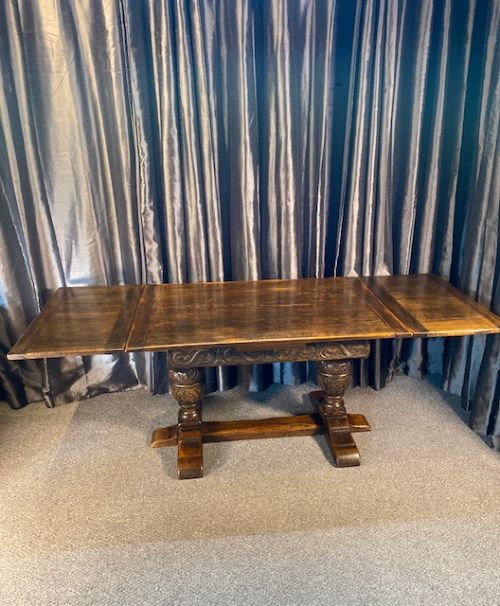
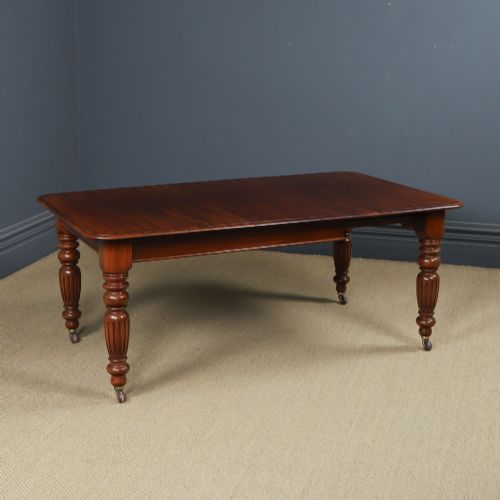
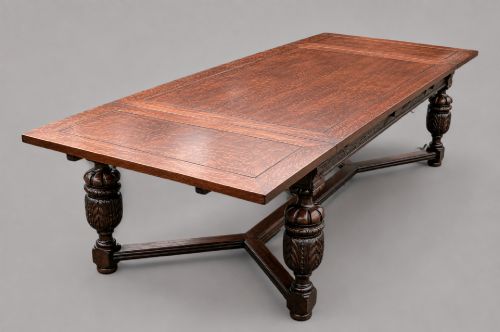
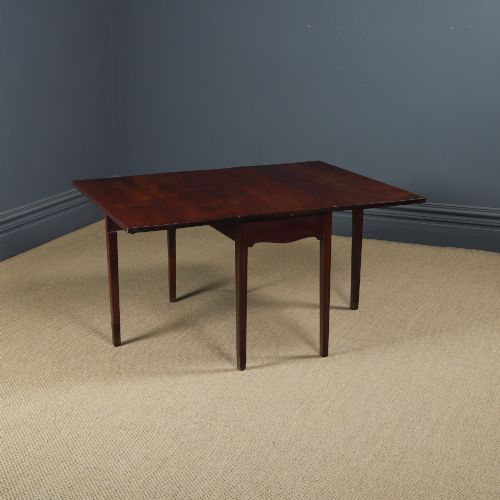
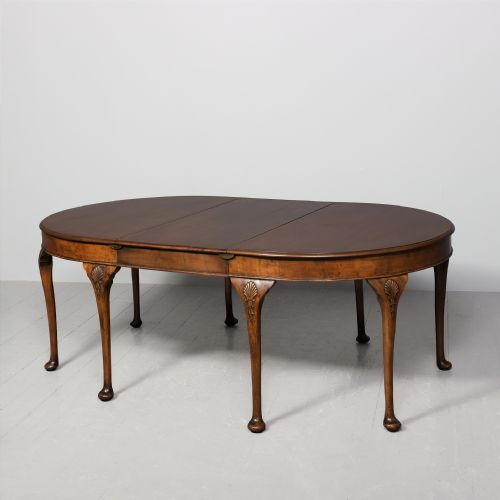
An english extending table appears across multiple periods including Georgian, Regency, and Victorian eras, taking the form of multi-pedestal banquet boards, drop leaf formats, and draw leaf designs. Buyers seeking these pieces encounter grand dining formats alongside compact gate leg tables and occasional pieces.
The materials span rich mahogany, solid oak, walnut, and brass fittings, reflecting country house utility and formal dining room design. Pieces range from intimate four seater supser tables to massive boardroom tables seating eighteen people.
Makers such as Gillows of Lancaster, Thomas Treherne, and Ashton Leach & Cumberbirch surface in the records alongside provincial country house examples. The core of the selection relies on time-tested mechanisms like draw leaves, drop leaves, and removable insertion leaves.
Materials and Construction
Cabinet makers utilised dense hardwoods like mahogany and oak, pairing solid timbers with figured veneers to create durable surfaces. Brass mechanisms, castors, and pillar supports provided the structural strength required to expand and contract heavy dining boards.
Joinery techniques such as gate leg actions, draw leaf sliding tracks, and pillar joints allowed tables to lengthen smoothly without compromising stability. Polished finishes protected the timber while highlighting the natural grain patterns of walnut and mahogany.
A solitary lamp and a book slide slip among the timber giants, proving that extension applied to reading habits as well as dining.
Design and Execution
The distinction between standard workshop output and maker-stamped pieces rests in the precision of the extension mechanism and the quality of the timber selection. Finer examples display harmonious grain matching across multiple insertion leaves and robust brass fittings that endure repeated adjustments.
Proportion and stability separate exceptional tables from simpler utilitarian versions, especially when fully extended to seat large numbers. Master workshops ensured that pedestals, gate legs, and cantilever structures bore weight evenly across all seating configurations.
Gillows of Lancaster·Thomas Treherne·Ashton Leach & Cumberbirch·Faraday and Sons
The English Extending Table Glossary
- Pedestal
- A central column support resting on splayed legs, often fitted with brass castors. These pillars allow maximum legroom around large dining surfaces.
- Draw Leaf
- A mechanism where auxiliary leaves slide out from beneath the main top, extending the table length quickly. This design appears frequently in oak dining formats.
- Drop Leaf
- A table featuring hinged side flaps that fold down when not in use. It provides flexible footprint management in compact rooms.
- Gate Leg
- A hinged leg that swings outward to support a folding leaf. This traditional construction underpins many sturdy Georgian and provincial tables.
- Banquet Table
- A large multi-pillar dining structure designed for hosting numerous guests. These boards accept multiple removable leaves for substantial length.
English Extending Table: Frequently Asked Questions
How do I extend the table?
Many examples utilise removable centre leaves held within a pillar framework, requiring operators to crank or pull the ends apart.
Other formats rely on draw leaf slides or folding gate leg actions that swing into position beneath drop leaves.
How many people can sit?
Seating capacity ranges widely from compact four seater supper tables to massive banquet boards accommodating eighteen guests.
Tables with multiple removable leaves adjust to suit the exact number of diners required for an occasion.
How do I date a table?
Stylistic cues such as Regency pillar supports, Victorian Gothic revival details, and Georgian proportions help determine the period.
Maker stamps, brass castor styles, and timber selection further narrow down the manufacturing era.